

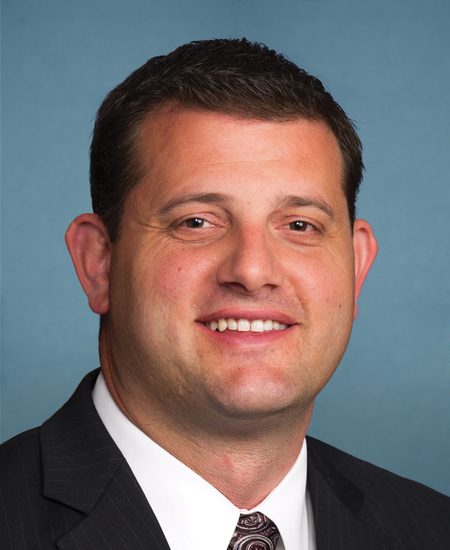
Photo of David G. Valadao
R United States House · District 22 · California On the 2026 ballot

Rep. David G. Valadao

Compare
Total votes
2,831
all sessions
Attendance
98%
53 missed
Near the chamber average
With party
90%
of cast votes
Near the chamber average
Bipartisan score
5%
crosses aisle rarely
Near the chamber average
Sponsored
1,231
bills & resolutions
Near the chamber average
Committees
8
assignments
1,231 bills and resolutions

Sponsored bills

Total
1,231
Primary
69
Co-sponsor
1,162
This page
1,231
matching current filters
Co-sponsor HJRES 28
In committee · United States House · Co-sponsor
Proposing an amendment to the Constitution of the United States to require that the Supreme Court of the United States be composed of nine justices.

Maddy summaryHJRES 28 proposes a constitutional amendment to permanently fix the number of justices on the U.S. Supreme Court at nine. This would require ratification by 38 state legislatures (three-fourths of states) within seven years to become part of the Constitution. The amendment directly affects the structure of the Supreme Court, which has had nine justices since 1869 but could otherwise be altered by future congressional action. It does not change current court operations or create new laws, but instead seeks to make the nine-justice composition a permanent constitutional requirement.

In committee Jan 22, 2025 1 co-sponsor
Co-sponsor HR 597
In committee · United States House · Co-sponsor
PURR Act of 2025

Maddy summaryThe PURR Act of 2025 creates a uniform federal regulatory framework for pet food in the United States, replacing inconsistent state and historical livestock feed regulations. It preempts state laws on pet food labeling, advertising, and marketing (while preserving state food safety oversight), establishes a 90-day review timeline for new pet food ingredients, and allows ingredients listed in the AAFCO publication to be considered "Generally Recognized as Safe" without specific FDA approval. The bill sets clear rules for ingredient labeling (including "sometimes present" for fats, flavors, and grains) and permits certain marketing claims like "natural" or "hairball control" without premarket approval, provided specific conditions are met. This legislation directly affects pet food manufacturers, pet owners, and veterinarians by creating a more consistent regulatory environment for pet food products nationwide. The FDA must issue specific guidance on pet food nutrition, labeling, and safety within 18 months of enactment.

In committee Jan 21, 2025 1 co-sponsor
Co-sponsor HR 577
In committee · United States House · Co-sponsor
Treatment and Homelessness Housing Integration Act of 2025

Maddy summaryThis bill establishes a HUD demonstration program to connect homeless individuals with behavioral health needs to treatment services. It awards up to 10 grants to Continuums of Care (CoCs) in the 5 states with the highest homelessness rates per capita, provided they're within 50 miles of a Certified Community Behavioral Health Clinic. The program refers "qualified participants" - homeless individuals receiving supportive housing or disability benefits - to these clinics for mental health, substance use, and behavioral health treatment. It authorizes $50 million (2025-2029) and requires a report on program outcomes, including whether participants received Social Security disability benefits.

In committee Jan 21, 2025 1 co-sponsor
Co-sponsor HR 516
In committee · United States House · Co-sponsor
To amend the Internal Revenue Code of 1986 to modify the railroad track maintenance credit.

This bill increases the annual limit on the tax credit for qualified railroad track maintenance expenses (also referred to as the short line railroad tax credit) and expands eligibility for claiming the credit. Under current law, the tax credit is limited each tax year to $3,500 multiplied by the sum of the number of miles of railroad track owned or leased by the taxpayer (miles owned or leased) and the number of railroad track miles assigned to the taxpayer by a Class II or III railroad (miles assigned). This bill increases the annual limit to $6,100 multiplied by the sum of miles owned or leased and miles assigned. The $6,100 amount used in the calculation of the tax credit limit is adjusted for inflation for tax years beginning after 2025. The bill also expands eligibility for the tax credit to include gross expenses for maintaining railroad tracks owned or leased as of January 1, 2024. Under current law, the tax credit is limited to gross expenses for maintaining railroad tracks owned or leased as of January 1, 2015.

In committee Jan 16, 2025 1 co-sponsor
Co-sponsor HR 536
In committee · United States House · Co-sponsor
Agricultural Environmental Stewardship Act of 2025

Maddy summaryThe Agricultural Environmental Stewardship Act of 2025 extends the deadline for a tax credit for qualified biogas property from December 31, 2024, to December 31, 2025. This change applies to biogas property construction beginning after December 31, 2024, as amended in the Internal Revenue Code. The bill directly affects agricultural businesses and producers building biogas systems that convert organic waste into energy, enabling them to claim the tax credit for a longer period. The key mechanism is a straightforward extension of an existing credit, without altering eligibility or creating new requirements.

In committee Jan 16, 2025 1 co-sponsor
Co-sponsor HR 506
In committee · United States House · Co-sponsor
Security First Act

Maddy summaryHR 506, the "Security First Act," allocates $110 million annually (2025-2028) for border security grants to state/local law enforcement through the Operation Stonegarden program, funded by a new trust fund using seized monetary instruments at the border. It requires the State Department to assess whether major Mexican cartels (like Sinaloa and Jalisco New Generation) and gangs (like Tren de Aragua) meet criteria for foreign terrorist organization designation. The bill mandates a detailed technology needs analysis by DHS within one year, evaluating border security tech gaps, new surveillance systems, and infrastructure to address threats like drug trafficking and human smuggling. This analysis must be updated biannually and includes assessing privacy impacts, staffing needs, and coordination with Mexican law enforcement.

In committee Jan 16, 2025 1 co-sponsor
Co-sponsor HR 507
In committee · United States House · Co-sponsor
Veterans Member Business Loan Act

Maddy summaryHR 507, the Veterans Member Business Loan Act, amends the Federal Credit Union Act to explicitly include loans made to veterans as qualifying "member business loans" under credit unions. This change directly affects veterans seeking business financing through federal credit unions, allowing them to access these loans under the same framework as other small business borrowers. The key mechanism is adding a new definition category ("made to a veteran") to the existing eligibility criteria for business loans, using the standard military definition of "veteran" from Title 38, U.S. Code. The bill does not create new funding or programs but expands existing credit union lending options to include veterans. This definition change takes effect six months after the bill's enactment.

In committee Jan 16, 2025 1 co-sponsor
Co-sponsor HJRES 19
In committee · United States House · Co-sponsor
To acknowledge the courage and sacrifice of veterans of the Vietnam war and formally apologize for the treatment they received upon returning home.

This joint resolution recognizes the sacrifice of veterans of the Vietnam War and commends them for their sacrifice to the United States. The joint resolution also urges the President to formally acknowledge the widespread mistreatment of such veterans as part of the ongoing Vietnam War Commemoration and issue a formal apology to the veterans and their families. Additionally, the joint resolution expresses urgent support for increased education to better reflect the sacrifice and treatment of Vietnam veterans.

In committee Jan 15, 2025 1 co-sponsor
Co-sponsor HR 429
In committee · United States House · Co-sponsor
Rosie the Riveter Commemorative Coin Act

Maddy summaryHR 429, the Rosie the Riveter Commemorative Coin Act, authorizes the U.S. Treasury to mint and sell three types of commemorative coins ($5 gold, $1 silver, and half-dollar) to honor women who worked on the U.S. home front during World War II. The coins will be sold at face value plus surcharges ($35 for gold, $10 for silver, $5 for half-dollar), with all surcharge revenue directed to the Rosie the Riveter Trust to support the Rosie the Riveter WWII Home Front National Historical Park and related educational programs. The coins must be issued between January 1, 2028, and December 31, 2028, in specified quantities (50,000 gold, 400,000 silver, 750,000 half-dollar), with all costs covered by the sales revenue to avoid net government expense.

In committee Jan 15, 2025 1 co-sponsor
Co-sponsor HR 404
In committee · United States House · Co-sponsor
Hearing Protection Act

Maddy summaryHR 404, the "Hearing Protection Act," reclassifies firearm silencers (devices that reduce gunfire noise) as firearms for federal tax and regulatory purposes. It imposes a 10% federal tax on silencers, requires the destruction of all existing federal silencer registration records within one year, and preempts state laws that tax or regulate silencers. The bill clarifies that silencers are treated as firearms under federal law, including for licensing and marking requirements, and defines "firearm silencer" to include specific components. Note: The bill’s title is misleading - it addresses firearm silencer regulation, not hearing protection for people.

In committee Jan 15, 2025 1 co-sponsor
Showing 351 to 360 of 1,231 bills
Previous 1 … 35 36 37 … 124 Next