

Maddy summaryHR 835, the 9/11 Memorial and Museum Act, provides a one-time federal grant of $5-10 million to the National September 11 Memorial & Museum (operated by an IRS 501(c)(3) organization) for its operations, security, and maintenance. The bill requires the museum to offer free admission to veterans, first responders, and victims' families, plus weekly free public hours, and mandates annual financial audits and public reporting to Congress. Grant funds must be used to preserve the site, educate visitors, and increase access for economically disadvantaged groups. The funding is subject to annual appropriations and does not authorize ongoing federal support beyond the one-time grant.
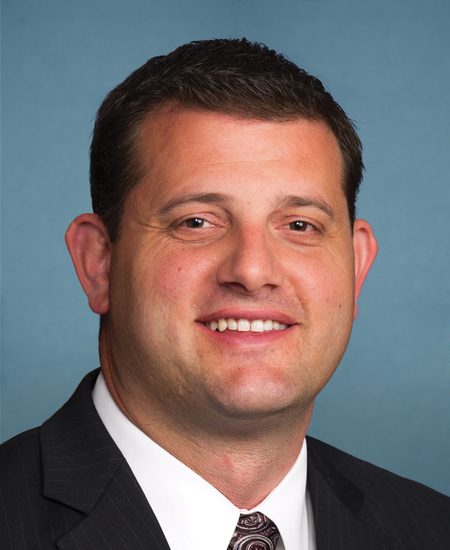
Rep. David G. Valadao
Sponsored bills
Maddy summaryThis bill extends the Nutria Eradication and Control program's authorization period through 2030 (previously set to expire in 2025) and corrects a minor technical error in the original 2003 law's reference to the Secretary. It does not create new policy or change program requirements, only maintaining the existing framework for managing invasive nutria rodents. The program directly affects wetland ecosystems and landowners in states where nutria are established, primarily Maryland and Delaware. This is a procedural reauthorization with no substantive policy changes.
Maddy summaryHR 914, the American CANS Act, requires importers of canned agricultural products to clearly mark the country of origin on the front label or top of the can. This applies specifically to agricultural products packaged in cans, as defined by existing law, and affects businesses importing these items into the U.S. The bill amends the Tariff Act of 1930 to mandate this labeling, effective 18 months after the bill's enactment. It does not change product content or pricing, only the required origin disclosure on packaging.
Maddy summaryThe HOPE Act of 2025 creates tax-advantaged "HOPE Accounts" for individuals to pay qualified medical expenses. These accounts allow tax-free savings with annual contribution limits of $4,000 for self-only coverage or $8,000 for family coverage, and employers can contribute up to 50% of these limits. Distributions for qualified medical expenses are tax-free, but amounts used for non-medical purposes are taxed at ordinary rates plus a 30% penalty. The bill would take effect for taxable years beginning after December 31, 2025, and applies to individuals with minimum essential health coverage who don't participate in other similar accounts like HSAs or FSAs.
Health Care Workforce Innovation Act of 2025 This bill establishes the Health Care Workforce Innovation Program within the Health Resources and Services Administration to provide grants to federally qualified health centers, rural health clinics, and post-secondary vocational programs for developing education and training for allied health professionals (e.g., professionals providing clinical or non-clinical support services, community health workers, and health education specialists). Specifically, grant recipients must use the funds to carry out innovative, community-based programs to train allied health professionals, with a focus on supporting rural and underserved areas. Grant recipients may use the funds to launch or expand health care professional partnerships (e.g., between a grant recipient and a school), establish apprenticeship or other career programs, or invest in training equipment, among other activities.
Medicare Patient Access and Practice Stabilization Act of 2025 This bill increases certain payment adjustments under the Medicare physician fee schedule for services furnished between April 1, 2025, and January 1, 2026.
Maddy summaryThis resolution expresses the House of Representatives' position that Congress should take steps to prevent the privatization of the United States Postal Service (USPS), ensuring it remains a federal independent agency. It highlights USPS’s constitutional role, self-sustaining nature (relying on service revenue, not taxpayer funds), and critical functions - serving 168 million addresses daily, supporting rural communities, and underpinning e-commerce. The resolution opposes privatization, noting it would raise prices, reduce services, and harm the $1.9 trillion mailing industry. As a non-binding resolution, it reflects the House’s stance but does not create new law or policy.
Sustainable Cardiopulmonary Rehabilitation Services in the Home Act This bill permanently allows services relating to cardiac rehabilitation programs, intensive cardiac rehabilitation programs, and pulmonary rehabilitation programs to be furnished via telehealth at a beneficiary's home under Medicare.
Maddy summaryHR 768, the Holocaust Education and Antisemitism Lessons Act, requires the U.S. Holocaust Memorial Museum Director to study how states and school districts currently teach about the Holocaust and antisemitism in K-12 schools. The study will examine curriculum requirements, teacher training, educational materials used, and assessment methods across all states and a representative sample of school districts and schools. It specifically aims to identify gaps, resources needed, and how schools address antisemitism and genocide prevention in their teaching. The Museum must submit a report to Congress within three years of the bill's enactment, detailing findings on current practices and challenges. This bill does not mandate new teaching requirements but seeks to understand existing approaches to Holocaust education.
Maddy summaryHR 703, the Main Street Tax Certainty Act, makes a key tax deduction permanent for small business owners. It removes the temporary sunset provision (subsection (i)) from Section 199A of the tax code, ensuring the qualified business income deduction remains available for eligible small businesses. This change directly affects pass-through business owners (like S-corps, partnerships, and sole proprietorships) who currently qualify for this deduction. The permanent change takes effect for tax years starting after December 31, 2025.