

Maddy summaryHR 378, the Thin Blue Line Act, adds a new aggravating factor for the death penalty in federal cases where a defendant kills or targets a law enforcement officer, firefighter, or other first responder. It specifically applies when the victim was killed or targeted while performing official duties, because of those duties, or due to their status as a public official. This amendment to federal death penalty law would make the death penalty a potential sentencing option for such crimes, as the killing would be considered an aggravating factor. The bill directly affects defendants convicted of homicides meeting these specific circumstances involving public safety personnel.
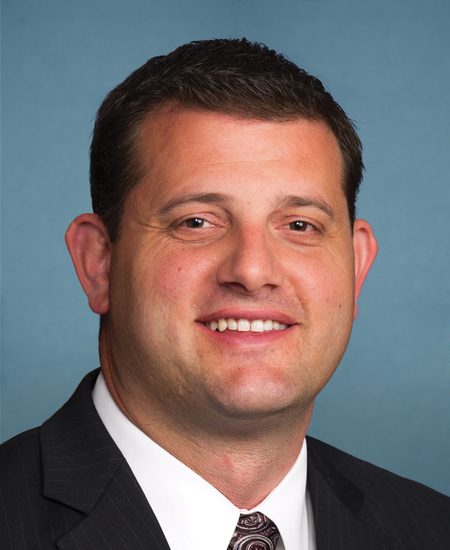
Rep. David G. Valadao
Sponsored bills
Maddy summaryHRES 36 creates a new House committee, the Committee on the Elimination of Nonessential Federal Programs, to review and recommend cutting underperforming or unnecessary federal programs. The committee, composed of 14 members (including four from key committees and a bipartisan chair/vice chair), must annually report findings and propose specific legislation to eliminate targeted programs. It establishes expedited rules for such legislation, including a 10-hour debate limit and no amendments, while dissolving after the 120th Congress. This resolution directly affects House procedures and future budget decisions by streamlining program-cutting efforts.
Maddy summaryHR 337 redirects $3 million annually from unobligated funds to support groundwater recharge, aquifer storage, and water source substitution projects. It authorizes $3 million per year for fiscal years 2026-2031 to be transferred to the Secretary for these specific water management initiatives. The bill directly affects state and local water agencies implementing these projects by providing dedicated funding. It does not create new programs but reallocates existing unobligated funds from the Infrastructure Investment and Jobs Act. The key mechanism is the annual transfer of $3 million for these water storage and supply projects.
Maddy summaryHR 256, the SAVE Act, prohibits the sale of petroleum products drawn from the U.S. Strategic Petroleum Reserve (SPR) to entities headquartered in specific countries listed under federal regulations or to any entity based in Russia. This law directly affects SPR sales by blocking transactions with companies from designated nations (as defined in 22 CFR §126.1) and all Russian entities. The key mechanism adds Section 170 to the Energy Policy and Conservation Act, requiring the Secretary to enforce this sales ban across all SPR-related transactions. The bill makes no changes to SPR stockpiling or other reserve operations, focusing solely on restricting sales to the specified entities.
Maddy summaryHR 327, the Valor Earned Not Stolen Act of 2025, increases criminal penalties for falsely claiming military medals or decorations. It raises the maximum prison sentence from one year to three years for fraudulent misrepresentation of receiving military decorations, the Congressional Medal of Honor, or combat badges under federal law. The bill also requires the Attorney General to study how individuals fraudulently obtain government benefits using fake military honors and report findings to Congress within 180 days. This law directly affects individuals who falsely claim military service honors and aims to address fraud in benefit programs.
Maddy summaryHR 82, the Social Security Fairness Act of 2023, repeals two provisions that reduce Social Security benefits for certain government workers. It eliminates the Government Pension Offset (GPO), which cuts spousal or survivor benefits for people with pensions from jobs not covered by Social Security (like federal or state government roles), and the Windfall Elimination Provision (WEP), which lowers retirement benefits for those with similar pensions. The law takes effect for benefits paid after December 2023, requiring the Social Security Administration to adjust benefit calculations to remove these reductions. This change directly affects public-sector employees who previously had their Social Security benefits reduced due to their government pensions.
Maddy summaryThis bill formally names the Department of Veterans Affairs community-based outpatient clinic in Auburn, California, as the "Louis A. Conter VA Clinic." The legislation honors Lou Conter, a Navy veteran and the last surviving member of the USS Arizona crew at Pearl Harbor, for his decades of military service and post-retirement contributions to veterans' education.
Maddy summaryThis bill (HR 8641) renames a U.S. Postal Service facility at 401 Main Street in Brawley, California, as the "Walter Francis Ulloa Memorial Post Office Building." It directly affects the postal facility and all federal references to it, changing them to the new name. The bill contains no policy changes or funding provisions - it is solely a commemorative naming resolution honoring Walter Francis Ulloa. The designation became effective upon enactment on January 4, 2025.
Maddy summaryHR 8057 designates the U.S. Postal Service facility at 9317 Bolsa Avenue in Westminster, California, as the "Little Saigon Vietnam War Veterans Memorial Post Office." This bill changes the official name of the post office to honor Vietnam War veterans, specifically recognizing the local Little Saigon community's connection to veterans' service. All federal references to the facility, including laws, maps, and documents, will now use the new name. The bill does not create new funding, services, or policy changes - it solely provides a commemorative designation.
Maddy summaryThis bill designates the U.S. Postal Service facility at 201 East Battles Road in Santa Maria, California, as the "Larry Lavagnino Post Office Building." It updates all official references in federal laws, documents, and records to use this new name for the building. The change affects only the postal facility’s official designation and has no impact on postal operations or services. The bill was enacted on January 4, 2025, following approval by both chambers of Congress.