

Maddy summary# Summary of Proposed Legislation This comprehensive legislative proposal contains multiple sections addressing election integrity, campaign finance reform, cybersecurity, census operations, and related government functions. Key provisions include: 1. **Campaign Finance Reforms**: - Increased thresholds for political committee reporting requirements - Repeal of requirements for political committees to report donor identification - Exemption of uncompensated internet communications from contribution/expenditure treatment - Protection of donor privacy for tax-exempt organizations through the "Speech Privacy Act of 2023" 2. **Election Security**: - Establishment of a process for testing and monitoring cybersecurity vulnerabilities in election equipment - Requirements for the Secretary of Homeland Security to notify state officials about election cybersecurity incidents - Exclusive authority for the Election Assistance Commission regarding guidelines for voting system certification 3. **Census and Redistricting**: - Establishment of a permanent Census Monitoring Board with bipartisan composition to review census operations - Clarification of state authority over congressional redistricting maps - Provisions regarding the Speaker of the House's authority to join civil actions related to apportionment 4. **Other Key Provisions**: - Termination of the Disinformation Governance Board and prohibition on funding similar entities - Amendments to the Federal Election Campaign Act to increase reporting thresholds and exempt certain communications - Various technical corrections to existing campaign finance law The legislation appears to focus on enhancing election security, reducing regulatory burdens on political organizations, protecting donor privacy, and strengthening oversight of census operations while maintaining constitutional boundaries between federal and state authority.
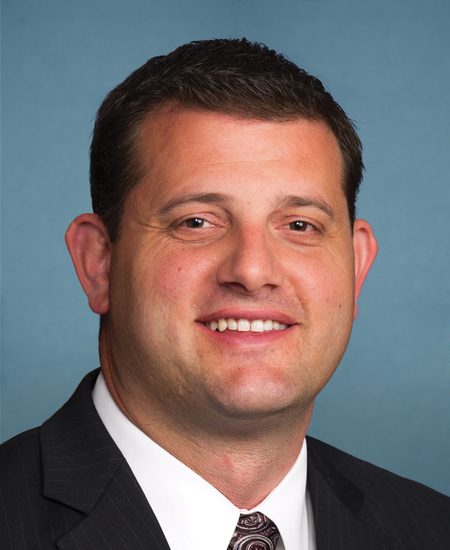
Rep. David G. Valadao
Sponsored bills
Maddy summaryHR 45 (FIND Act) requires federal government contractors to certify they do not discriminate against firearm businesses (including manufacturers, dealers, and trade associations) in their policies or practices. The bill mandates that contractors and subcontractors (for contracts over 10% of the prime contract value) certify they have no discriminatory policies and will not adopt them during the contract term. Violations could lead to contract termination and potential debarment. This applies to all federal procurement contracts awarded after the bill's enactment, excluding sole-source contracts. The law aims to ensure firearm businesses are treated equally in government contracting without restricting legitimate business criteria like creditworthiness or legal compliance.
Maddy summaryThis bill requires Congress to approve major federal regulations before they take effect. It would mandate that agencies submit detailed reports including cost-benefit analyses, economic impact assessments, and other information to Congress before implementing significant regulations. Major rules - defined as those with at least $100 million annual economic impact or significant effects on costs, competition, or employment - would need a joint resolution of approval from Congress within 70 session days. Nonmajor rules would follow a less stringent disapproval process. The bill aims to increase legislative oversight of the regulatory process, requiring Congress to formally review and approve rules that significantly impact the economy or public regulations.
Maddy summaryThis bill (HR 1555, Public Law 118-211) designates the U.S. Postal Service facility at 2300 Sylvan Avenue in Modesto, California, as the "Corporal Michael D. Anderson Jr. Post Office Building." It directly affects the postal facility and all official references to it, requiring future documents to use the new name. The bill has no policy provisions - its sole purpose is to honor Corporal Michael D. Anderson Jr. through this commemorative naming. It was passed by Congress and signed into law on January 2, 2025.
Maddy summaryThe Treat and Reduce Obesity Act of 2023 expands Medicare coverage for obesity treatment by allowing a wider range of healthcare providers - including nurse practitioners, dietitians, psychologists, and community-based counseling programs - to deliver intensive behavioral therapy for obesity, provided they coordinate with primary care providers. It also adds Medicare Part D coverage for medications used to treat obesity or for weight loss management in overweight individuals with related health conditions like diabetes or high blood pressure. These changes directly affect Medicare beneficiaries, particularly older adults (65+), who face higher obesity rates and associated costs, including $50 billion annually in Medicare spending for obesity-related care. The bill requires annual reports to Congress on implementation to improve coordination of obesity care across federal health programs.
Maddy summaryThis bill, HR 1097 (Everett Alvarez, Jr. Congressional Gold Medal Act of 2023), authorizes the award of a Congressional Gold Medal to Everett Alvarez, Jr., in recognition of his service as a U.S. Navy pilot and Vietnam War prisoner of war. It directly honors Alvarez, who was the first U.S. pilot shot down in the Vietnam War, spent over 8.5 years in captivity, and later served in the Peace Corps and Veterans Administration. The bill’s key mechanism is directing the U.S. Mint to strike a gold medal bearing his name and image, with bronze duplicates available for sale to cover costs. It does not create new policies or affect any group beyond the honoree.
Maddy summaryHR 8784, the FREE Act, requires federal agencies to replace slow, discretionary permitting systems with a streamlined "permit by rule" process. Applicants would certify compliance with written requirements, and permits would automatically be approved within 30 days unless the agency proves non-compliance. Agencies must first report on all current permits and identify which could switch to this system, with a deadline of 240 days after enactment. This directly affects federal agencies managing permits and applicants seeking permits, aiming to reduce delays while maintaining enforcement for violations through audits and appeals.
Maddy summaryHR 8505, the Household Goods Shipping Consumer Protection Act, requires household goods motor carriers, brokers, and freight forwarders to designate a "principal place of business" and disclose recent ownership relationships during registration. It gives states the option to use federal grant funds to enforce federal household goods shipping regulations for both interstate and intrastate transport, if state laws align with federal rules. The bill also ensures states retain fines and penalties collected from shipping companies for violations, rather than forwarding them to the federal government. These changes aim to improve regulatory oversight and accountability in the household goods shipping industry.
Maddy summaryHR 8308 reauthorizes the federal Nutria Eradication and Control Program through 2030, extending the existing program authorized under the 2003 Act. The bill directly affects the U.S. Department of the Interior, which administers the program targeting nutria - invasive rodents damaging wetlands in the Chesapeake Bay region. Its key mechanism is updating the program's expiration date from 2025 to 2030, ensuring continued funding and operations for nutria control efforts. This is a procedural extension with no new policy changes, maintaining the current program structure.
Maddy summaryThis bill allows electrical utilities operating on National Forest System land to clear trees and vegetation near power lines without needing a separate timber sale, as long as the work follows existing land management plans and environmental laws. It directly affects utilities managing power infrastructure on federal forest land by streamlining vegetation management to reduce wildfire risks. Utilities must share any money earned from selling cleared vegetation (minus transportation costs) with the Forest Service, though they aren’t required to sell the material. The law focuses on improving safety through routine maintenance while ensuring revenue from vegetation removal benefits federal land management.