

Maddy summaryThe Corporate Tax Dodging Prevention Act would revise corporate tax rules to prevent tax avoidance by large corporations. It would restore a progressive tax structure (15% on income under $50,000, 25% for $50,000-$75,000, 34% for $75,000-$10 million, and 35% for income over $10 million), equalize tax rates on domestic and foreign income, and implement country-by-country application of foreign tax credit rules. The bill also limits interest deductions for multinational corporations in international financial reporting groups and modifies rules to prevent "inverted" corporations from avoiding US taxes. These changes would primarily affect large corporations with significant international operations and complex tax structures.
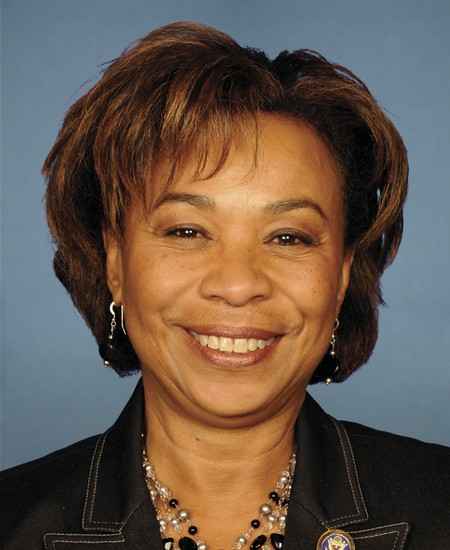
Rep. Barbara Lee
Sponsored bills
This resolution recognizes the anniversary of the Civil Rights Act of 1866 and its impact on establishing that all Americans are protected equally under the law.
Maddy summaryThe STAMP Act of 2024 bans state and local governments from taxing menstrual products. It prohibits taxes on items like pads, tampons, menstrual cups, discs, and period underwear that meet industry standards. The law directly affects consumers purchasing these products and state/local governments that previously imposed such taxes. It takes effect 120 days after enactment, removing tax burdens on menstrual products nationwide.
Maddy summaryHCONRES 102 is a non-binding symbolic resolution supporting International Transgender Day of Visibility, introduced by multiple House members. It formally encourages the U.S. to observe the day with ceremonies and programs, celebrates transgender community achievements, and recognizes their ongoing fight for equality amid documented discrimination in employment, healthcare, housing, and public spaces. The resolution highlights transgender representation in politics (including 21 state legislators) and historical context, while acknowledging rising anti-transgender legislation. It directly affirms the transgender community's visibility and rights without creating new policies or funding.
Maddy summaryHCONRES 101 is a symbolic resolution introduced in the U.S. House of Representatives on March 22, 2024, by multiple cosponsors. It recognizes that people with disabilities face daily barriers accessing federally funded facilities and reaffirms support for the existing Americans with Disabilities Act (ADA) and Architectural Barriers Act of 1968. The resolution pledges to prioritize "universal and inclusive design" in future federal infrastructure projects but does not create new legal requirements or alter current accessibility standards. As a concurrent resolution, it has no binding effect and serves only to express congressional support for accessibility goals.
Maddy summaryHRES 1110 is a symbolic resolution passed by the U.S. House of Representatives in March 2024 to commemorate March 2024 as National Women’s History Month. It formally supports the month’s goals, recognizes women and organizations advancing women’s history education, and highlights the intersectional contributions of Black, Hispanic, Asian, Native American, Pacific Islander, LGBTQ+, and disabled women throughout U.S. history. The resolution has no legal effect or policy changes - it serves solely as a ceremonial acknowledgment of historical milestones and ongoing advocacy for gender equality. It directly affects all Americans by affirming the significance of women’s historical contributions through official congressional recognition.
Maddy summaryHR 7849, the Disaster Resiliency and Coverage Act of 2024, establishes a federal grant program to help homeowners in high-risk disaster areas make their homes more resilient. The program provides up to $10,000 per household (adjusted annually for inflation) for specific qualifying mitigation activities, such as reinforcing roofs, installing flood barriers, or creating fire-resistant landscaping. Homeowners must have an adjusted gross income under $250,000 ($500,000 for joint filers) and the work must meet FEMA-established standards. States and tribal governments administer the program, with funds intended to incentivize insurance companies to offer or increase coverage in vulnerable areas.
Maddy summaryHR 7825, the Shrinkflation Prevention Act of 2024, would ban manufacturers from reducing product sizes (like smaller cereal boxes or thinner soap bars) without lowering the price proportionally or clearly disclosing the change. It directly affects consumer goods manufacturers by requiring the Federal Trade Commission (FTC) to create regulations prohibiting this practice within 18 months of the bill becoming law. The bill treats shrinkflation as an unfair or deceptive act under existing FTC law, allowing the FTC and state attorneys general to enforce the ban through fines, injunctions, or restitution for affected consumers. This focuses on making product size changes transparent and preventing companies from profiting from misleading downsizing without altering the price.
Maddy summaryThis bill authorizes federal grants to expand maternal health services in underserved communities. It directly affects public and nonprofit health care providers serving minority, low-income, or medically underserved areas, requiring them to improve prenatal, postnatal, and postpartum care while reducing racial and economic disparities. Key provisions include prioritizing community-led providers, limiting administrative costs to 10% of grant funds, and mandating culturally appropriate care. The grants, funded for fiscal years 2025-2029, aim to enhance health outcomes for mothers and infants in these communities through coordinated service delivery.
Maddy summaryHRES 1109 is a symbolic resolution commemorating the 1913 Woman Suffrage Procession in Washington, DC, where suffragists led by Alice Paul and Inez Milholland marched to demand voting rights for women. It honors the participants' courage during a protest that drew 500,000 spectators despite violent opposition, highlighting how this event advanced the national push for the 19th Amendment. The resolution does not create new laws but reaffirms support for voting rights equality, connecting the 1913 march to ongoing efforts to protect democratic access. It specifically acknowledges the intersectional struggles of women of color in the suffrage movement. As a commemorative resolution, it has no binding policy effect.