

Denying Infinite Security and Government Resources Allocated toward Convicted and Extremely Dishonorable Former Protectees Act or the DISGRACED Former Protectees Act This bill removes Secret Service protection from any individual who is convicted and sentenced for a federal or state felony.
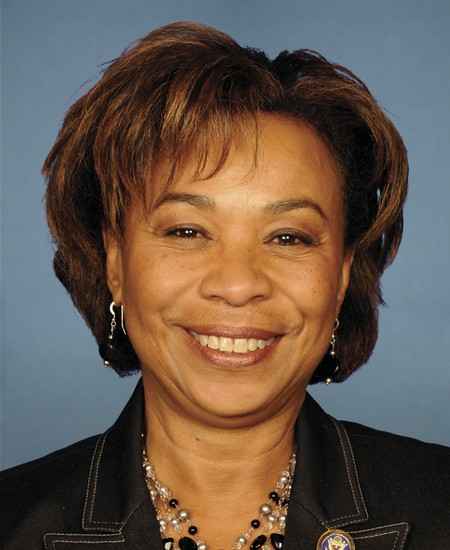
Rep. Barbara Lee
Sponsored bills
Maddy summaryHouse Resolution 1158 recognizes the 82nd anniversary of the establishment of the U.S. Naval Construction Force (Seabees) on March 5, 2024. It honors their dual role in building military infrastructure and fighting in combat since World War II, as well as their global humanitarian efforts including disaster relief and community projects. The resolution expresses gratitude for their service, sacrifices, and contributions to U.S. military operations and international goodwill. As a symbolic measure, it does not create new policies or obligations.
Maddy summaryThe Love Lives On Act of 2023 modifies benefits for surviving spouses of military veterans and service members. It removes an expiration date on the Marine Gunnery Sergeant John David Fry Scholarship for surviving spouses, ensures remarriage doesn't automatically end eligibility for veterans' dependency and indemnity compensation, and expands access to commissary and exchange privileges for remarried surviving spouses. The bill also clarifies that remarried widows or widowers whose subsequent marriage ended (due to death, divorce, or annulment) can still be considered dependents under TRICARE. These changes directly affect surviving spouses of veterans and military members who have remarried or are considering remarriage, providing more consistent benefits regardless of marital status.
Maddy summaryHR 3303, the Maternal Health for Veterans Act, requires the Department of Veterans Affairs (VA) to annually report on maternity care coordination programs and maternal health outcomes for veterans receiving care through VA facilities or VA-contracted providers. The bill mandates the VA to collect data on maternal outcomes - including disparities affecting high-risk demographic groups - and submit recommendations to Congress by September 2028. It authorizes $15 million annually (2024-2028) for VA maternity care coordination programs, supplementing existing funding without reducing current resources. The law directly affects veterans using VA maternity services, aiming to improve care through data-driven strategies.
Maddy summaryHR 1083, the Caring for Survivors Act of 2023, increases financial support for surviving spouses of veterans. It amends Title 38 to raise dependency and indemnity compensation from a fixed $1,154 to 55% of the monthly compensation rate under section 1114(j), effective six months after enactment. The bill also modifies eligibility for survivors of veterans who died before 1993, ensuring they receive the greater of their current benefit or the new calculation. Additionally, it reduces the required continuous service rating period for survivors from 10 years to five years when a veteran was totally disabled at death. These changes directly affect surviving spouses, particularly those with veterans who died prior to 1993.
Maddy summaryHR 8013, the Gig Is Up Act, requires large employers (those with $100 million+ in annual gross receipts and 10,000+ independent contractors) to treat payments to certain gig workers as wages for payroll tax purposes. This means these employers must withhold Social Security and Medicare taxes at double the standard rate (instead of the usual 7.65%), similar to how they handle employee wages. The change applies to payments made after December 31, 2024, and directly affects major gig platforms and their workers who currently pay self-employment taxes. The bill does not reclassify workers as employees but alters how their payments are taxed under the Social Security system.
Maddy summaryThis bill authorizes federal grants to the Theodore Roosevelt Presidential Library Foundation for establishing a library in Medora, North Dakota, requiring the Foundation to match federal funds two-to-one from non-Federal sources (e.g., state funds or private donations). It directs federal agencies to transfer relevant artifacts and collections to the library without cost for public display. The library will operate independently under the Foundation, with no ongoing federal management or operational involvement.
Maddy summaryThis bill authorizes $5 billion annually (2025-2034) for three key housing programs - Home Investment Partnerships, Community Development Block Grants, and the Housing Trust Fund - but restricts funding to areas already designated with a "high housing cost adjustment" by HUD. It mandates a two-year assessment by the Secretary of Housing and Urban Development to evaluate how area median income (AMI) calculations impact affordability, particularly in high-cost urban areas, including analyzing ZIP code-level metrics and alternatives to AMI. The study must examine rent burdens, income limits for tax-subsidized housing, and the specific effects of high-cost adjustments in places like New York City. The bill directly affects low-income and middle-class families in urban areas where housing costs significantly exceed local median income, aiming to inform potential reforms to housing affordability metrics.
Maddy summaryHR 7940, the Coal Cleanup Taxpayer Protection Act of 2024, changes bonding rules for coal mining reclamation. It bans self-bonding (where mining companies guarantee their own cleanup costs) for both federal and state programs, requiring operators to replace existing self-bonds within 90 days or at permit renewal. The bill also mandates states to submit detailed reports on past bond forfeitures and financial forecasts, and establishes new rules for surety bonds and collateral - prohibiting coal mines, equipment, or coal itself as collateral. These changes directly affect coal mining operators, state regulators, and federal oversight under the Surface Mining Control and Reclamation Act.
Maddy summaryThe Bond Improvement and Reclamation Assurance Act updates bond requirements for surface coal mining under the 1977 Surface Mining Control and Reclamation Act. It requires mining operators to post bonds covering the full cost of land reclamation, with amounts adjusted annually for inflation and based on factors like mine closure timing, topography, and reclamation difficulty. The bill mandates bond recalculations when permits are transferred, conditions change (e.g., mine closure or water pollution), or permit renewals occur, and holds both original operators and controlling owners jointly liable for reclamation costs. This ensures sufficient funds are available to reclaim mined land if operators fail to meet their obligations, protecting public lands and water resources.