

Maddy summaryHR 8200, the Pediatric Access to Critical Healthcare Act, creates federal grants to strengthen pediatric healthcare infrastructure. It provides $600 million annually (2025-2034) for eligible entities like children’s hospitals, facilities serving Medicaid/CHIP patients, or nonprofits treating individuals under 21. Grantees may use funds for building expansions, workforce training, digital upgrades, and emergency preparedness, but must match 50% of grant costs with non-federal funds. The bill prioritizes facilities serving over 60% Medicaid/CHIP patients or diverse, underserved populations, and requires annual reports on project impacts and outcomes.
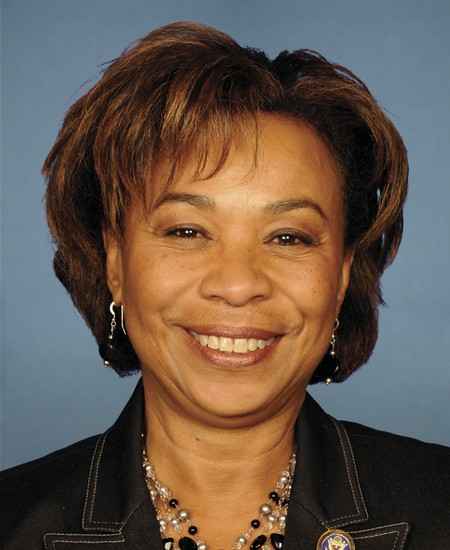
Rep. Barbara Lee
Sponsored bills
Maddy summaryHR 8231, the James Earl Jones Congressional Gold Medal Act, authorizes a Congressional Gold Medal to be awarded to actor James Earl Jones in recognition of his distinguished career in theater and film, and his role in advancing inclusion and equal opportunities for people of all backgrounds in the entertainment industry. The Treasury will strike the medal with an image and inscription of Jones, and may produce and sell bronze duplicates to cover costs, with proceeds deposited into the U.S. Mint's public enterprise fund. This bill serves as a ceremonial honor with no new legal requirements or policy changes.
Maddy summaryThis bill codifies the Environmental Protection Agency's 2023 determination that the Pebble Mine project would cause unacceptable harm to Bristol Bay's salmon habitats. It makes the EPA's prohibition on the mine's waste disposal sites legally binding, directly affecting the Pebble Mine developers and protecting the watershed. The key provision permanently enforces the EPA's finding that the mine would destroy critical salmon streams, wetlands, and fishery areas vital to the region's ecosystem and Indigenous subsistence culture.
Maddy summaryThis bill increases federal funding for states that have laws allowing civil lawsuits against people who remove sexual protection barriers (like condoms or dental dams) without consent during sexual activity. States with such laws can receive up to a 20% increase in their annual Violence Against Women Act (VAWA) Sexual Assault Services Program funding for a 4-year period, with a maximum of four such increases. The bill authorizes $5 million annually from 2025-2029 to cover these funding increases. It directly affects states that implement the required legal provisions, tying federal grant support to their enforcement of consent protections during sexual contact. The policy change focuses on incentivizing state-level legal frameworks addressing nonconsensual barrier removal through federal funding mechanisms.
Maddy summaryThe CROWN Act of 2024 prohibits discrimination based on hair texture or style commonly associated with race or national origin, such as braids, locs, cornrows, twists, or afros. It directly affects individuals - particularly people of African descent - who face workplace, school, housing, or public accommodation discrimination due to natural or protective hairstyles. The bill expands existing federal civil rights laws (like Title VI, the Fair Housing Act, and Title VII) to explicitly include hair-based discrimination, requiring compliance in federally funded programs, housing, employment, and public spaces. It clarifies that grooming policies targeting these hairstyles violate anti-discrimination protections without creating new legal standards.
Maddy summaryHR 8188, the Stealthing Act of 2024, creates a federal civil remedy allowing victims of non-consensual condom or sexual barrier removal (known as "stealthing") to sue perpetrators in court. The bill directly affects individuals who experience this non-consensual act, which the bill defines as removing a condom or barrier without consent during sexual contact. Key provisions establish federal jurisdiction for such civil actions when the conduct involves interstate commerce, payments, communications, or occurs within U.S. territories. Victims may seek compensatory damages, punitive damages, and other court-ordered relief. This legislation does not criminalize the act but provides a legal pathway for victims to pursue civil remedies under specific federal jurisdictional conditions.
Maddy summaryThis resolution symbolically recognizes April 11-17, 2024, as the seventh annual "Black Maternal Health Week." It highlights the disproportionately high maternal mortality and morbidity rates faced by Black women in the U.S., citing data showing Black women are 2-3 times more likely to die from pregnancy-related causes than White women. The resolution emphasizes systemic racism, healthcare inequities, and barriers like limited access to care as key factors contributing to these disparities. It calls for policy action - including support for the Black Maternal Health Momnibus Act - but does not create new laws or allocate funding.
Maddy summaryHR 8141, the Azerbaijan Sanctions Review Act of 2024, requires the President to review whether 44 specific Azerbaijani officials meet criteria for U.S. sanctions under the Global Magnitsky Act and related laws. The bill targets military commanders, judges, prosecutors, and security officials linked to alleged human rights violations, including torture of prisoners of war and suppression of political dissent. Within 180 days of enactment, the President must submit a detailed determination to Congress on whether sanctions should be imposed on these individuals. The review is based on findings of Azerbaijan’s alleged war crimes, arbitrary detentions, and failures to uphold international legal obligations. This bill focuses on procedural review, not immediate sanctions.
Maddy summaryThis bill, HR 8117 (HEIR Act of 2024), modifies HUD's Community Development Block Grant (CDBG) disaster recovery and mitigation programs to help specific property owners access aid after disasters. It requires HUD to create a standardized affidavit of ownership form (replacing traditional deed requirements) for "heir property" owners - those inheriting residential property without a will through intestacy, often affecting Black and rural communities. Grantees must provide this form in multiple languages at application, prohibit notarization, and accept it alongside other documents like school or benefit letters. The change directly helps people who lack standard deeds to prove ownership and receive housing repair or mitigation assistance after a declared disaster.
Maddy summaryThe HEIRS Act of 2024 establishes grant programs to help homeowners resolve ownership issues with "heirs' property" - residential land passed to multiple heirs without a will, held as shared ownership. It provides $30 million annually (2025-2035) to states and local governments that adopt the Uniform Partition of Heirs Property Act, covering costs like title reports, legal fees, and estate planning. Additionally, it allocates $10 million yearly (2025-2029) for direct assistance through HUD-approved counselors and nonprofits, prioritizing minority and low-to-moderate-income homeowners in high-need neighborhoods. The law requires housing counselors to explain heirs' property risks and available solutions, aiming to clarify ownership and prevent displacement.