Issue · Technology

Technology

Every technology bill, vote, and legislator stance in United States, automatically classified by Maddy, our AI policy reader.

Total bills
1,661
119th Congress
Top supporter
Ami Bera
86% support rate
Top opponent
Scott Perry
14% support rate
Ranked legislators
10
5 support · 5 oppose
Key legislators

Who's moving technology in United States

Legislators moving technology in United States
Legislator Party Stance Support rate Decisive votes
Ami Bera
Ami Bera House · District 6
D
Strong +
86% 22
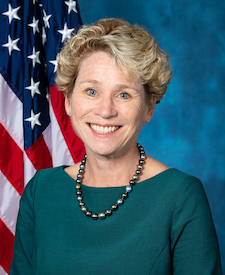
Chrissy Houlahan
Chrissy Houlahan House · District 6
D
Strong +
86% 22
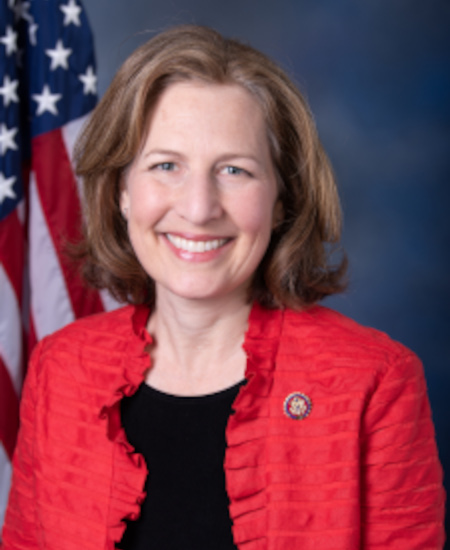
Kim Schrier
Kim Schrier House · District 8
D
Strong +
86% 22
Mike Thompson
Mike Thompson House · District 4
D
Strong +
86% 22
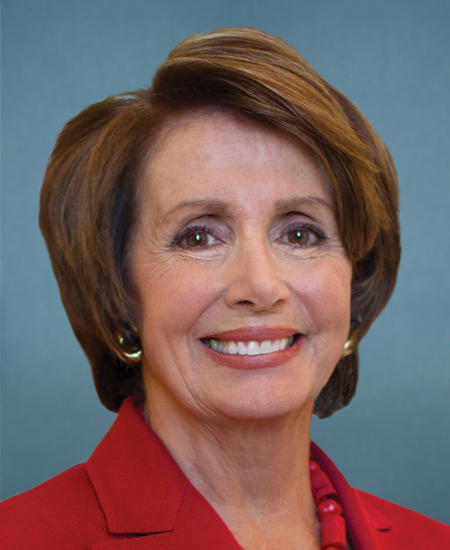
Nancy Pelosi
Nancy Pelosi House · District 11
D
Strong +
86% 22
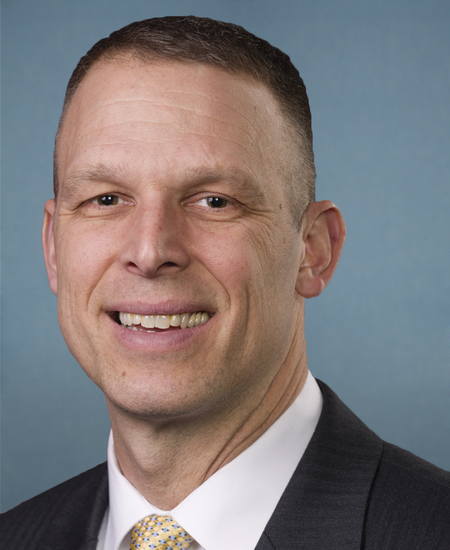
Scott Perry
Scott Perry House · District 10
R
Strong −
14% 21
AA
Alan Armstrong Senate
R
Strong −
17% 29
Rand Paul
Rand Paul Senate
R
Strong −
17% 46
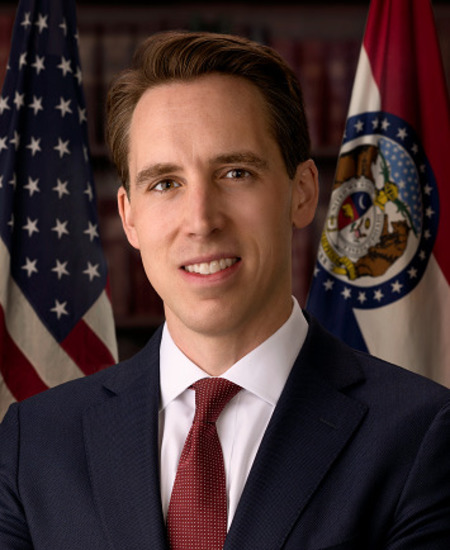
Josh Hawley
Josh Hawley Senate
R
Strong −
18% 45
Andy Harris
Andy Harris House · District 1
R
Strong −
18% 22
Showing 391–400 of 1,661 bills

All technology bills

in committee · United States · House Jun 18, 2026

HR 8671: Bank Fraud Technology Advancement Act of 2026

The Bank Fraud Technology Advancement Act of 2026 directs federal banking agencies to conduct a comprehensive study on how banks and credit unions use advanced fraud detection tools like artificial intelligence and machine learning. This study will examine the effectiveness of these technologies, identify barriers for smaller community financial institutions, and analyze issues related to data sharing and regulatory clarity. Within 18 months of enactment, the agencies must submit a public report with their findings and recommendations to Congress on how to improve fraud prevention. Following the study, the bill allows the agencies to launch a voluntary pilot program designed to help smaller banks access shared fraud detection tools and technical support.
passed · United States · House Sep 17, 2026

HR 9086: Foreign Service Modernization Act

The Foreign Service Modernization Act aims to reform the U.S. diplomatic workforce by updating recruitment, training, and management policies. It requires the State Department to recruit more broadly from community colleges and technical schools, establish a new Veterans and Foreign Service Pathway Program, and create a pilot Diplomatic Reserve Corps to handle crises. The bill also mandates comprehensive training on cybersecurity, artificial intelligence, critical minerals, and crisis leadership, while strengthening protections for officers pursuing external education and clarifying rules for promotions and assignments.
in committee · United States · Senate Apr 30, 2026

S 4459: Expanding Appalachia’s Broadband Access Act

Expanding Appalachia’s Broadband Access Act This bill requires the Government Accountability Office to study and report to Congress on the Appalachian Regional Commission’s capability to incorporate satellites in broadband projects. Specifically, the study must review and analyze the capacity and cost-effectiveness of using satellite broadband service for business purposes and economic development.
in committee · United States · House Apr 23, 2026

HR 8486: Data Driven Suicide Prevention and Outreach Act of 2026

This bill establishes a grant program within the Department of Veterans Affairs to fund nonprofit and research organizations in developing artificial intelligence tools that predict suicide risks among veterans. Selected organizations will create models that combine military service records with clinical health data to identify risk factors, with a focus on areas experiencing high suicide rates and long wait times for mental health care. The program prioritizes applicants capable of building secure, interoperable systems that can be shared across the VA network, though the resulting technology remains the intellectual property of the winning organizations. Funding for this pilot initiative is authorized until September 30, 2029.
in committee · United States · House May 15, 2026

HRES 1296: Expressing support for the designation of May 16, 2026, as the "National Day of Light".

This resolution expresses support for designating May 16, 2026, as the "National Day of Light" to raise awareness about the importance of light in modern technology and daily life. The bill highlights how light-based innovations have advanced fields such as medicine, communications, transportation, and national security, while also commemorating the 50th anniversary of the compact fluorescent lamp. It encourages educational institutions to observe the day with activities that inspire future scientists and innovators, recognizing the United States' leadership in light-based science.
in committee · United States · House Apr 30, 2026

HR 8609: Vehicle Innovation Act of 2026

The Vehicle Innovation Act of 2026 directs the Department of Energy to consolidate its vehicle technology programs and fund research aimed at improving fuel efficiency and reducing emissions across all vehicle types. This legislation authorizes over $1.7 billion in appropriations from 2027 to 2031 to support domestic development of advanced technologies, including electric vehicles, hydrogen fuel cells, natural gas systems, and improved manufacturing processes. The bill mandates that these activities be conducted through partnerships with private industry, universities, and state governments, while requiring annual reports to Congress on progress and commercial adoption. Additionally, the act establishes specific programs to test heavy-duty truck technologies, explore secondary uses for vehicle batteries, and update existing federal authorities related to energy efficiency.
passed · United States · House Jul 14, 2026

HR 8770: SAFEGUARDS Act of 2026

The SAFEGUARDS Act of 2026 directs that money collected from the 9/11 Security Fee must be used exclusively for aviation security improvements rather than other government purposes. Starting in fiscal year 2027, the law creates two separate funds: one to cover general security operations and another specifically for purchasing and installing new checkpoint technology at airports. The Transportation Security Administration will manage these funds to pay for screening upgrades, security equipment, and related personnel support, ensuring the fee directly benefits aviation safety.
Sub-Topics Procurement Airports
in committee · United States · House Apr 30, 2026

HR 8635: VERIFY Act of 2026

The VERIFY Act of 2026 directs the Department of Homeland Security to upgrade the SAVE program, which verifies immigration status for individuals applying for federal benefits, to ensure faster and more accurate responses. Key provisions require modernizing the system's technology to reduce delays, integrating it with other government databases for better data sharing, and mandating that status changes be reflected within 24 hours. The bill also establishes strict rules for using automated tools, ensuring human review is required for any negative eligibility decisions and prohibiting the use of the system for general law enforcement or criminal history checks. Additionally, the act prohibits charging fees to government agencies for verification queries and mandates regular audits by the Inspector General to monitor accuracy and compliance.
in committee · United States · Senate May 20, 2026

S 4599: Scratch Cooked Meals for Students Act of 2026

The Scratch Cooked Meals for Students Act of 2026 creates a five-year pilot program to provide grants to school districts that prepare meals using unprocessed or minimally processed ingredients. To receive funding, schools must apply and prioritize those serving low-income students and those committed to self-operation or collective bargaining agreements. The grants cover costs for staff training, kitchen equipment, employee wages, and technology, while recipients must work with a technical assistance center to create implementation plans. Schools receiving the money will report on their progress by tracking the percentage of whole ingredients used and the number of scratch-cooked menu items served. The program is authorized to receive $20 million annually from fiscal years 2027 through 2031.
in committee · United States · Senate Apr 29, 2026

S 4441: CREATE AI Act

The CREATE AI Act establishes the National Artificial Intelligence Research Resource, a centralized system designed to connect U.S. researchers and educators with advanced computational tools, data, software, and educational materials. Managed by the National Science Foundation, this resource will be built by coordinating contributions from federal agencies, state governments, and private organizations to support artificial intelligence research and workforce development. Access to these tools is primarily reserved for eligible U.S.-based universities, nonprofits, government entities, and small businesses, with a specific provision to exclude individuals employed by designated foreign countries. The bill also outlines a flexible fee structure that includes a free tier for users, mandates the use of open-source software where possible, and requires annual public reporting on the resource's progress.
Showing 391 to 400 of 1,661 bills
Previous 1 39 40 41 167 Next