Issue · Technology

Technology

Every technology bill, vote, and legislator stance in United States, automatically classified by Maddy, our AI policy reader.

Total bills
1,647
119th Congress
Top supporter
Ami Bera
86% support rate
Top opponent
Alan Armstrong
14% support rate
Ranked legislators
10
5 support · 5 oppose
Key legislators

Who's moving technology in United States

Legislators moving technology in United States
Legislator Party Stance Support rate Decisive votes
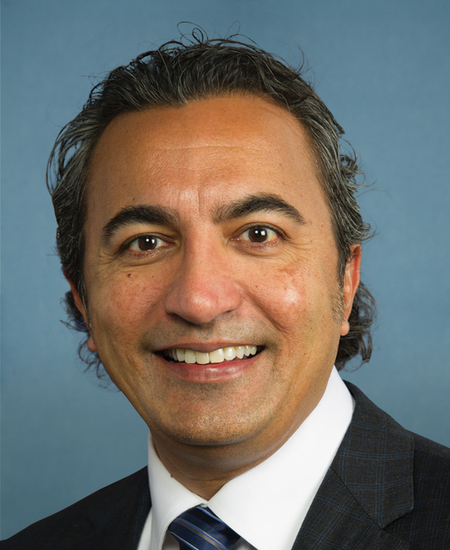
Ami Bera
Ami Bera House · District 6
D
Strong +
86% 22
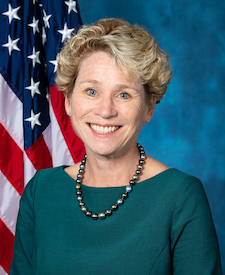
Chrissy Houlahan
Chrissy Houlahan House · District 6
D
Strong +
86% 22
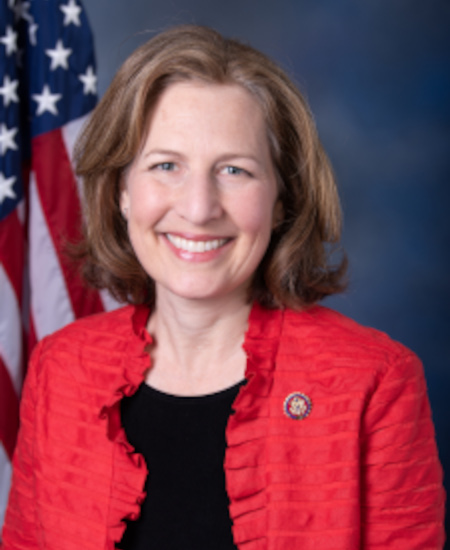
Kim Schrier
Kim Schrier House · District 8
D
Strong +
86% 22
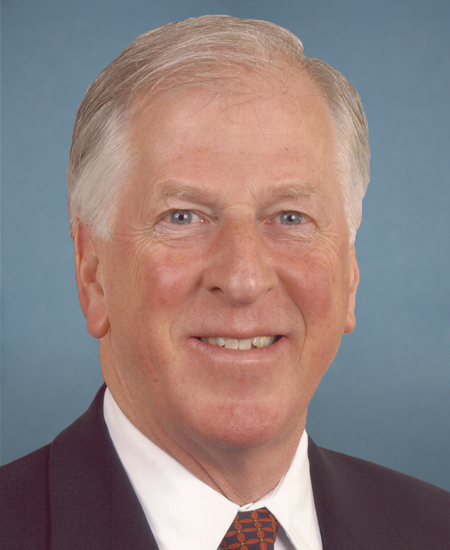
Mike Thompson
Mike Thompson House · District 4
D
Strong +
86% 22
Nancy Pelosi
Nancy Pelosi House · District 11
D
Strong +
86% 22
AA
Alan Armstrong Senate
R
Strong −
14% 28
Scott Perry
Scott Perry House · District 10
R
Strong −
14% 21
Rand Paul
Rand Paul Senate
R
Strong −
16% 45
Josh Hawley
Josh Hawley Senate
R
Strong −
18% 44
Andy Harris
Andy Harris House · District 1
R
Strong −
18% 22
Showing 381–390 of 1,647 bills

All technology bills

in committee · United States · House May 15, 2026

HRES 1296: Expressing support for designation of May 16, 2026, as the "National Day of Light".

This resolution expresses support for designating May 16, 2026, as the "National Day of Light" to raise awareness about the importance of light in modern technology and daily life. The bill highlights how light-based innovations have advanced fields such as medicine, communications, transportation, and national security, while also commemorating the 50th anniversary of the compact fluorescent lamp. It encourages educational institutions to observe the day with activities that inspire future scientists and innovators, recognizing the United States' leadership in light-based science.
in committee · United States · House Apr 30, 2026

HR 8609: Vehicle Innovation Act of 2026

The Vehicle Innovation Act of 2026 directs the Department of Energy to consolidate its vehicle technology programs and fund research aimed at improving fuel efficiency and reducing emissions across all vehicle types. This legislation authorizes over $1.7 billion in appropriations from 2027 to 2031 to support domestic development of advanced technologies, including electric vehicles, hydrogen fuel cells, natural gas systems, and improved manufacturing processes. The bill mandates that these activities be conducted through partnerships with private industry, universities, and state governments, while requiring annual reports to Congress on progress and commercial adoption. Additionally, the act establishes specific programs to test heavy-duty truck technologies, explore secondary uses for vehicle batteries, and update existing federal authorities related to energy efficiency.
passed · United States · House Jul 14, 2026

HR 8770: SAFEGUARDS Act of 2026

The SAFEGUARDS Act of 2026 directs that money collected from the 9/11 Security Fee must be used exclusively for aviation security improvements rather than other government purposes. Starting in fiscal year 2027, the law creates two separate funds: one to cover general security operations and another specifically for purchasing and installing new checkpoint technology at airports. The Transportation Security Administration will manage these funds to pay for screening upgrades, security equipment, and related personnel support, ensuring the fee directly benefits aviation safety.
Sub-Topics Procurement Airports
in committee · United States · House Apr 30, 2026

HR 8635: VERIFY Act of 2026

The VERIFY Act of 2026 directs the Department of Homeland Security to upgrade the SAVE program, which verifies immigration status for individuals applying for federal benefits, to ensure faster and more accurate responses. Key provisions require modernizing the system's technology to reduce delays, integrating it with other government databases for better data sharing, and mandating that status changes be reflected within 24 hours. The bill also establishes strict rules for using automated tools, ensuring human review is required for any negative eligibility decisions and prohibiting the use of the system for general law enforcement or criminal history checks. Additionally, the act prohibits charging fees to government agencies for verification queries and mandates regular audits by the Inspector General to monitor accuracy and compliance.
in committee · United States · Senate May 20, 2026

S 4599: Scratch Cooked Meals for Students Act of 2026

The Scratch Cooked Meals for Students Act of 2026 creates a five-year pilot program to provide grants to school districts that prepare meals using unprocessed or minimally processed ingredients. To receive funding, schools must apply and prioritize those serving low-income students and those committed to self-operation or collective bargaining agreements. The grants cover costs for staff training, kitchen equipment, employee wages, and technology, while recipients must work with a technical assistance center to create implementation plans. Schools receiving the money will report on their progress by tracking the percentage of whole ingredients used and the number of scratch-cooked menu items served. The program is authorized to receive $20 million annually from fiscal years 2027 through 2031.
in committee · United States · Senate Apr 29, 2026

S 4441: CREATE AI Act

The CREATE AI Act establishes the National Artificial Intelligence Research Resource, a centralized system designed to connect U.S. researchers and educators with advanced computational tools, data, software, and educational materials. Managed by the National Science Foundation, this resource will be built by coordinating contributions from federal agencies, state governments, and private organizations to support artificial intelligence research and workforce development. Access to these tools is primarily reserved for eligible U.S.-based universities, nonprofits, government entities, and small businesses, with a specific provision to exclude individuals employed by designated foreign countries. The bill also outlines a flexible fee structure that includes a free tier for users, mandates the use of open-source software where possible, and requires annual public reporting on the resource's progress.
in committee · United States · House May 15, 2026

HR 8846: Tornado Preparedness Act

The Tornado Preparedness Act directs the National Oceanic and Atmospheric Administration and the Federal Emergency Management Agency to create a national plan for improving tornado detection, forecasting, and warning systems. This initiative involves investing in advanced technologies like next-generation radar and artificial intelligence while integrating federal capabilities with state and local emergency management networks. Additionally, the bill establishes a grant program for communities in high-risk areas to build storm shelters, modernize warning systems, and develop emergency preparedness plans, with a specific focus on underserved and low-income populations. Federal officials are also required to coordinate closely with local governments and submit regular reports to Congress on the progress and impact of these improvements.
Sub-Topics Artificial Intelligence Tags Emergency Management
in committee · United States · Senate Apr 27, 2026

S 4385: Community Connect Grant Program Act of 2026

The Community Connect Grant Program Act of 2026 modifies the Rural Electrification Act to update eligibility criteria for broadband funding in rural areas. It raises the minimum internet speed requirements for grant recipients, increasing downstream capacity from 100 Mbps to 100 Mbps and upstream capacity from 20 Mbps to 20 Mbps, while also adjusting specific speed thresholds for other categories. Additionally, the bill extends the deadline for certain program provisions from 2023 to 2031 and clarifies that future broadband commitments count toward eligibility. These changes directly affect rural communities and the financial institutions that administer broadband infrastructure grants.
Sub-Topics Broadband Access Tags Rural Communities
in committee · United States · House May 7, 2026

HR 8706: Better Energy Storage and Safety Act

The Better Energy Storage and Safety Act expands federal efforts to improve the safety and reliability of energy storage systems used in homes and on the electrical grid. It directs government agencies to develop standardized testing methods, including stress tests that push systems to failure, to better predict how these technologies degrade and to mitigate risks like fires or explosions. The legislation also increases funding for demonstration projects and grants, requiring a focus on safer battery chemistries and advanced diagnostic tools. Additionally, it updates the program's goals to include the use of artificial intelligence and digital modeling to enhance the safety of installed energy storage units.
in committee · United States · Senate Apr 30, 2026

SRES 716: A resolution expressing the sense of the Senate regarding critical elements of the United States policy towards the People's Republic of China.

This Senate resolution expresses the Senate's view that the United States should prioritize countering the People's Republic of China as its main strategic competitor. The document outlines specific policy directions, including strengthening military deterrence in the Indo-Pacific, protecting American economic interests from Chinese trade practices, and leading in emerging technologies like artificial intelligence. It also calls for maintaining strong alliances with nations such as Japan, South Korea, Australia, and the Philippines, while supporting democratic values and human rights globally.
Showing 381 to 390 of 1,647 bills
Previous 1 38 39 40 165 Next