Issue · Technology

Technology

Every technology bill, vote, and legislator stance in United States, automatically classified by Maddy, our AI policy reader.

Total bills
1,661
119th Congress
Top supporter
Ami Bera
86% support rate
Top opponent
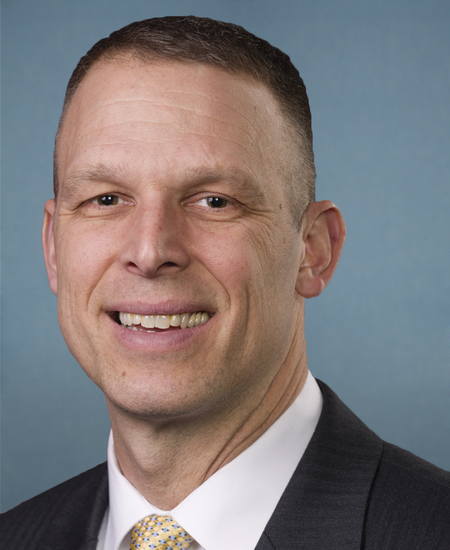
Scott Perry
14% support rate
Ranked legislators
10
5 support · 5 oppose
Key legislators

Who's moving technology in United States

Legislators moving technology in United States
Legislator Party Stance Support rate Decisive votes
Ami Bera
Ami Bera House · District 6
D
Strong +
86% 22
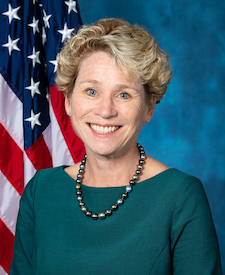
Chrissy Houlahan
Chrissy Houlahan House · District 6
D
Strong +
86% 22
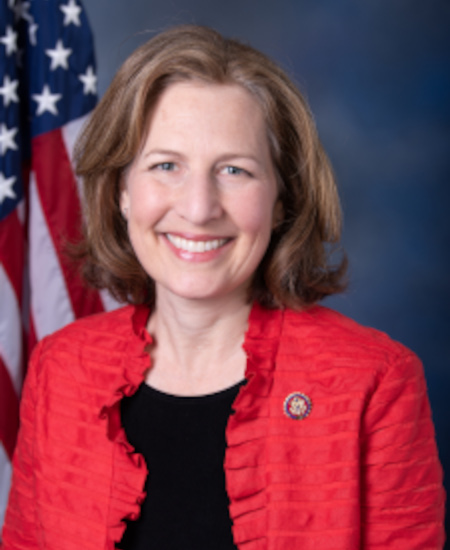
Kim Schrier
Kim Schrier House · District 8
D
Strong +
86% 22
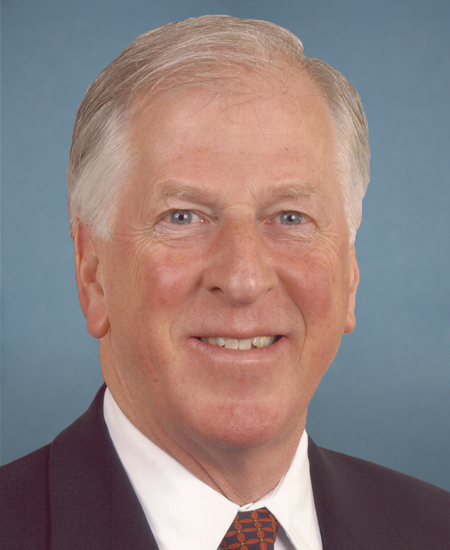
Mike Thompson
Mike Thompson House · District 4
D
Strong +
86% 22
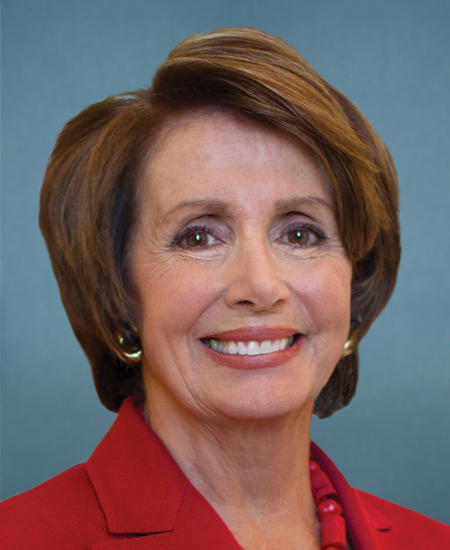
Nancy Pelosi
Nancy Pelosi House · District 11
D
Strong +
86% 22
Scott Perry
Scott Perry House · District 10
R
Strong −
14% 21
AA
Alan Armstrong Senate
R
Strong −
17% 29
Rand Paul
Rand Paul Senate
R
Strong −
17% 46
Josh Hawley
Josh Hawley Senate
R
Strong −
18% 45
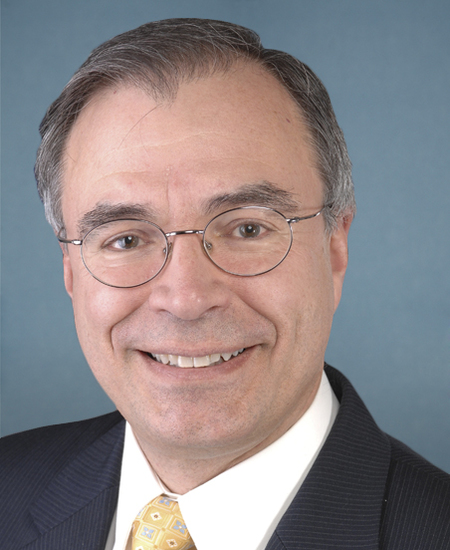
Andy Harris
Andy Harris House · District 1
R
Strong −
18% 22
Showing 401–410 of 1,661 bills

All technology bills

in committee · United States · House May 15, 2026

HR 8846: Tornado Preparedness Act

The Tornado Preparedness Act directs the National Oceanic and Atmospheric Administration and the Federal Emergency Management Agency to create a national plan for improving tornado detection, forecasting, and warning systems. This initiative involves investing in advanced technologies like next-generation radar and artificial intelligence while integrating federal capabilities with state and local emergency management networks. Additionally, the bill establishes a grant program for communities in high-risk areas to build storm shelters, modernize warning systems, and develop emergency preparedness plans, with a specific focus on underserved and low-income populations. Federal officials are also required to coordinate closely with local governments and submit regular reports to Congress on the progress and impact of these improvements.
Sub-Topics Artificial Intelligence Tags Emergency Management
in committee · United States · Senate Apr 27, 2026

S 4385: Community Connect Grant Program Act of 2026

The Community Connect Grant Program Act of 2026 modifies the Rural Electrification Act to update eligibility criteria for broadband funding in rural areas. It raises the minimum internet speed requirements for grant recipients, increasing downstream capacity from 100 Mbps to 100 Mbps and upstream capacity from 20 Mbps to 20 Mbps, while also adjusting specific speed thresholds for other categories. Additionally, the bill extends the deadline for certain program provisions from 2023 to 2031 and clarifies that future broadband commitments count toward eligibility. These changes directly affect rural communities and the financial institutions that administer broadband infrastructure grants.
Sub-Topics Broadband Access Tags Rural Communities
in committee · United States · House May 7, 2026

HR 8706: Better Energy Storage and Safety Act

The Better Energy Storage and Safety Act expands federal efforts to improve the safety and reliability of energy storage systems used in homes and on the electrical grid. It directs government agencies to develop standardized testing methods, including stress tests that push systems to failure, to better predict how these technologies degrade and to mitigate risks like fires or explosions. The legislation also increases funding for demonstration projects and grants, requiring a focus on safer battery chemistries and advanced diagnostic tools. Additionally, it updates the program's goals to include the use of artificial intelligence and digital modeling to enhance the safety of installed energy storage units.
in committee · United States · Senate Apr 30, 2026

SRES 716: A resolution expressing the sense of the Senate regarding critical elements of the United States policy towards the People's Republic of China.

This Senate resolution expresses the Senate's view that the United States should prioritize countering the People's Republic of China as its main strategic competitor. The document outlines specific policy directions, including strengthening military deterrence in the Indo-Pacific, protecting American economic interests from Chinese trade practices, and leading in emerging technologies like artificial intelligence. It also calls for maintaining strong alliances with nations such as Japan, South Korea, Australia, and the Philippines, while supporting democratic values and human rights globally.
in committee · United States · Senate Jul 22, 2026

S 4448: Accelerating Broadband Permits Act of 2026

This bill, the Accelerating Broadband Permits Act of 2026, aims to speed up the permitting process for broadband internet projects by requiring federal agencies to create better tracking tools and reporting systems. It mandates the creation of a public dashboard to monitor how grant funds are spent and where broadband service has been established, as well as a tool to help local groups identify and track federal permit requirements. The legislation also requires federal agencies to analyze and report on factors causing delays in processing communications applications and to alert staff when projects are at risk of missing deadlines. Additionally, it clarifies that large-scale broadband construction projects involving over $5 million must undergo environmental reviews under the National Environmental Policy Act.
in committee · United States · House May 22, 2026

HR 9010: Making appropriations for the Legislative Branch for the fiscal year ending September 30, 2027, and for other purposes.

HR 9010 appropriates funds for the Legislative Branch for fiscal year 2027, primarily covering salaries, expenses, and operations for the House of Representatives, Senate, Capitol Police, and various independent agencies like the Library of Congress and Government Accountability Office. The bill includes specific restrictions on spending, such as prohibiting the purchase of certain Chinese-made technology and limiting vehicle leasing allowances for Members of Congress. It also mandates in-person workplace rights training for Members under active misconduct investigations and requires that any unused funds from Members' representational allowances be used to reduce the federal deficit or debt.
Sub-Topics Appropriations
in committee · United States · House May 14, 2026

HR 8814: HUD Data Privacy Act of 2026

This bill, known as the HUD Data Privacy Act of 2026, restricts how the Department of Housing and Urban Development can share personal information with other agencies or third parties. It mandates that data collected from individuals receiving federal housing assistance be used solely to verify their eligibility for benefits or to determine the amount of aid they receive. The law includes specific exceptions for sharing deidentified data for research, ongoing criminal investigations, or preventing immediate threats to life, while explicitly prohibiting the use of this information for immigration enforcement purposes.
in committee · United States · Senate Apr 27, 2026

SRES 688: A resolution expressing support for the staff of public, school, academic, and special libraries in the United States and the essential services those libraries provide to communities, recognizing the need for funding commensurate with the broad scope of social service and community supports provided by libraries, preserving the right of all citizens of the United States to freely access information and resources in their communities, supporting a strong union voice for library workers, and defending the civil rights of library staff.

This Senate resolution expresses support for library staff across public, school, academic, and special libraries in the United States. It highlights the essential services libraries provide, such as equitable internet access, social support, and community resources, while calling for adequate funding at all government levels. The measure reaffirms the right of citizens to freely access information and explicitly supports the ability of library workers to unionize and collectively bargain. Additionally, it defends the civil rights of library staff against intimidation and censorship, noting recent challenges like book bans and the potential elimination of the Institute of Museum and Library Services.
in committee · United States · Senate Apr 27, 2026

S 4401: PRICE Act

The PRICE Act requires third-party food delivery apps to show customers the exact delivery fee before they finalize an order, preventing these fees from changing during the checkout process. Under this law, delivery fees must be calculated based only on the cost of the food and distance, excluding factors like a customer's past buying habits or willingness to pay. The bill also mandates that apps clearly display the total price, including taxes and fees, throughout the ordering process and explain what each fee covers before payment is requested. Enforcement of these rules falls to the Federal Trade Commission and state attorneys general, who can take legal action against platforms that violate the new pricing transparency requirements.
in committee · United States · House Apr 21, 2026

HR 8413: SECURE Data Act

The SECURE Data Act establishes a comprehensive federal privacy framework that grants consumers specific rights to access, correct, delete, and opt out of the sale of their personal data, while requiring companies to provide clear privacy notices and implement reasonable data security measures. It directly affects large businesses and data brokers that process significant amounts of consumer information, mandating that these entities obtain explicit consent for sensitive data and prohibiting discrimination against individuals who exercise their privacy rights. The legislation creates a registration system for data brokers, allows for enforcement actions by the Federal Trade Commission and state attorneys general, and preempts conflicting state laws to ensure a uniform national standard.
Showing 401 to 410 of 1,661 bills
Previous 1 40 41 42 167 Next