Issue · Budget & Taxes

Budget & Taxes

Every budget & taxes bill, vote, and legislator stance in United States, automatically classified by Maddy, our AI policy reader.

Total bills
2,349
119th Congress
Top supporter
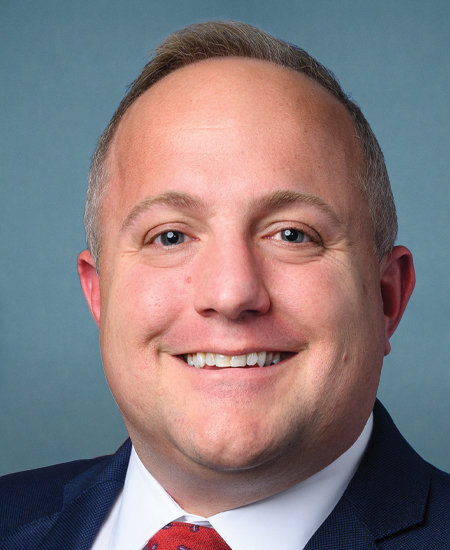
Clay Fuller
86% support rate
Top opponent
Eleanor Holmes Norton
0% support rate
Ranked legislators
10
5 support · 5 oppose
Key legislators

Who's moving budget & taxes in United States

Legislators moving budget & taxes in United States
Legislator Party Stance Support rate Votes
Clay Fuller
Clay Fuller House · District 14
R
Strong +
86% 55
Tina Smith
Tina Smith Senate
D
Strong +
83% 251
Andrew Ogles
Andrew Ogles House · District 5
R
Strong +
83% 175
Russell Fry
Russell Fry House · District 7
R
Strong +
82% 186
John Joyce
John Joyce House · District 13
R
Strong +
82% 185
Eleanor Holmes Norton
Eleanor Holmes Norton House · District At-Large
D
Strong −
0% 46
Pablo José Hernández
Pablo José Hernández House · District At-Large
D
Strong −
7% 46
George Latimer
George Latimer House · District 16
D
Strong −
14% 181
Analilia Mejia
Analilia Mejia House · District 11
D
Strong −
14% 52
Gregory W. Meeks
Gregory W. Meeks House · District 5
D
Strong −
14% 181
Showing 2,191–2,200 of 2,349 bills

All budget & taxes bills

in committee · United States · House May 20, 2025

HR 3512: Tackling Predatory Litigation Funding Act

HR 3512, the Tackling Predatory Litigation Funding Act, imposes a new annual tax on funds received by third-party investors who finance lawsuits through litigation financing agreements. It directly affects investors (including foreign entities) who provide funding to plaintiffs or law firms in exchange for a share of settlement or judgment proceeds, excluding small agreements under $10,000 or standard loans. The tax equals the top individual income tax rate plus 3.8 percentage points, with 50% withheld from settlement payments by parties involved in the lawsuit. The law also clarifies that such funds cannot offset losses and excludes certain typical legal fee reimbursements from taxation. The provisions take effect for taxable years beginning after December 31, 2025.
Sub-Topics Income Tax
in committee · United States · House Apr 7, 2025

HR 2671: Tax Fairness for Workers Act

The Tax Fairness for Workers Act (HR 2671) would allow certain employees to deduct work-related expenses directly from their gross income. Specifically, it creates an above-the-line deduction for union dues (amending IRC Section 62(a)(1)) and reinstates a deduction for other out-of-pocket work costs like uniforms or tools (amending IRC Section 67(g)), effective for 2025 tax years. This directly affects union members and workers with significant job-related expenses who previously could not deduct these costs. The bill removes the prior limitation that barred these deductions, making them available without needing to itemize. The policy change simplifies tax filing for affected workers by treating these expenses as deductible business costs.
in committee · United States · House Apr 30, 2026

HR 2424: Modern, Clean, and Safe Trucks Act of 2025

HR 2424, the Modern, Clean, and Safe Trucks Act of 2025, repeals a 12% federal excise tax on new heavy trucks, tractors, and trailers. This tax currently adds significant costs - $7,000+ for trailers, $20,000+ for clean diesel trucks, and up to $50,000 for advanced technology trucks - discouraging replacement of older, less efficient vehicles. The bill directly affects truck manufacturers, dealers, and fleet operators by removing this cost barrier, making newer, cleaner models more affordable. It aims to accelerate the adoption of modern trucks with improved safety and environmental features, particularly benefiting electric and alternative-fuel vehicles that face higher upfront costs.
in committee · United States · House Mar 14, 2025

HR 2153: Fight for Families Act of 2025

HR 2153, the Fight for Families Act of 2025, makes a portion of the federal adoption tax credit refundable for families adopting children with special needs. Specifically, it treats the part of the credit covering special needs adoption expenses as refundable - meaning eligible families could receive a cash refund even if they owe no income tax. This directly affects taxpayers who adopt children with special needs and claim the credit under Section 23 of the Internal Revenue Code. The change applies to taxable years beginning after December 31, 2025, and modifies how the credit is calculated and applied.
Sub-Topics Income Tax Tax Credits
in committee · United States · Senate Sep 11, 2025

S 2780: No Tax on Large Party Tips Act

This bill reclassifies two types of restaurant tips as "voluntary" for tax purposes: (1) tips automatically added to a customer's bill at payment time, and (2) tips suggested by a business (like "18% suggested"). It directly affects customers paying large group bills and restaurants that use these tip structures. The key provision exempts these specific tips from being counted as taxable income under current tax rules, meaning customers wouldn't owe income tax on them. This is a concrete policy change to the tax treatment of certain service charges, not a broader tax overhaul.
Sub-Topics Income Tax Tax Credits
in committee · United States · Senate Jul 23, 2025

S 2410: Medicaid Bump Act

S 2410, the Medicaid Bump Act, increases federal funding for states that raise spending on Medicaid-covered behavioral health services (including mental health and substance use treatment) above 2019 baseline levels. It provides a 90% federal match for the amount exceeding that baseline, requiring states to use these funds to supplement, not replace, existing state funding for these services. States must also use the funds to improve service delivery, such as through higher provider payments or reducing staff turnover. The bill mandates annual reports to Congress on payment rates, service utilization, and the rationale for payment rates for these services. This directly affects state Medicaid programs and providers delivering behavioral health services.
in committee · United States · Senate Jan 22, 2025

S 181: A bill to require agencies submit zero-based budgets.

S 181 requires most federal agencies to submit zero-based budgets every six years, analyzing current operations, exploring alternatives, and ranking programs by importance. These budgets must cover the next fiscal year and the following four years, submitted to the Office of Management and Budget and congressional budget committees. Agencies (excluding Defense and the National Nuclear Security Administration) must also recommend specific program cuts totaling at least a 2% reduction in non-defense discretionary spending from the prior year. The bill directly affects how federal agencies plan and justify their funding, aiming to improve budget efficiency through systematic review.
in committee · United States · House Apr 14, 2025

HR 2912: Oligarch Act of 2025

HR 2912, the "Oligarch Act of 2025," creates a new progressive wealth tax on high-net-worth individuals and certain trusts. It imposes tax rates of 2% to 8% on net taxable assets exceeding a threshold based on median household wealth (starting at $50,000), with higher rates applying to larger wealth brackets. The bill excludes assets under $50,000 that are tangible personal property used in daily life, and includes special rules for married couples, trusts, deceased individuals, and non-residents. It requires new reporting by taxpayers and financial institutions and mandates annual audits of 30% of taxpayers subject to the tax.
in committee · United States · House Mar 27, 2025

HR 2440: SIFIA Act

The SIFIA Act creates tax credit bonds to finance school infrastructure projects, allowing investors to claim a 25% annual tax credit based on the bond's face value. It requires projects to be net-zero energy buildings and mandates completion within six years, with school districts partnering with private developers meeting strict experience and reporting criteria. The bill allocates $10 billion total for these bonds ($2.5 billion annually), including $1 billion reserved for rural school projects. It also includes rules for bond redemption if funds aren't spent on time and sets limits on how much a single school district can borrow.
in committee · United States · House Feb 27, 2025

HR 1707: Grown in America Act of 2025

HR 1707, the Grown in America Act of 2025, creates a new tax credit for agricultural businesses that use predominantly domestically produced inputs. The credit equals 25% of a business's domestic agricultural input costs (capped at $100 million annually), but only if the business meets a 3-year average threshold for domestic sourcing (starting at 50% in 2026 and rising to 85% after 2033). It directly affects food and agricultural producers who source inputs like crops or fish raised in the U.S. for products sold domestically without further processing. The bill defines "domestic agricultural input costs" as expenses for U.S.-produced commodities used in U.S.-made food products, excluding certain commodities listed by the Secretary of Agriculture.
Showing 2,191 to 2,200 of 2,349 bills