

Maddy summaryThis bill amends Pennsylvania's Health Care Facilities Act to strengthen the Attorney General's authority in reviewing proposed mergers and acquisitions within the healthcare sector. It establishes a detailed list of factors the Attorney General must evaluate, including potential impacts on prices, service quality, market competition, and access for vulnerable populations. The legislation also requires state agencies like the Department of Aging and the Insurance Department to assist in these reviews while protecting certain documents from public disclosure. Ultimately, the law aims to ensure that large healthcare transactions do not negatively affect patients or the overall public interest.
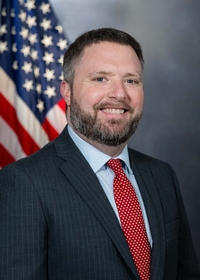
Rep. Ben Waxman
Sponsored bills
Maddy summaryThis bill, known as the Live Customer Service Improvement Act, requires businesses in Pennsylvania to offer customers the option to speak with a live person via telephone when they call customer service lines. The law applies specifically to for-profit organizations with more than 100 employees and annual revenues exceeding $10 million, while exempting smaller businesses. Companies must establish a system that allows callers to bypass automated menus and reach an employee directly upon request. Violations of this requirement would be treated as unfair trade practices under existing state consumer protection laws. The new rules will become effective 180 days after the bill is passed.
Maddy summaryThis bill amends Pennsylvania laws to update definitions and policies regarding utility customer protection programs for residential electricity, natural gas, and water services. It clarifies who qualifies as a customer or applicant for assistance, establishes specific income thresholds for determining financial hardship, and expands the scope of these protections to include water and sewer authorities in second-class cities. The legislation also standardizes terms related to complaints, payment arrangements, and service termination to ensure consistent application across different utility types.
Maddy summaryThis bill requires hospitals, nursing homes, and home health agencies in Pennsylvania to create violence prevention committees to address workplace violence against employees. These committees must include a mix of management, union or elected non-union staff, and direct care workers who will conduct annual risk assessments, track incidents, and develop safety plans. The legislation also mandates that employees report violence within 24 hours, protects reporters from retaliation, and requires facilities to make risk reports public while maintaining records for at least three years. Health facilities that fail to comply with these new reporting and prevention duties face administrative fines of up to $10,000 per violation.
Maddy summaryThis bill amends Pennsylvania's Unfair Trade Practices and Consumer Protection Law to add specific definitions for new types of deceptive business practices. It introduces legal definitions for terms such as "environmental marketing claims," "net zero claims," "paltering," and "reputational advertising" to help regulators identify misleading statements about a product's environmental impact or a company's green efforts. The legislation also clarifies the definition of "Internet service provider" and expands the list of prohibited unfair methods of competition to better cover modern marketing tactics. These changes directly affect businesses and consumers by providing clearer standards for what constitutes deceptive advertising, particularly regarding sustainability claims and online services.
Maddy summaryThis House Resolution designates October 5, 2024, as Ostomy Awareness Day in Pennsylvania to honor individuals living with ostomies. The bill aims to increase public understanding of the surgery and reduce stigma by highlighting the importance of education and support for patients and their families. It does not create new laws or funding but serves as a symbolic gesture to recognize the medical procedure and promote awareness within the state.
Maddy summaryThis bill amends the Pennsylvania Prevailing Wage Act to update definitions regarding construction work. Specifically, it adds "rebar system assembly" to the list of covered activities while removing the phrase "or smaller prefabricated components" from the definition of prefabricated components. These changes clarify which specific tasks and materials are subject to prevailing wage requirements for public projects. The bill also outlines updated duties for the Secretary of Labor and Industry in enforcing these provisions.
Maddy summaryThis bill requires manufacturers of digital electronic equipment to provide owners and independent repair shops with the necessary documentation, parts, and tools for maintenance and repair on fair and reasonable terms. The legislation specifically expands the definition of covered equipment to include security and life safety systems such as fire alarms, medical alert devices, intrusion detection systems, and access control tools. Additionally, the bill prohibits individuals from replacing batteries in residential smoke detectors, likely to ensure safety standards are maintained. These changes aim to facilitate independent repair options while addressing specific safety concerns related to critical home systems.
Maddy summaryThis resolution urges the Pennsylvania Interscholastic Athletic Association to create separate playoff systems for public schools and private or charter schools. The bill argues that private and charter schools have an unfair advantage because they can recruit students from outside their local districts, unlike public schools which are limited to their geographic boundaries. It cites recent basketball championship statistics as evidence that public schools are currently at a disadvantage in state competitions. By requesting a structural change to how playoffs are organized, the measure aims to provide a fairer opportunity for public school students to win state titles.
Maddy summaryThis bill creates the Nursing Assistant Workforce Hub Program to help Pennsylvania recruit and train staff for nursing homes. It directs the Department of Community and Economic Development to divide the state into four regions and award grants of up to $4 million to nonprofit organizations to run local hubs. These hubs can use the funds for building facilities, hiring staff, providing job placement services, and offering financial support to help workers get certified. The program is funded by a $16 million transfer from the state's General Fund and requires annual reporting on progress and outcomes.