

Maddy summaryThis bill updates Pennsylvania's Second Class City Firemen Relief Law to clarify membership rules and improve benefits for surviving spouses and children. It requires new members to sign an agreement forfeiting fund rights upon leaving the fire department and mandates that active members contribute six percent of their wages plus a one-dollar monthly fee, while retirees pay one dollar monthly. The legislation establishes specific death benefits, including a lump sum for all dues paid and monthly survivor payments for widows who die on duty, which continue for up to five hundred weeks or until remarriage. Additionally, it outlines how pensions are distributed to dependent children or parents if there is no surviving spouse, ensuring that total family benefits do not exceed fifty percent of the deceased member's salary.
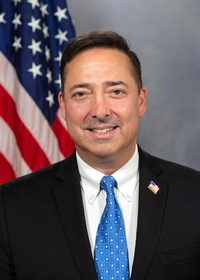
Rep. Chris Pielli
Sponsored bills
Maddy summaryThis bill modifies Pennsylvania's tax laws to exclude sales tax from the calculation of interchange fees charged on credit and debit card transactions. It requires payment card networks to either deduct the tax amount from these fees at the time of settlement or refund a proportional portion of the fee if the tax was not initially separated. The legislation defines specific terms like "interchange fee" and "electronic payment transaction" to clarify which fees are affected and outlines penalties for networks that fail to comply, including fines and mandatory refunds to merchants.
Maddy summaryThis bill establishes the Microfiber Filtration Protection Act to require all washing machines sold or installed in Pennsylvania to include a built-in or in-line filter capable of capturing microfibers. The Environmental Quality Board must create regulations mandating these filters have a mesh size of 100 micrometers or smaller and display a consumer notice about checking and disposing of captured lint. Starting in 2030, manufacturers cannot sell non-compliant machines, and by 2031, installers cannot fit them unless they meet the new standards. The Department of Environmental Protection will enforce these rules through testing, inspections, and complaints, while charging manufacturers for any testing costs related to non-compliance.
Maddy summaryThis bill requires correctional officers in Pennsylvania to use safety seat belts when transporting detained individuals or inmates in vehicles. It allows for exceptions if using a seat belt would endanger the officer or others, or if the person is being transported on a bus. The Department of Corrections must create specific regulations for seat belt use within 120 days, including rules for transporting pregnant individuals. The law applies to all peace officers and other authorized personnel who transport detainees under official detention.
Maddy summaryThis bill allows local taxing authorities in Pennsylvania to offer property tax exemptions to developers who redevelop old churches, hospitals, and schools. To oversee these efforts, it creates a new advisory committee within the State Planning Board and gives the Department of Community and Economic Development new powers and responsibilities. The law defines redevelopment as major repairs or construction that improve safety and utility, rather than simple maintenance, and requires developers to sign agreements outlining the terms of the tax breaks.
Maddy summaryThis bill amends Pennsylvania's eminent domain laws to clarify definitions, streamline condemnation procedures, and expand protections for property owners. It introduces new terms such as "blighted property" and "marginalized community" to ensure consistent legal interpretation and requires that replacement housing for displaced residents be affordable and located in areas with similar school districts and amenities. The legislation also mandates that title transfer only occurs after a court makes a final determination, while simultaneously allowing owners to recover limited costs for appraisals, legal fees, and engineering services. Additionally, the bill provides for compensation for the loss of business goodwill and ensures that mortgages and liens are addressed during the condemnation process.
Maddy summaryThis bill prohibits employers in Pennsylvania from punishing, disciplining, or retaliating against employees for refusing to attend meetings or listen to communications about religious or political topics. It defines "voluntary" participation as attendance that is not incentivized by benefits or threatened with negative employment consequences, ensuring employees can opt out without fear of reprisal. To enforce these protections, the law allows aggrieved workers to sue for remedies like reinstatement and back pay, while also requiring employers to post a notice explaining these rights. Additionally, the bill mandates that the Department of Labor and Industry investigate complaints and provides a framework for interested parties to report violations.
Maddy summaryThis bill establishes a minimum hourly wage of $20 or a living wage for education support professionals in Pennsylvania public schools, effective for the 2024-2025 school year. It requires schools to pay overtime at 1.5 times the standard rate and mandates that salaried workers be paid based on their actual hours worked to meet this threshold. For employees currently covered by existing contracts with lower wages, the law requires schools to make supplemental payments to bridge the gap until the contract expires or is renewed. The Department of Labor and Industry is tasked with calculating and annually adjusting the living wage based on inflation data, while the state provides funding to school districts to cover the cost of these wage increases. Additionally, the legislation updates procedures for school boards, requiring a majority vote and proper recording for certain decisions.
Maddy summaryThis bill establishes the TRICARE Premium Reimbursement Program to provide financial grants to members of the Pennsylvania National Guard who are eligible for TRICARE Reserve Select coverage. The program allows eligible recipients to receive reimbursement for health insurance premiums paid for themselves and their immediate family members, as well as premiums for TRICARE dental coverage for themselves and their families. To qualify, individuals must submit an application with personal contact information, details about family members, a statement confirming their eligibility, and proof of premium payments. The Department of Military Affairs will manage the program, post application forms online, and create necessary rules to administer the grants.
Maddy summaryThis Pennsylvania House resolution asks the U.S. Congress to change federal rules so that military reservists who are also eligible for federal employee health insurance can join the TRICARE Reserve Select program. Currently, federal employees serving in the National Guard or armed forces reserves are barred from enrolling in this specific health coverage, which the bill argues creates a financial disincentive for them to work for the government. The measure does not alter any laws directly but serves as a formal recommendation to lawmakers to address this eligibility gap.