

Maddy summaryThis Pennsylvania bill authorizes the Department of Corrections to issue electronic control gloves to corrections officers, with mandatory distribution required for officers working in units housing inmates who have received disciplinary sanctions and are segregated from the general population. The legislation mandates that the department create public written policies for the use, training, maintenance, and storage of these devices and requires all officers to complete an approved training course before receiving them. Additionally, the bill defines electronic control gloves as gloves with electrodes that emit less than 500 volts to temporarily immobilize or restrain individuals and requires their use to comply with existing state guidelines on law enforcement use of force.
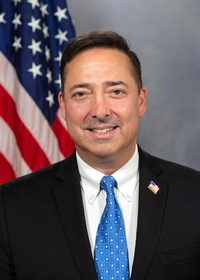
Rep. Chris Pielli
Sponsored bills
Maddy summaryThis bill amends Pennsylvania's Health Care Facilities Act to change licensing requirements specifically for abortion facilities. It removes the mandate that these facilities must have transfer agreements with nearby hospitals and eliminates the requirement for physicians and medical staff working there to hold admitting privileges at a hospital. Additionally, the legislation repeals an existing state regulation related to these licensing standards. These changes directly impact how abortion clinics are regulated and the operational requirements for their medical staff.
Maddy summaryThis Pennsylvania bill updates the state's tax code to provide tax relief for victims of Nazi persecution. It specifically exempts from state personal income tax any money received as compensation for the seizure, theft, or forced conversion of income or property that occurred after May 30, 1971. The legislation also clarifies that such compensation is not considered a taxable gain from selling property. These changes apply to tax years starting on or after December 31, 2024, and take effect immediately.
Maddy summaryThis bill amends Pennsylvania's Human Services Code to update definitions related to child care and establish a new copayment system for families receiving subsidized child care. It clarifies terms such as "child care," "child-care center," and "family child-care home" to specify who is covered and under what conditions. Under the new rules, parents or caretakers must pay a portion of the child care cost based on their family's annual income, with a cap of fifteen percent. The legislation also provides special provisions for families where the parent or caretaker works as a child-care employee or a direct support professional, ensuring they remain eligible for subsidies regardless of income level while still requiring a capped copayment.
Maddy summaryThis resolution directs the Joint State Government Commission to conduct a study estimating the projected costs of climate change adaptation and resilience measures for Pennsylvania. The study will analyze potential financial impacts on public health, natural resources, built infrastructure, and social environments under different future climate scenarios. It specifically requires examining how these costs vary across different demographics and geographic areas while considering hazards like flooding, heat, and wildfires. The findings aim to help state officials better prepare for and mitigate the effects of climate-related events on the Commonwealth.
Maddy summaryThis bill designates September of each year as "International Underground Railroad Month" throughout Pennsylvania. It aims to honor the courage of freedom seekers and the individuals who assisted them in escaping slavery through a clandestine network. The legislation includes a list of historical findings that highlight the significance of the Underground Railroad and its role in the state's history. Importantly, the bill clarifies that this designation does not require employers to treat September as a paid holiday or provide special leave for employees.
Maddy summaryThis bill establishes the Health Insurance Core Benefits Coverage Act to require all individual and group health insurance policies in Pennsylvania to cover a specific set of essential services. These mandatory benefits include emergency care, hospitalization, prescription drugs, mental health treatment, and preventive services, ensuring that plans are at least as comprehensive as those first offered in the state in 2020. The Insurance Department is authorized to adjust these requirements through regulations by considering factors such as population health needs, potential discrimination, and medical advancements. Insurers that fail to comply with these coverage standards face penalties, while the law explicitly excludes limited policies like dental-only or accident-only plans from these mandates.
Maddy summaryThis bill modifies Pennsylvania fishing and hunting laws to provide financial relief for disabled veterans and former prisoners of war. It establishes that veterans with a 100% service-connected disability rating will receive free fishing, hunting, and furtaking licenses, while those with ratings between 60% and 99% will pay a reduced fee of one dollar. To qualify, applicants must be certified by the U.S. Department of Veterans Affairs and submit proof that their disability was incurred during military service. The changes apply to resident licenses and will take effect 60 days after the bill is enacted.
Maddy summaryThis bill updates Pennsylvania's Public Utility Confidential Security Information Disclosure Protection Act to create a specific exception for government agencies. It requires public utilities to share emergency response plans and other records with federal or state authorities, such as the National Transportation Safety Board, when there is a reasonable belief of a safety risk or potential harm. The legislation ensures that agencies receiving this information can use it without fear of violating confidentiality rules or triggering public record requests under the Right-to-Know Law. The changes apply to all public utilities in the state and take effect 60 days after the bill is passed.
Maddy summaryThis resolution directs the Joint State Government Commission to conduct a study on improving Home and Community-Based Services waivers for individuals with disabilities in Pennsylvania. The investigation will examine how these programs, managed by the Office of Long-Term Living and the Office of Developmental Programs, can better meet medical needs, reduce barriers to community living, and enhance employment opportunities. Specifically, the study will compare service menus and pay rates between the two offices, analyze administrative processes, and review how other states have addressed similar challenges. Ultimately, the commission is tasked with issuing a report containing recommendations to improve eligibility, access to care, and support services for this population.