

Maddy summaryThis Pennsylvania bill updates the fees that constables and deputy constables can charge for their services in both civil and criminal cases. It directly affects law enforcement officers who perform duties such as serving legal documents, transporting defendants, and providing courtroom security. The legislation increases the dollar amounts for various tasks, such as raising the fee for executing an arrest warrant from $25 to $50 and adjusting costs for transporting prisoners and holding defendants in court. Additionally, the bill establishes a new $10 surcharge for each criminal case where a constable provides a service, while ensuring that indigent defendants in criminal cases are not held financially responsible for this fee.
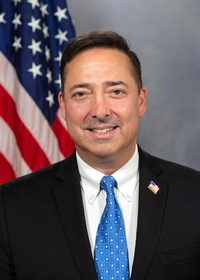
Rep. Chris Pielli
Sponsored bills
Maddy summaryThis bill amends Pennsylvania's Public School Code to authorize the creation of school-based health centers within public and private schools. These centers must remain open during school hours and cannot refuse care based on a student's ability to pay, insurance status, or existing primary care provider. Services are determined by school boards based on student demographics and needs, with strict requirements for parental consent and data confidentiality. The legislation also mandates the establishment of a statewide advisory council to oversee program operations and requires the Department of Health to collect usage and demographic data once funding is available.
Maddy summaryThis Pennsylvania House Resolution designates November 2024 as "Veterans and Military Families Month" to honor the state's large veteran population and their families. The measure serves as a symbolic gesture to acknowledge the sacrifices made by service members and to highlight the support provided by the Department of Military and Veterans Affairs. It does not create new laws or funding but directs a copy of the resolution to the relevant state department for record-keeping.
Maddy summaryThis bill establishes the Municipal and Emergency Responder Solar Grant Program to provide financial assistance for solar energy projects at government facilities and emergency service locations such as fire stations and police departments. The Department of Environmental Protection will administer the program on a competitive basis, offering grants to cover costs like equipment purchase, installation, and energy storage. To receive funding, applicants must submit a detailed proposal that includes a site assessment and an affidavit confirming that all construction contractors meet specific licensing, insurance, and safety training requirements. The Department is also tasked with developing application guidelines, providing technical assistance, and creating educational materials to help eligible entities navigate the process.
Maddy summaryThis bill updates the membership rules for Pennsylvania's State Veterans' Commission to ensure broader representation of different veteran groups. It mandates that the commission include representatives from sixteen specific national veterans' organizations, such as the American Legion and VFW, along with four members appointed by the Governor who must be female or Vietnam-era veterans. The legislation also clarifies the roles of state-level leaders from the American Legion, Disabled American Veterans, and Veterans of Foreign Wars as nonvoting members. These changes aim to modernize the commission's composition while maintaining its existing structure under Pennsylvania law.
Maddy summaryThis bill establishes a policy allowing Pennsylvania educational institutions to award academic credit for military training and service. It directly affects students enrolled in community colleges, public universities, and state-related institutions who have completed military duties. The legislation requires the Department of Education to create guidelines for granting credit based on the skills and experience gained during service. Additionally, the bill ensures that professionals holding state licenses do not lose their credentials or miss continuing education requirements while serving in the military.
Maddy summaryThis bill updates Pennsylvania zoning laws to allow municipalities with over 5,000 residents in growing counties to create rules for multiple-unit housing. It directly affects local governments in these specific areas by expanding their authority to regulate apartment and condominium developments. The key provision adds new eligibility criteria based on population size and recent growth, removing previous restrictions that limited these zoning options. This change aims to provide a clearer legal framework for communities seeking to increase housing density in response to population increases.
Maddy summaryThis bill establishes a Net Operating Loss Transfer Program in Pennsylvania to allow certain new or expanding biotechnology and technology businesses to sell their unused tax losses to other companies. The program specifically targets businesses that have been operating in the state for five years or less and employ at least 15% of their U.S. workforce within Pennsylvania. Under the new rules, these "selling taxpayers" can transfer the value of their tax benefits to "purchasing taxpayers," who may then use those benefits to offset their own taxable income. The legislation also updates penalty provisions for tax violations and renumbers existing sections of the Tax Reform Code of 1971 to reflect these changes.
Maddy summaryThis Pennsylvania bill prohibits the intentional addition of perfluoroalkyl and polyfluoroalkyl substances, commonly known as PFAS, to a wide range of consumer products including cookware, cosmetics, food packaging, and artificial turf. While the law generally bans these chemicals, it allows for their use in specific items if the Department of Environmental Protection determines that no safer alternative exists and the chemical is critical for the product's function. The Department of Environmental Protection is tasked with enforcing these restrictions, managing a public database of PFAS information, and imposing penalties for violations.
Maddy summaryHB 2353 establishes civil liability for entities that use artificial intelligence or other automated systems to create deceptive campaign advertisements featuring current or former candidates. The bill defines "covered persons" as firms, political committees, foreign governments, and individuals acting on their behalf, while also clarifying that generative AI and synthetic content like deepfakes fall under these regulations. To avoid liability, covered persons must provide clear and conspicuous disclosures stating that an advertisement contains manipulated or generated content, with specific formatting requirements for text, video, and audio formats. If a covered person fails to provide such a disclosure and is found liable, the law requires the immediate removal of the advertisement and imposes financial penalties based on the jurisdiction where the candidate filed with election officials.