

Maddy summarySB 112 extends the validity period of Oklahoma plumbing licenses from one year to three years, with licenses expiring on the last day of the licensee's birth month. It allows renewal within 30 days before or after the expiration date (with additional fees for late renewal beyond that window) and requires continuing education for journeyman and contractor license renewals. The bill also provides a one-year grace period for military service members to renew licenses without penalty, if applied for within one year of discharge. These changes take effect on November 1, 2025.
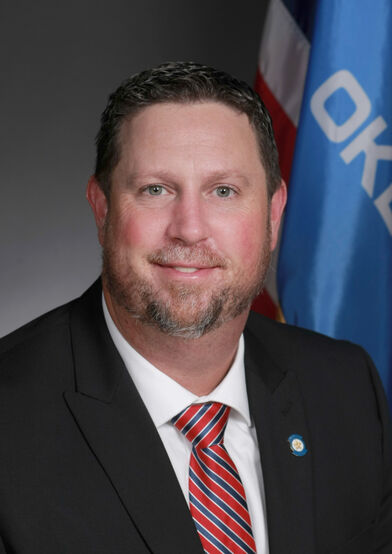
Sen. David Bullard
Sponsored bills
Maddy summaryHB 2194 amends Oklahoma's tax code to adjust how taxable income and adjusted gross income are calculated for state tax purposes. It modifies rules for net operating loss deductions (including carryover periods and allocation methods), adds interest income from state/local obligations to taxable income, and establishes specific allocation rules for income from real property, intangible assets, and business activities based on geographic situs. The bill directly affects businesses and individuals calculating Oklahoma income tax by changing how federal tax adjustments and income sources are treated. These changes aim to align Oklahoma's tax calculations more closely with federal rules while maintaining state-specific provisions.
Maddy summarySB 382 requires children enrolling in prekindergarten to be toilet trained by the 2025-2026 school year, directly affecting families of 4- to 5-year-olds in Oklahoma public schools. Parents or guardians must provide written assurance of toilet training on a state-created form at enrollment. School districts must follow a specific process if a child is not toilet trained, including temporary unenrollment, referrals to support resources, or allowing parental assistance in training. Children with disabilities requiring an IEP under federal law are exempt from this requirement. The bill takes effect immediately upon enactment.
Maddy summaryHB 1190 creates the Council on Law Enforcement Education and Training (CLEET) as a formal state agency in Oklahoma, directly affecting law enforcement officers and contractors who handle sensitive records. The bill modifies background check requirements by mandating that all CLEET-certified personnel undergo criminal history searches through the Oklahoma State Bureau of Investigation (OSBI), including fingerprint submissions to the FBI for national checks. It establishes a 13-member Council with specific appointments from law enforcement agencies, tribal leaders, sheriffs, and training organizations to set certification standards, oversee training programs, and manage educational scholarships. The bill also authorizes CLEET to appoint an Executive Director with specific qualifications and commission staff as peace officers for agency duties. (Note: The bill failed passage on March 26, 2025, with 33 yes votes against 58 no votes.)
Maddy summaryHB 1190 creates the Council on Law Enforcement Education and Training (CLEET) to oversee and standardize law enforcement officer training, certification, and background checks across Oklahoma. The Council will require national criminal history checks (via FBI fingerprint analysis) for officers and set rules on certification, training standards, and continuing education. It is composed of 13 members representing law enforcement agencies, sheriffs, police chiefs, and educational institutions, with specific qualifications for the Executive Director (e.g., a law enforcement degree and five years of experience). This bill directly affects all Oklahoma law enforcement officers who must meet these new certification requirements.
Maddy summaryHB 1219 prohibits Oklahoma state agencies from using public funds or resources to promote, recognize, or support LGBTQ+ Pride Month or similar events. It also restricts state property flag displays to only those officially recognized by federal or state governments. The bill directly affects all state government entities, including departments and agencies, by banning activities like social media posts or educational programs related to Pride Month. It takes effect July 1, 2025, and includes an emergency clause for immediate implementation upon approval.
Maddy summarySB 14 requires Oklahoma employers (both public and private) to provide employees and contractors with a "certification of disclosure exemption" form if they refuse to disclose their COVID-19 vaccination status. Employers must accept the completed form within 30 days, cannot retaliate against employees who use it (e.g., through discipline, pay cuts, or denial of benefits), and cannot require them to wear visible markers of their exemption. The bill also mandates that employers offer reasonable accommodations like mask-wearing or weekly testing (at employer cost) instead of requiring vaccination disclosure. It explicitly prohibits employers from disclosing exemption status, offering rewards for disclosure, or segregating employees based on vaccination status.
Maddy summarySB 14 requires Oklahoma employers to provide employees and contractors with a "certification of disclosure exemption" allowing them to refuse to disclose their COVID-19 vaccination status (including variants) under employer policies. Employers must give this certification form immediately when adopting such policies, allowing 30 days for completion. Once submitted, employers must accept the exemption without question, maintain it in the employee's file, and cannot disclose who refused to share their status. The bill directly affects workers in all public and private Oklahoma workplaces with vaccination-mandated policies.
Maddy summaryHB 1169 repeals multiple Oklahoma statutes (63 O.S. 2021 Sections 1-729a through 1-757.16) that previously regulated abortion-inducing drugs. The bill directly affects existing state law by removing these specific provisions without creating new restrictions or requirements. Key mechanisms include the formal repeal of all listed sections, which covered various aspects of abortion drug regulations. This is a procedural bill with no new policy changes, simply eliminating the repealed statutes from the Oklahoma Statutes. The "emergency" declaration in Section 2 allows immediate implementation upon approval but does not alter the bill's substantive effect.
Maddy summaryHB 1162, the "Real Access to Whole Milk Act of 2025," modifies Oklahoma's milk regulations to allow small-scale direct farm sales of raw milk. It permits farmers to sell up to 500 gallons of raw milk monthly directly to consumers at their farm without a permit, and up to 100 gallons monthly for goat milk. The bill also explicitly allows farmers to make cheese using milk produced on their own farm. These changes amend existing Oklahoma law (Sections 7-413, 7-414, and 7-417) to exclude incidental farm sales from standard permit requirements. The law takes effect November 1, 2025.