

Maddy summaryHB 1162, the "Real Access to Whole Milk Act of 2025," allows Oklahoma farmers to sell raw milk directly to consumers at their farms without a permit, provided monthly sales do not exceed 500 gallons for cow milk or 100 gallons for goat milk. It amends existing law to clarify that these small-scale "incidental" sales are exempt from standard milk permit requirements, while still requiring permits for ungraded raw milk sales beyond these limits. The bill maintains temperature and safety standards for milk products but simplifies regulatory hurdles for small producers. It becomes effective November 1, 2025, directly affecting small farm dairy producers and local consumers seeking direct farm milk access.
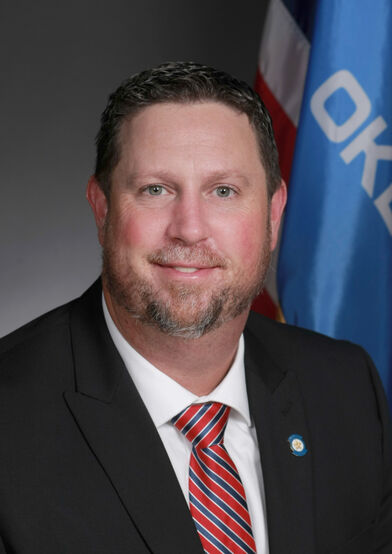
Sen. David Bullard
Sponsored bills
Maddy summaryHB 1169 repeals multiple existing Oklahoma statutes (including Sections 1-729a through 1-757.16) that previously regulated abortion-inducing drugs. The bill removes these legal provisions from state law, effectively eliminating the specific restrictions or requirements related to such drugs that were codified in those sections. It includes an emergency clause, meaning it would take effect immediately upon approval without waiting for the typical legislative delay. This is a procedural repeal bill, not a new policy, so it directly affects the legal framework governing abortion drugs but does not create new restrictions or allowances.
Maddy summarySB 172 allows oversight boards for Oklahoma's major public employee retirement systems (including firefighters, police, teachers, and state employees) to approve cost-of-living adjustments (COLAs) under specific circumstances. The bill amends statutes governing these systems to transfer authority for COLA decisions from state legislators to the respective boards. Key provisions require boards to follow defined processes when approving adjustments but do not specify the exact circumstances triggering this authority. The change aims to streamline COLA decisions within each system's governance structure while maintaining board oversight. This affects all participants in the covered retirement systems by altering who makes COLA decisions.
Maddy summarySB 116 amends Oklahoma's initiative and referendum laws to clarify signature requirements for citizen-led petitions. It sets a 90-day deadline for collecting signatures after a petition is approved, limits signatures from any single county to 5% of the total required, and updates procedures for filing petitions with the Secretary of State. These changes directly affect citizens or groups circulating petitions to propose new laws (initiatives) or challenge existing ones (referendums). The bill focuses on procedural clarity for petition validation, requiring signatures to include voter registration details and specifying the Secretary of State's role in reviewing submissions.
Maddy summarySB 381 modifies Oklahoma law to restore firearm rights for certain nonviolent convicted felons who have completed their sentences and maintained a 5-year clean record (no new misdemeanor or felony charges). It specifically allows these individuals to possess non-semi-automatic firearms and apply for handgun carry permits under the Oklahoma Self-Defense Act. However, rights are denied for those convicted of offenses like domestic abuse, sexual assault, child endangerment, or stalking. The bill maintains existing prohibitions for felons under supervision, delinquents, and undocumented immigrants possessing firearms.
Maddy summarySB 116 modifies Oklahoma's initiative and referendum signature requirements. It sets a clear 90-day deadline for gathering signatures after protests or appeals are resolved (previously unclear), requires each signature to include the signer's birth date and voter-registered address, and extends the 5% county signature limit to both initiative and referendum petitions. The bill updates statutory language to clarify these procedural steps without changing the core process for citizen-led ballot measures. These changes directly affect petition supporters seeking to place initiatives or referendums on the ballot.
Maddy summarySB 381 modifies Oklahoma's laws regarding firearm possession by convicted felons. It restores the right to possess, carry, or transport non-semi-automatic firearms for nonviolent felons who have completed their sentence and had no new misdemeanor or felony convictions for five years, provided they haven't been convicted of specific offenses like domestic abuse, sexual assault, or stalking. The bill also restores firearm rights for pardoned nonviolent felons and prohibits firearm possession by individuals on probation for any felony. Certain offenses listed in subsection C(3) permanently disqualify individuals from having these rights restored. The law does not affect restrictions on felons currently serving prison terms or those with pending charges.
Maddy summaryHB 1008 prohibits most abortions in Oklahoma except when necessary to preserve the life of a pregnant woman facing a medical emergency involving physical disorder, illness, or injury directly related to pregnancy. It defines "medical emergency" as conditions where abortion is required to save the woman's life, and imposes penalties of up to $100,000 or 10 years in prison for violations. The bill explicitly states it does not criminalize women for pregnancy outcomes and preserves access to contraceptives when used before pregnancy detection. The law takes immediate effect as an emergency measure upon passage.
Maddy summaryHB 1008 prohibits most abortions in Oklahoma, allowing exceptions only when a medical emergency - defined as a condition unremediable by delivery that requires abortion to preserve the pregnant woman’s life - is present. The bill amends Oklahoma law to criminalize performing or attempting an abortion outside this exception, with penalties including fines up to $100,000 or up to 10 years in prison. It explicitly states the law does not criminalize pregnant individuals for the death of their unborn child or ban contraception administered before pregnancy detection. This legislation directly affects healthcare providers performing abortions and anyone involved in abortion services within Oklahoma.
Maddy summaryThis bill modifies Oklahoma's Teachers' Retirement System rules to allow certain retired classroom teachers to return to public school employment without earnings restrictions. Specifically, it permits retired teachers who retired as active classroom teachers by July 1, 2017 or July 1, 2021, have received benefits for at least one year, and have not worked for public schools during that year to return to classroom teaching in common or career tech districts. For three years after retirement, these teachers can earn full salary without deductions from their retirement benefits. The change applies only to those meeting the strict eligibility criteria and does not affect other retired teachers or non-classroom roles.