

Maddy summarySB 649 reinstates education-based salary supplements for North Carolina public school teachers and instructional support personnel (ISP) who hold master's or doctoral degrees. It directs the State Board of Education to use the 2013 policy (TCP-A-006) to determine eligibility for the "M" salary schedule and degree-related pay supplements. The bill appropriates $8 million in recurring state funds for the 2025-2026 fiscal year to cover these reinstated supplements. This policy change directly affects educators with advanced degrees by restoring previously eliminated pay incentives tied to their academic credentials.
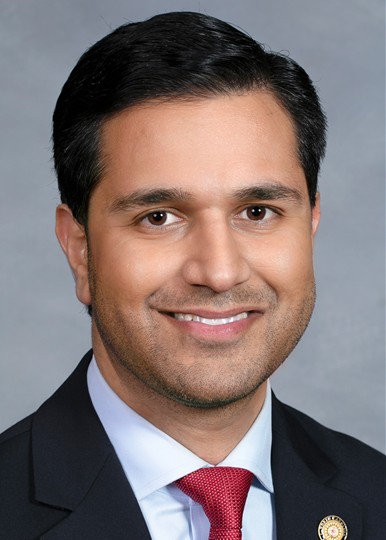
Sen. Mujtaba Mohammed
Sponsored bills
Maddy summaryThis North Carolina bill creates a civil remedy for victims of domestic violence, their children, and former foster youth who incurred debt through coercion (e.g., threats, fraud, or intimidation). It allows these individuals to submit documentation like police reports, court orders, or certified statements from domestic violence professionals to stop debt collection and repair credit reports. Debt collectors must halt collection efforts upon receiving valid documentation, but the law does not cover secured debts or require refunds for money already paid. The bill explicitly states it does not replace existing legal rights or defenses.
Maddy summarySB 660 increases the property tax exemption for disabled veterans in North Carolina from $45,000 to $75,000 of home value, effective for taxes starting July 2025. It also allows 100% disabled veterans to exclude their primary vehicle from property tax and creates a prequalification process to determine eligibility before purchasing a home. Local governments will be reimbursed by the state for 50% of revenue losses from these exemptions, capped at 1% of their general fund revenue. The bill directly affects North Carolina residents who are 100% disabled veterans or surviving spouses of such veterans.
Maddy summarySB 661 directs North Carolina's Department of Health and Human Services (DHHS) to study health issues affecting military women, particularly during pregnancy and postpartum. The study will examine coordinating maternity care between military and civilian facilities, improving access to housing and job resources, addressing mental health risks, expanding childbirth support services, and reducing racial disparities in maternal health outcomes. DHHS must consult with military veterans affairs and gather input from currently or formerly serving military mothers. The bill appropriates $100,000 for this study and requires a final report to legislative committees by April 2026. This bill does not enact new programs but mandates a review to inform future policy.
Maddy summarySB 707 modifies North Carolina retirement rules for law enforcement officers (LEOs) in the Teachers' and State Employees' Retirement System or Local Governmental Employees' Retirement System. It allows LEOs to retire with full, unreduced benefits after 25 years of creditable service, regardless of age (replacing previous age/service requirements). The bill specifies that LEOs retiring on or after January 1, 2026, will receive a benefit calculated as 1.82% of their average final salary multiplied by their years of service, without age-based reductions. This change directly affects current and future LEOs who meet the 25-year service threshold, providing them equal retirement benefits to non-LEO members who reach 30 years of service.
Maddy summarySB 708, the "Working Families Act," directly affects low- and middle-income North Carolina families by reducing child care costs, increasing tax credits, raising wages, and providing housing assistance. It cuts parent copayments for subsidized child care to 7% of gross income (down from 10%), reenacts a refundable child tax credit with income-based payments up to $250 per child, and raises the statewide minimum wage to $15 per hour starting September 1, 2025 - while allowing cities to set higher local rates. The bill also increases income limits for property tax relief and creates a homebuyers' program offering assistance to first-time public servant homebuyers (including teachers, firefighters, police, and EMTs). These changes aim to reduce living costs and support working families through concrete financial adjustments.
Maddy summarySB 719 creates the North Carolina Victims of Crime Assistance (NC VOCA) Fund and a competitive grant program to support victim services. It establishes a fund within the Department of Public Safety, administered by the Governor’s Crime Commission, to award grants (up to $1 million per organization annually) to public agencies or nonprofits providing direct assistance to crime victims. The grants must address victims’ emotional, physical, financial, or safety needs, with recipients required to report on fund usage and victims served. This program is funded partly by increased criminal court fees ($147.50 in district court, $154.50 in superior court), with $0.95 from each fee directed to the fund, directly benefiting victims of crime across North Carolina through eligible service providers.
Maddy summarySB 725 establishes the Foster Care and Education Council in North Carolina to improve educational outcomes for youth in foster care. The 27-member council, jointly led by the Department of Public Instruction (DPI) and Department of Health and Human Services (DHHS), includes representatives from child welfare agencies, foster care advocates, education stakeholders, and youth with lived experience. The council’s key duties include reviewing federal and state education laws, analyzing data on foster youth academic performance (including race/ethnicity breakdowns), and developing policy recommendations to address barriers like school instability, transportation access, and coordination gaps. It specifically aims to ensure foster youth can stay in their school of origin and resolve disputes over educational decisions without cost barriers. The bill does not create new funding but mandates coordination between existing state agencies to implement these recommendations.
Maddy summarySB 726 allocates $9.5 million in one-time Highway Fund money for the planning and design of the Westmoreland Road Interchange at Interstate 77 Exit 27 in Cornelius. This bill directly affects residents and commuters in Cornelius by funding the initial design phase of the interchange project. The funds are designated for the 2025-2026 fiscal year and become effective July 1, 2025. The bill does not cover construction costs, only the planning and design work for the interchange.
Maddy summarySB 715 appropriates $500,000 to create a grant program for North Carolina community colleges. The program provides up to $20,000 per college to upgrade equipment and facilities needed to produce student ID cards that meet state voting requirements (G.S. 163-166.16). It directly affects community colleges that lack voter-acceptable student IDs, removing financial barriers to providing these cards. Colleges must submit plans for fund use by August 15, 2025, and the State Board of Elections must approve the IDs before they can be used for voting.