

Maddy summarySB 680 creates the North Carolina Child Care Finance Agency to address the state's childcare shortage through targeted financing. The agency will provide loans and bonds for constructing or renovating childcare facilities, prioritizing small providers (under 10 facilities), high-quality licensed centers, and projects in high-need areas. It specifically supports faith-based organizations, businesses offering on-site childcare for employees, and encourages full-day care and workforce development partnerships. The bill directly affects childcare providers, employers, and families by expanding affordable, accessible childcare options across North Carolina.
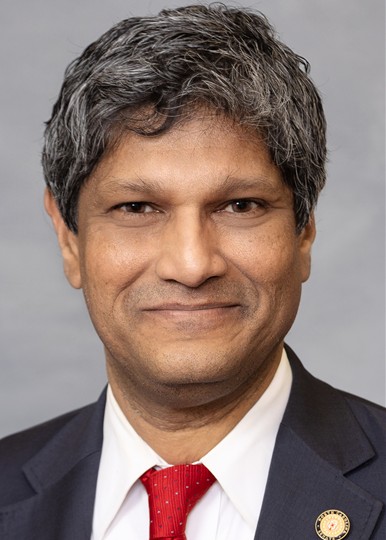
Sen. Jay Chaudhuri
Sponsored bills
Maddy summarySB 708, the "Working Families Act," directly affects low- and middle-income North Carolina families by reducing child care costs, increasing tax credits, raising wages, and providing housing assistance. It cuts parent copayments for subsidized child care to 7% of gross income (down from 10%), reenacts a refundable child tax credit with income-based payments up to $250 per child, and raises the statewide minimum wage to $15 per hour starting September 1, 2025 - while allowing cities to set higher local rates. The bill also increases income limits for property tax relief and creates a homebuyers' program offering assistance to first-time public servant homebuyers (including teachers, firefighters, police, and EMTs). These changes aim to reduce living costs and support working families through concrete financial adjustments.
Maddy summarySB 744, the Voucher School Accountability Act, requires nonpublic schools receiving North Carolina Opportunity Scholarship funds to meet new reporting and accountability standards. It mandates annual transparency on tuition fees (capped at 5% annual increases), staff background checks, standardized testing (including ACT for 11th graders), and financial audits for schools receiving over $250,000 in scholarship funds. Schools must also publish student progress data, maintain physical facilities for in-person instruction, and comply with state academic standards. These requirements directly affect participating nonpublic schools and the families using scholarship funds. The bill focuses on enforcing accountability through concrete reporting mechanisms, not changing scholarship eligibility.
Maddy summarySB 752 allows North Carolina schools to use epinephrine nasal spray in addition to auto-injectors for treating severe allergic reactions (anaphylaxis). The bill requires schools to stock at least two emergency epinephrine products (including nasal spray) in secure but accessible locations, train staff to recognize symptoms and administer treatment, and develop emergency action plans. It applies to all public, charter, and regional schools, directly affecting students with severe allergies and school staff trained to respond to emergencies. The policy change takes effect for the 2025-2026 school year.
Maddy summarySB 732 requires North Carolina's Department of Commerce to measure economic well-being using specific, publicly reported metrics like poverty rates, living wage job access, housing/childcare costs relative to income, and concentrated poverty areas. The bill appropriates $200,000 annually (2025-2027) to conduct bi-annual analyses and submit reports to the General Assembly by January 31 each odd-numbered year. These reports must include data on hardship, cost burdens, education costs, and neighborhood conditions across all counties. The law directly affects how state policymakers assess economic progress, shifting focus from market metrics alone to people's lived experiences. It does not change existing laws but establishes a framework for measuring policy impacts on residents' economic security.
Maddy summarySB 745 allows North Carolina child care centers operating under voluntary enhanced requirements to increase maximum group sizes for infants (0-12 months) from 10 to 12 children and for toddlers (12-24 months) from 12 to 15 children, while maintaining stricter staff-to-child ratios (e.g., 1:4 for infants). It also aligns nap time supervision rules for one-year-olds with existing rules for two-year-olds, requiring visible supervision by a staff member present in the room. The bill directly affects licensed child care centers seeking flexibility under voluntary enhanced licensing standards. These changes aim to provide capacity options without reducing staff ratios, effective upon enactment.
Maddy summarySB 659, the "Investing in North Carolina Act," raises salaries for public school teachers and state employees for the 2025-2026 fiscal year. It establishes a new monthly salary schedule for teachers based on experience (ranging from $4,600 for 0 years to $6,370 for 29+ years), adds specific supplements for certified teachers, nurses, counselors, and specialists, and provides cost-of-living increases for retirees. The bill also expands the Wage$ program statewide and creates a tax credit for qualifying employers equal to 5% of wages paid or $10,000, whichever is lower. Directly affecting teachers, state employees, community college staff, UNC employees, retirees, and participating employers, it focuses on concrete pay adjustments through funding appropriations.
Maddy summarySB 606 requires North Carolina state services to be accessible in 25 additional languages, including Spanish, Mandarin, Arabic, and Cherokee, by mandating translations for driver's license materials, tests, and traffic signs. It also mandates that public schools translate parent documents - such as enrollment forms, consent forms, and disciplinary notices - into those 25 languages. Additionally, the bill encourages schools to grant excused absences for religious observances and allocates $1 million to cover substitute teacher costs when educators take leave for such holidays. These provisions aim to improve access to essential services and education for non-English speaking residents while respecting cultural traditions.
Maddy summarySB 404 (the RIC FLAIR Act) appropriates $500,000 from the state General Fund to study the feasibility of creating a professional wrestling museum in North Carolina. The Department of Natural and Cultural Resources must complete this study by July 1, 2026, and report findings to the Joint Legislative Oversight Committee. This bill does not create the museum but authorizes a preliminary study, directly affecting state funding and the department responsible for the research.
Maddy summarySB 465 requires North Carolina's Department of Administration to maintain detailed inventories of all state-owned land and buildings, including location, condition, costs, and vacancy status. It mandates the department to develop a comprehensive five-year facilities plan identifying needed space, analyzing current property utilization, and recommending disposal or consolidation of underused properties. The bill also establishes space planning standards for state agencies based on federal benchmarks, requiring annual audits to ensure compliance with utilization metrics. This directly affects all state agencies that own or lease buildings, aiming to reduce costs by optimizing existing property use rather than acquiring new facilities. The law focuses on administrative procedures for managing state real estate, not new funding or services.