

Maddy summarySB 393 requires North Carolina public schools to include instruction on the costs of gambling - including sports betting - and gambling addiction in all required personal financial literacy courses. This policy change directly affects all K-12 students in the state, as it amends existing curriculum standards to add this specific topic. The bill mandates that schools cover these topics alongside other financial literacy elements like credit costs, mortgages, and credit scoring. The requirement will take effect for the 2025-2026 school year. This is a concrete addition to the curriculum, not a procedural change.
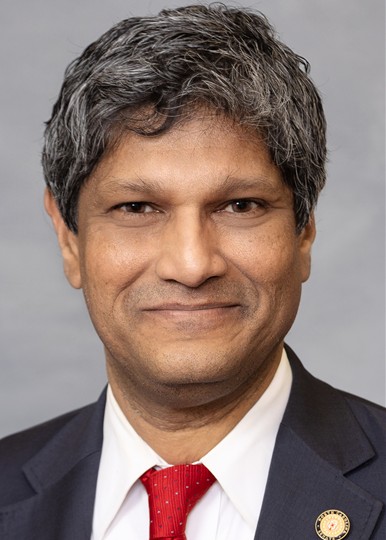
Sen. Jay Chaudhuri
Sponsored bills
Maddy summarySB 440, the "Current Operations Appropriations Act of 2025," allocates base budget funding for North Carolina's state departments, agencies, and universities for the 2025-2027 fiscal biennium. It specifies exact funding amounts for all state operations, including $12.94 billion for public instruction, $8.83 billion for health and human services, and $4.24 billion for the University of North Carolina system. The bill directs all state entities to spend within these allocated amounts, with unused funds reverting to the appropriate fund at year-end. As a routine budget measure, it does not create new policies or affect specific groups beyond funding existing state services.
Maddy summarySB 438, titled "NC Adopt ERA," is a bill to formally ratify the Equal Rights Amendment (ERA) to the U.S. Constitution. The ERA, proposed by Congress in 1972, was ratified by 38 states (including Virginia in 2020), meeting the constitutional requirement for three-fourths of states. This bill directs North Carolina to send a certified copy of its ratification to the U.S. Archivist and Congress, completing the state's role in the federal amendment process. If enacted, North Carolina would join the 38 states that have ratified the ERA, which the bill states is now the 28th Amendment to the U.S. Constitution.
Maddy summarySB 409 bans the sale, possession, and transfer of "ghost guns" (unserialized firearms like homemade kits) and "undetectable firearms" (e.g., plastic guns or those avoiding metal detectors). It directly affects most North Carolinians, including gun owners and sellers, with exceptions only for federally licensed firearm manufacturers under ATF rules. The law imposes Class I felony penalties for violations and takes effect December 1, 2025. Key provisions define prohibited items based on federal standards and prohibit all non-licensed activity involving them.
Maddy summarySB 413, titled "Right to Use Contraception," declares that North Carolina has no legitimate interest in limiting access to contraception for pregnancy prevention. It directly affects all residents by affirming their right to use contraception without state interference, adding a new legislative declaration to the state statutes. The bill’s key mechanism is a policy statement in Chapter 90 of North Carolina’s General Statutes, explicitly stating that preventing pregnancy through contraception is protected. It does not change existing laws or create new regulations but formally codifies this policy position. The measure is currently in early committee review after its initial filing and first reading.
Maddy summarySB 412 increases North Carolina's childcare subsidy rates to the 75th percentile of typical market rates starting July 2025, with an additional 10% boost for rural counties and infant/toddler care (birth to 3 years). It allocates $123.5 million annually for 2025-2027 to fund these rate increases for childcare centers and homes. The bill also provides $8 million for a two-year pilot program in western NC regions impacted by Hurricane Helene, managed by regional councils to recruit new childcare providers and establish mentorship for sustainability. The pilot will track new childcare centers, family homes, and slots created across five designated regions, with progress reports required for oversight.
Maddy summarySB 398 bans the possession or carrying of dangerous weapons at North Carolina voting locations, within 100 feet of a polling place entrance, and while in line to vote. It directly affects voters and others near polling sites during voting hours, applying to all weapons defined under existing law (G.S. 14-277.2). The law creates a Class 1 misdemeanor penalty for violations, with an exception for law enforcement officers performing official duties. This bill aims to enhance safety at polling places by restricting weapons in specific proximity to voting areas during active voting periods.
Maddy summarySB 406 would establish a new court process in North Carolina called Extreme Risk Protection Orders (ERPOs), allowing family members, law enforcement, or health care providers to seek temporary removal of firearms from individuals deemed to pose a significant risk of self-harm or harm to others. Courts could issue emergency orders without the person present if danger is imminent, requiring immediate surrender of firearms and ammunition, with seizure ordered if compliance fails. The bill mandates specific evidence in petitions (e.g., details on firearms and safety risks), includes due process safeguards like verifying existing protection orders, and waives court costs for petitioners. It also requires annual reports to the legislature tracking ERPO usage, including petitions filed, orders issued, and denials.
Maddy summarySB 392 creates new criminal penalties for threatening or pressuring voters, election officials, or poll workers to influence voting choices or election participation. It makes it a felony to threaten someone for voting, voting for a specific candidate, registering to vote, or for election workers performing duties, and prohibits fraudulent challenges to voter eligibility. Employers cannot condition pay or employment on voting behavior, with violations carrying fines up to $100,000 or five years in prison. Convicted individuals must pay restitution fines that fund voter education programs, and election workers can seek civil damages for intimidation.
Maddy summarySB 435 restores education-based salary supplements for North Carolina teachers and instructional support personnel (ISP) that were previously eliminated. It directs the State Board of Education to use the 2013 policy (TCP-A-006) to determine eligibility for the "M" salary schedule and degree-based pay increases (e.g., for master's or doctoral degrees). The bill appropriates $8 million from the General Fund for the 2025-2026 fiscal year to fund these reinstated supplements. The law takes effect on July 1, 2025, directly affecting eligible educators' pay through revised salary calculations.