

Maddy summarySB 303 repeals North Carolina's service tax, which previously applied to certain services like repairs, maintenance, installation, and service contracts. This directly affects retailers and service providers who collected this tax on qualifying transactions. The bill removes specific tax code provisions (including those governing real property services and bundled transactions) and makes necessary adjustments to other related tax laws. The repeal would eliminate the tax obligation for businesses and customers involved in these service transactions.
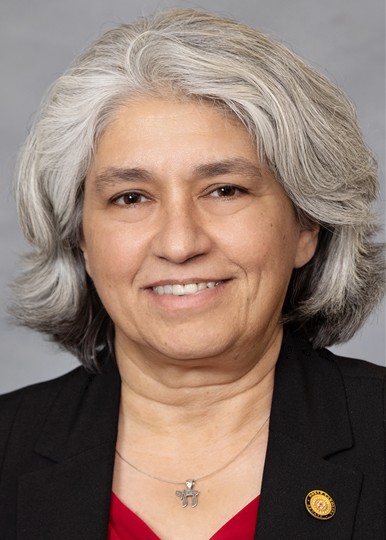
Sen. Lisa Grafstein
Sponsored bills
Maddy summarySB 297 establishes a Nursing Fellows Program at Winston-Salem State University (WSSU) to provide forgivable loans to nursing students. The program offers up to $5,000 per semester (or $2,500 per summer) for tuition, books, and fees toward a Bachelor of Science in Nursing (BSN) or Master of Science in Nursing Education (MSN) degree, contingent on recipients committing to work as nurses or nursing instructors in North Carolina. Eligibility requires WSSU nursing degree completion within 10 years, North Carolina RN licensure, and a demonstrated commitment to serve in-state, with loan forgiveness tied to employment in qualifying nursing roles after graduation.
Maddy summaryThis bill reinstates North Carolina's Earned Income Tax Credit (EITC) program, which provides a state tax credit to low-income workers who qualify for the federal EITC. It sets the state credit at 5% of the federal credit amount (down from 4.5% in 2013), making it refundable so eligible taxpayers receive cash even if they owe no state tax. The credit applies to tax years beginning January 1, 2025, and continues a program that expired after 2013. The bill does not change eligibility rules or create new benefits - it simply reenacts the prior policy structure.
Maddy summarySB 320 creates an additional retirement allowance for North Carolina state and local law enforcement officers who retire after meeting specific service and age requirements. Eligible officers with at least 30 years of service (or 55+ with 5+ years) under age 62 can choose between two calculation methods for their annual allowance: one based on their current pay rate and service, or one based on their pay rate at 30 years of service. The allowance, paid monthly from state funds, stops upon the officer’s death, reaching age 62 (for the first method), or meeting a time-based condition (for the second method). This change supplements retirement income without affecting other retirement benefits or salary increases.
Maddy summarySB 282 aims to expand access to clubhouse model psychosocial rehabilitation programs for adults with severe mental illness in North Carolina who are Medicaid beneficiaries. It requires the Department of Health and Human Services to develop a statewide reimbursement plan by December 2025, including incentives for clubhouse accreditation, consistent payment rates across managed care organizations, and staff training. The bill also appropriates $2.5 million annually (2025-2027) from the General Fund to the North Carolina Clubhouse Coalition to support member clubhouses for program expansion, accreditation, or staff training. This directly affects Medicaid-funded clubhouses, managed care organizations, and the coalition itself. The plan must be reported to the legislature by December 2025, with implementation effective July 2025.
Maddy summarySB 294 requires greater public involvement in North Carolina's state budget process. It mandates at least one week for virtual public comments, one in-person public hearing, and three nonvoting committee meetings before key budget votes. The bill also removes confidentiality for budget-related communications between state agencies, legislators, and legislative staff, making these documents public records once the budget is enacted. These changes apply to the Current Operations Appropriations Act for fiscal years starting after the bill takes effect.
Maddy summarySB 281, the Essential Relief for Child Care Act, appropriates $50 million in nonrecurring state funds for the 2024-2025 fiscal year to continue compensation grants for child care providers. This funding directly supports licensed child care facilities across North Carolina, helping them cover operational costs and prevent closures. The bill requires the Department of Health and Human Services to maintain these grants at current 2024-2025 funding levels through the fourth quarter. It aims to address ongoing financial pressures on providers, which the bill states could lead to 20% facility closures without continued support.
Maddy summarySB 275 reduces permit requirements for small boarding kennels that serve six or more dogs or cats at a time. It directly affects kennel operators meeting this size threshold by limiting the regulatory hurdles they must navigate. The bill requires the Board of Agriculture to update its rules to reflect this change, allowing temporary rule adjustments under existing procedures. The policy change takes effect on October 1, 2025, and focuses solely on streamlining permitting for qualifying facilities.
Maddy summarySB 274 repeals North Carolina’s "crime against nature" law (G.S. 14-177) while creating a new criminal offense for bestiality (G.S. 14-363.4), defined as sexual acts between a person and an animal. The bill directly affects professional educators whose licenses could previously be revoked for "crime against nature" convictions, as it removes that offense from licensing disqualifiers but adds "bestiality" as a new grounds for automatic license revocation. It also updates legal references in statutes related to juvenile offenses and educator licensing to reflect these changes. The new bestiality law carries a Class I felony penalty. The bill takes effect December 1, 2025, for offenses committed on or after that date.
Maddy summarySB 277 appropriates $750,000 annually from the state general fund to the North Carolina Area Health Education Centers (NC AHEC) program for the 2025-2026 fiscal year. The funds aim to improve recruitment, training, and retention of medical students and healthcare professionals in rural North Carolina. Key mechanisms include requiring NC AHEC to regularly convene stakeholders to share best practices and create a public database of this shared information. The bill takes effect July 1, 2025, directly supporting rural healthcare workforce development.