

Maddy summaryHouse Bill 38, known as the Second Amendment Financial Privacy Act, prohibits payment card networks from using a specific "firearms code" to identify or track purchases made at firearms merchants in North Carolina. It also forbids these networks from knowingly maintaining records of individuals in the state who own firearms. The bill aims to prevent the separate tracking of lawful firearm and ammunition purchases and protect the financial privacy of individuals exercising their right to bear arms. Payment card networks are also prohibited from discriminating against firearms merchants based on code assignment. Violations can lead to civil penalties assessed by the Attorney General or civil lawsuits from affected merchants or individuals.
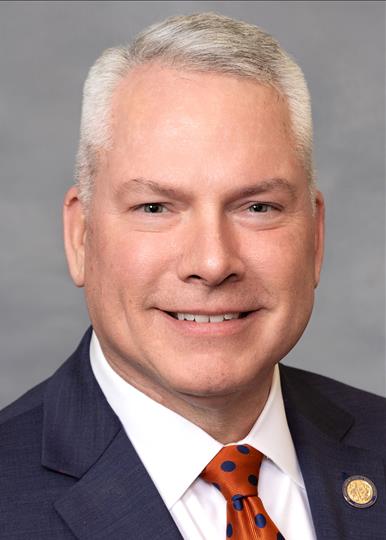
Rep. Grant Campbell
Sponsored bills
Maddy summaryHB 163 regulates Pharmacy Benefits Managers (PBMs) to ensure fair practices for pharmacies and insured individuals. The bill prohibits PBMs from charging insurers more for a prescription drug than they pay the pharmacy (spread pricing) and requires patient out-of-pocket costs to be based on the net price after any PBM concessions. It establishes minimum reimbursement standards for pharmacies, preventing PBMs from paying less than the national average drug acquisition cost plus a dispensing fee. Additionally, it clarifies that PBMs cannot restrict accredited pharmacies from dispensing specialty drugs and strengthens audit protections for pharmacies.
Maddy summaryHB 152 aims to regulate how health benefit plans in North Carolina cover Transcranial Magnetic Stimulation (TMS) services. If an insurer chooses to cover TMS, the bill requires them to cover all procedures performed by properly licensed healthcare providers, regardless of their medical specialty, as long as TMS is within their scope of practice. It prohibits insurers from penalizing providers solely based on their specialty when submitting TMS claims. However, the bill maintains that insurers retain discretion over whether to cover TMS, for which conditions, and at what reimbursement rates.
Maddy summaryHB 250 modifies the annual report filing requirements and fees for certain business entities in North Carolina. It directly affects domestic and foreign corporations and Limited Liability Companies (LLCs) where more than 50% of the ownership is held by one or more deployed members of the U.S. Armed Forces. The bill waives the annual report requirement and associated fees for these businesses while the owner is deployed. Instead, qualifying businesses must file a notice of deployment and can submit their annual report after the deployment ends (90 business days for corporations, April 15 of the following year for LLCs).
Maddy summaryHouse Bill 663, known as the Living Donor Protection Act, aims to support individuals who donate organs or bone marrow. The bill prohibits insurance companies from discriminating against individuals solely based on their status as a living organ donor in various insurance policies. It also establishes a state income tax credit of up to $5,000 for unreimbursed expenses, such as lost wages and travel, incurred by living donors. Furthermore, the act provides state employees and state-supported personnel with up to 30 days of paid leave for organ donation and seven days for bone marrow donation.
Maddy summaryHB 613, titled "The Vehicle Registration Convenience Act," allows vehicle owners in North Carolina to choose their preferred month for annual registration renewal. When initially registering a vehicle, owners can select any month within a 12-month period for their registration to expire. The initial registration fee will be prorated based on the chosen renewal month to cover the period until the elected expiration date. The bill also authorizes the Division of Motor Vehicles to send electronic renewal notices if the owner provides consent. These changes apply to vehicle registrations issued or renewed on or after January 1, 2026.
Maddy summaryHouse Bill 110 establishes the National Guard Student Loan Repayment Program in North Carolina. This program provides student loan repayment awards to active members of the North Carolina National Guard, incentivizing them to begin or complete a term of service of at least three years. Awards cannot exceed the recipient's total student loan debt or $50,000 for a three-year service term, with potential for additional funds for longer service. Recipients must sign an agreement to repay a portion of the award if they voluntarily terminate their service early. The bill appropriates over $25.5 million to a new fund for the program for the 2025-2026 fiscal year.
Maddy summaryHB 956 aims to enhance financial protections for disabled adults and North Carolina residents aged 65 or older. It requires financial institutions and electronic fund transfer entities to report to county social services if they observe a pattern of financially harmful behavior or a six-month cessation of communication from these adults. During the period from when such issues are first noted (or a cognitive impairment diagnosis is made) until the report is submitted, these entities are prohibited from charging late fees, other penalties, or interest on loans to the affected adult. This bill amends existing law to ensure late payment charges are subject to these new protections, becoming effective October 1, 2025.
Maddy summaryHB 574 establishes a Workforce Development Pilot Project in North Carolina. This bill provides funds to the Office of State Budget and Management to be allocated to the North Carolina Workforce Development Coalition (NCWDC). The NCWDC will then provide grants to eligible North Carolina-based employers, with 20 to 1,500 employees, to support employer-sponsored training programs. These grants aim to increase job creation, reduce employee turnover, improve wages, and upgrade worker skills, especially in industries with identified training gaps. Employers can receive up to 50% of eligible training costs or $2,000 per trainee, with a maximum of $40,000 annually per employer.
Maddy summaryHB 555, "Medicaid Telehealth Services," aims to ensure that certain telehealth providers can enroll as Medicaid providers in North Carolina. The bill specifies that individual health care providers licensed by the state who offer services exclusively through telemedicine are not required to maintain a physical presence in the state to be eligible for Medicaid enrollment. Similarly, medical provider groups that exclusively offer telemedicine services will not need an in-state service address to be eligible for the state's Medicaid program. This bill directly affects telehealth providers and medical groups by removing location-based requirements for participating in Medicaid.