

Maddy summaryHB 919 prohibits banks and other financial institutions from denying services or discriminating based on protected characteristics like political views, religious beliefs (unless for religious purposes), or social credit scores tied to lawful activities (e.g., firearm ownership, energy use, or environmental compliance). It bans using subjective criteria without full disclosure to customers and requires annual compliance reports under penalty of perjury. Financial institutions must also avoid discriminatory pricing based on environmental, social, or governance factors unless justified by actuarial standards. Individuals harmed by violations can pursue legal action for damages or injunctions.
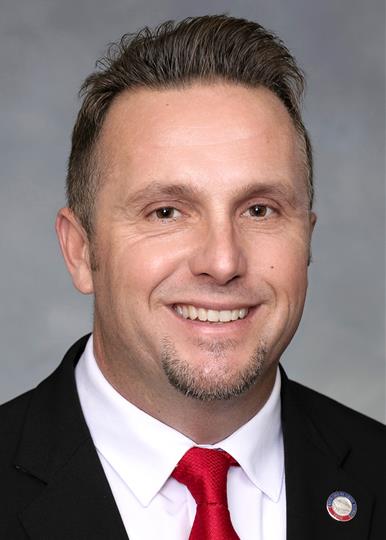
Rep. Brian Biggs
Sponsored bills
Maddy summaryThis bill allows federally licensed gun dealers in North Carolina to safely store firearms for private owners without charging a fee. It provides legal protection for these dealers against lawsuits if someone is injured or killed during the storage period, unless the dealer was negligent or acted unlawfully. The state Bureau of Investigation will create a standard form for these agreements and keep them confidential, while dealers cannot store illegally possessed guns or return weapons to prohibited individuals. The law takes effect on July 1, 2025.
Maddy summaryHB 945 requires North Carolina public schools to specify whether incidents of sexual assault, harassment, or other violence occurred on school buses when submitting reports to the State Board of Education. It increases reporting frequency from annual to biannual (at the end of each school quarter) and establishes a Class I felony penalty for school employees or board members who fail to report such incidents. The bill directly affects local school boards, administrators, and staff who must comply with these reporting requirements. The State Board will compile and publish these reports, excluding sensitive minor identifiers, starting with the 2025-2026 school year. This law aims to improve tracking of violence on school buses through standardized reporting and enforcement.
Maddy summaryHB 947 ("Every Child Reads") requires North Carolina public schools to screen all students in kindergarten through third grade, sixth grade, and ninth grade for dyslexia using state-approved tools. It mandates teacher training on dyslexia identification and evidence-based reading interventions, and requires literacy instruction in middle schools to align with the Science of Reading. The bill also creates Individual Reading Plans (IRPs) for kindergarten through third graders struggling with reading, based on assessment data, and transfers the NC Pre-K program to the Department of Public Instruction. These provisions directly affect students with dyslexia, K-3 teachers, and school districts implementing literacy programs.
Maddy summaryHB 916 strengthens North Carolina's Do Not Call and Do Not Text Registry by requiring telemarketers to remove registered numbers from their contact lists within 30 business days when a resident requests no further calls, reducing the previous timeframe from 60 days. It directly affects North Carolina residents who have registered their phone numbers and telemarketers operating in the state, including partner companies. Key provisions include clarifying that "telephone solicitation" covers text messages and automated calls, and holding companies jointly liable if they accept sales leads generated by illegal telemarketing calls. The bill updates state law to align with federal telemarketing rules and enforce stricter compliance.
Maddy summaryHB 966, the College Cost Reduction Act, prohibits all University of North Carolina (UNC) schools from requiring students to pay extra for mandatory course software (Learning Management Systems or LMS). It directly affects UNC students by banning any requirement for paid LMS access beyond existing, approved student fees. The bill mandates the UNC Board of Governors to create a policy ensuring professors or courses cannot force students to pay for LMS services - only free or fee-covered options may be required. The rule takes effect for the 2025-2026 academic year.
Maddy summaryHB 986, "Support Our Teachers," prohibits North Carolina school districts from requiring teachers to post lesson plans or objectives and bans schools from assigning work during teachers' designated lunch breaks. It also mandates that school districts compensate teachers financially for time spent leading professional development sessions for colleagues. The bill directly affects public school teachers and administrators across North Carolina, taking effect for the 2025-2026 school year. These provisions aim to reduce administrative burdens and recognize teachers' time spent in professional roles.
Maddy summaryHB 883 establishes a grant program for North Carolina school districts to cover extraordinary costs for students with disabilities, particularly for placements outside regular schools (like private special education programs or homebound settings). School districts can apply for 75% reimbursement of eligible costs - such as specialized staff salaries, materials, or private school tuition - provided these costs exceed four times the state average per-pupil expenditure for disabilities. The bill requires annual IEP reviews, mandates that districts maintain legal responsibility for students in private placements, and directs the Department of Public Instruction to report on placements and costs by March 2026. It appropriates $1 million for the 2025-2026 fiscal year to fund this program.
Maddy summaryHB 828 prohibits proposition wagers (bets on specific in-game actions like player stats or minor occurrences that don’t affect the final outcome) on college and amateur sports, effective July 1, 2025. It also bans in-person sports betting at venues hosting college events during the eight hours before and during those events. The bill defines "proposition wager" specifically to exclude such bets, while allowing other forms of legal sports wagering. It directly affects sports facilities hosting college games, bettors placing these specific wagers, and operators managing wagering platforms. The law does not restrict betting on professional sports or the final outcome of college games.
Maddy summaryThis bill requires North Carolina's Commission for Public Health to wait at least three years after a vaccine receives U.S. Food and Drug Administration (FDA) approval before adding it to the state's childhood immunization schedule. It allows exceptions only if both the North Carolina Medical Society and North Carolina Pediatric Society recommend adding a vaccine approved for less than three years. The law directly affects the Commission's authority to update vaccination requirements for school-aged children and the medical societies' role in advising on shorter-approved vaccines. It does not change existing vaccination requirements or exemptions for medical reasons.