

Maddy summaryHB 791, the Women's Safety and Protection Act, defines "biological sex" (based on physical characteristics at birth) and "gender" in North Carolina law and mandates that single/multiple occupancy restrooms, changing facilities, and sleeping quarters in state-funded facilities (including public schools, prisons, domestic violence centers, and juvenile facilities) be designated for use by one biological sex at a time. The bill requires facilities to have policies ensuring only one biological sex uses these spaces simultaneously, with exceptions for family use, maintenance, medical emergencies, or safety threats. It specifically prohibits students from sharing sleeping quarters with individuals of another biological sex in public schools unless family members or with parental permission. The law applies to all covered facilities receiving state funds, including public schools and domestic violence centers, and subjects its provisions to "intermediate scrutiny" under constitutional review.
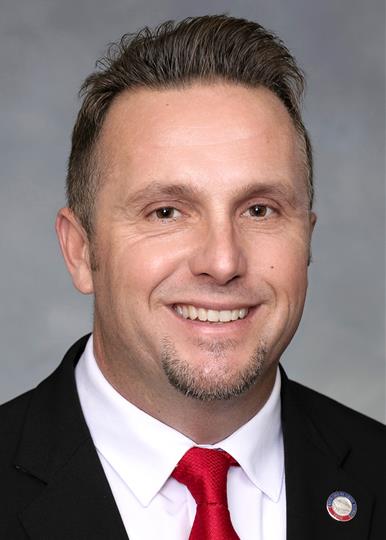
Rep. Brian Biggs
Sponsored bills
Maddy summaryHB 774 ("School Breakfast for All") mandates that all North Carolina public schools (pre-K through 12) provide free breakfast to every student, eliminating costs for families. It establishes a Farm-to-Table Initiative requiring schools to partner with local farmers for fresh, locally sourced ingredients in breakfast meals. The bill allocates $39 million in recurring state funds for the 2025-2026 fiscal year to cover program costs, while requiring annual reports on participation rates, costs, and impacts on student health and academic performance. This directly affects all public school students, school districts, and North Carolina agricultural producers.
Maddy summaryHB 776, the North Carolina Religious Freedom Restoration Act, requires state and local governments to apply strict scrutiny before restricting religious practices. It protects religious gatherings in places of worship, homes, and neighborhoods from neutral laws or regulations that incidentally burden faith, such as housing rules or emergency orders. The law defines a "burden" as any government action limiting religious exercise (including withholding benefits or imposing penalties) and mandates that such restrictions must serve a compelling government interest through the least restrictive means. It explicitly does not affect constitutional protections against government establishment of religion or alter existing housing nondiscrimination laws.
Maddy summaryHB 780 appropriates $2 million to expand the All Pro Dad program in North Carolina through Family First, Inc., funding school-based chapters, father-child engagement events, and parenting resources. It also creates the "Responsible Fatherhood NC" program under the Department of Health and Human Services, requiring a nonprofit manager to run a statewide media campaign, provide father-focused resources, and promote existing fatherhood initiatives. The bill directs grants to community organizations addressing fathers' needs - such as employment, child support, and parenting skills - with priority given to areas facing high unemployment, incarceration, or single-parent households. The program directly supports North Carolina fathers and their children, aiming to improve family well-being through increased paternal involvement.
Maddy summaryHB 761 proposes a constitutional amendment to limit North Carolina's regular legislative sessions to 90 days in odd-numbered years and 45 days in even-numbered years. This would apply only to regular sessions (not reconvened or special sessions) and directly affect the North Carolina General Assembly. The amendment requires voter approval in the November 2026 election, where voters would decide whether to adopt the session length limits. If approved, it would take effect for regular sessions starting after certification. The bill does not change current session lengths, as it is pending voter approval.
Maddy summaryHB 15 clarifies that including property in a non-financially constrained comprehensive transportation plan does not require disclosure as a "material fact" in real estate transactions. It removes the obligation for sellers, agents, or buyers to disclose this detail when selling, leasing, or exchanging property, covering transactions listed under North Carolina law (G.S. 47E-1). The bill also prohibits knowingly making false statements about such property inclusions. It directly affects real estate transactions involving properties near planned transportation projects, changing disclosure requirements effective October 1, 2025.
Maddy summaryHB 382 allows North Carolina's Wildlife Resources Commission to issue elk hunting permits through a raffle and an auction for the 2026 season. Residents can enter a $20-per-ticket raffle (max 30 tickets for $500), while a nonprofit focused on elk conservation must conduct an auction where the nonprofit keeps ≤25% of proceeds, with all other funds going to elk conservation. Permits are nontransferable, and the Commission must reserve 50% of raffle permits for North Carolina residents in future seasons. All revenue supplements existing elk management funding, and the Commission must report annually on program effectiveness to legislative committees.
Maddy summaryHB 721 appropriates $500,000 from the General Fund to fund Muddy Sneakers, Inc.'s fifth-grade science programs, which provide hands-on field instruction aligned with state science standards. It also allocates $2.75 million to St. Gerard House to support its autism treatment programs. The funding is designated for the 2025-2026 fiscal year, with the Muddy Sneakers funds being recurring and the St. Gerard House grant nonrecurring. The bill directly affects fifth-grade students in North Carolina public schools and individuals receiving autism services through St. Gerard House.
Maddy summaryThis bill would regulate hemp-derived consumable products (like edibles, vapes, and beverages) by requiring retailers to obtain permits, limiting THC content to 0.3%, and mandating age verification for all sales. It directly affects vape shops, gas stations, convenience stores, and online sellers currently selling these products to minors. The law creates new enforcement rules for the Commission, requiring proof of age (e.g., driver's license) and banning sales to anyone under 21.
Maddy summaryHB 141, the Joe John Remembrance Act, removes an additional fee for special license plates designated for fire department and rescue squad members in North Carolina. The bill amends state law to formally eliminate the "additional fee" listed for these plates (which was already set to $0 in the current fee schedule), meaning eligible firefighters and rescue personnel will pay only the standard registration fee when obtaining or renewing these special plates. This change applies to plates issued or renewed on or after July 1, 2025. The bill does not create new benefits but codifies an existing fee structure for these specific special plates.