

Maddy summaryHB 647 expands North Carolina’s agricultural tax program to include land owned by qualified conservation organizations. It allows conservation holders (nonprofits dedicated to preserving farmland/forestland) to have land taxed at its current agricultural or forest use value, rather than its full market value, when they acquire it. To qualify, land must be appraised at present-use value upon transfer to the conservation holder, and the holder must continue using it for conservation purposes while assuming tax liability for any deferred taxes. This bill directly affects conservation groups and landowners transferring property to them, aiming to support long-term land preservation through tax incentives. The law takes effect for taxes due in 2026.
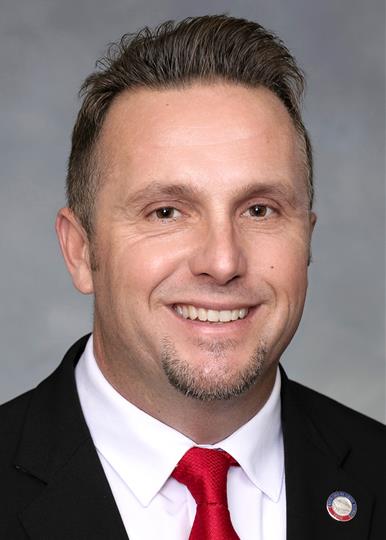
Rep. Brian Biggs
Sponsored bills
Maddy summaryHB 300 establishes a program to reimburse owners of retired first responder dogs for veterinary care. It directly affects owners of canines that served with law enforcement, fire departments, or correctional agencies in roles like narcotics detection or search and rescue, after retiring on or after July 1, 2024. The bill requires registration of the dog and owner with the Department of Public Safety, then allows reimbursement of up to $1,500 annually for covered care - including routine check-ups, vaccinations, emergencies, surgeries, and euthanasia. Owners must submit itemized vet bills within 90 days of service.
Maddy summaryHB 426 establishes the Workforce Diploma Program to help North Carolina adults aged 21+ without high school diplomas earn diplomas while gaining job skills. The program requires approved providers to offer courses combining diploma requirements with career training, including employability certifications and industry credentials. Participants receive milestone-based funding up to $7,500 per person, with payments tied to completing half-credits, certifications, or diplomas. The program mandates annual reports tracking participant outcomes like diplomas earned, credits, and workforce credentials. It appropriates $5 million for implementation starting July 2025.
Maddy summaryHR 563 adopts the permanent rules for the North Carolina House of Representatives during the 2025 Regular Session. These rules establish procedural guidelines including session hours (e.g., no Friday sessions in January and February, adjournment by 10:00 PM on Mondays and 9:00 PM on other days), quorum requirements, and the order of business for legislative proceedings.
Maddy summaryHB 609 allows licensed farms in North Carolina to sell unpasteurized milk and raw milk products directly to consumers under strict safety conditions. It requires farms to obtain a Department of Agriculture license, pass annual inspections for disease (tuberculosis/brucellosis), meet water safety standards, and undergo regular testing for bacteria and pathogens in milk. Sales can only occur at the farm of origin or a small farm stand (max 1,000 sq ft), with mandatory labeling stating "Raw milk: not pasteurized and may contain organisms injurious to your health." The bill does not permit raw milk sales in restaurants or general retail settings, and all requirements must be met before the law takes effect on January 1, 2026.
Maddy summaryThis bill's title ("Ensuring Patient Safety with Mail Order Medications") does not match its actual content. The bill, formally titled "AN ACT REVISING ABORTION-INDUCING DRUG LAWS," restricts the mailing of abortion-inducing drugs in North Carolina. It prohibits mailing such drugs to pregnant women unless a qualified physician provides in-person counseling 72 hours prior, all other informed consent requirements are met, and the drugs are FDA-approved. Violations carry $5,000 fines per offense or Class H felony charges, and the bill creates civil remedies allowing women, parents, or the Attorney General to sue for damages or injunctions. The bill is currently pending in committee (referred March 31, 2025) and would take effect December 1, 2025.
Maddy summaryHB 554 makes technical adjustments to North Carolina's tax code to align with federal rules and expand tax parity for peer-to-peer car rentals. It modifies how S corporation losses are deducted, restricts certain net operating loss deductions (like capital gains carryforwards), and updates estate/trust tax calculations. The bill specifically adds peer-to-peer car rental services to the alternate highway use tax, requiring them to pay the same tax as traditional rental companies. These changes affect individual taxpayers, S corporations, estates, trusts, and peer-to-peer car rental businesses, with most provisions effective for tax years beginning in 2025.
Maddy summaryHB 566 establishes a competitive grant program to support North Carolina's Principal Fellows Program, directly affecting school leader preparation programs and future principals. It provides forgivable scholarship loans to participants in these programs (repaid only if they don’t work in North Carolina schools) and grants to eligible entities to develop innovative principal training methods. The bill sets specific grant terms, including 2-6 year durations for loan programs and 1-year terms for innovation grants, with funding capped at $250,000 per recipient annually. Recipients must report on key metrics like program completers’ placement rates in high-need schools and their performance evaluations. The program also allocates funds for administrative costs and program monitoring, requiring public sharing of non-identifiable materials to promote best practices.
Maddy summaryHB 564 provides a 2% cost-of-living adjustment for retirees in North Carolina's Teachers' and State Employees' Retirement System, Consolidated Judicial Retirement System, and Legislative Retirement System. It increases retirement payments for retirees who retired on or before specific dates (July 1, 2024, for most systems, or January 1, 2025, for the Legislative system) and offers a prorated increase for those retiring between July 1, 2024, and June 30, 2025. The bill appropriates $106.2 million from the General Fund to fund this adjustment, effective July 1, 2025. This policy change directly affects current retirees in these systems by increasing their monthly benefits.
Maddy summaryHB 330 updates North Carolina's Controlled Substances Act by adding specific synthetic drugs and chemical structures to Schedule I, making them illegal without exception. It directly affects law enforcement, healthcare providers, and individuals using these substances, as it automatically controls new variants of fentanyl derivatives (like 4-fluorofentanyl), nitazenes, synthetic cannabinoids (including indole carboxamides), and other novel psychoactive substances based on their chemical structure - not just named compounds. Key mechanisms include defining "structurally derived" compounds (e.g., fentanyl modifications) and listing specific examples to close loopholes where manufacturers alter molecules slightly to evade existing laws. This policy change aims to address emerging drug threats by expanding the legal definition of controlled substances.