

Maddy summaryHB 134 requires manufacturers of cell-cultured, insect-based, or plant-based food products to clearly label items that use meat-related terms (like "beef" or "chicken") with specific qualifying terms (such as "cell-cultured," "plant-based," or "insect-based") in prominent, close proximity on packaging. This directly affects food companies producing alternative meat products that might otherwise confuse consumers by mimicking traditional meat names. The bill defines key terms like "identifying meat term" and "qualifying term" to ensure labels are clear and prevent misleading representations. It mandates that products using terms like "beef" or "chicken" must include these qualifiers to avoid being deemed "misbranded" under North Carolina law. The law aims to ensure transparency for consumers about the origin of these food products.
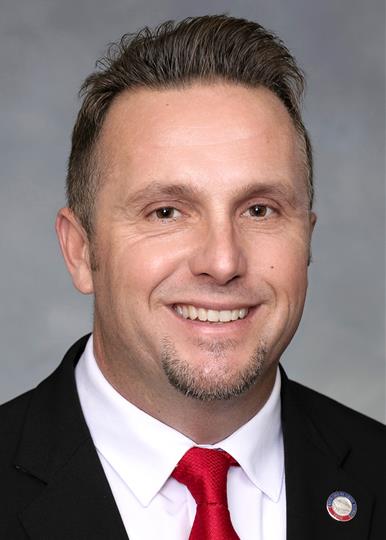
Rep. Brian Biggs
Sponsored bills
Maddy summaryHB 16 requires the North Carolina General Assembly to display the national motto "In God We Trust" directly above and behind the dais for the Speaker of the House and President of the Senate, aligning with the U.S. House of Representatives' display. The bill mandates the Legislative Services Officer to implement this, first using private gifts or donations for costs, and if none are provided within 90 days, using state funds. It becomes effective July 1, 2025. This is a procedural bill affecting legislative chamber decor, not a substantive policy change.
Maddy summaryHB 498 creates a retirement credit for North Carolina teachers who served in the military. It allows veterans to count up to four years of active duty service toward their state retirement system, provided they weren’t dishonorably discharged, served before becoming a teacher, and meet licensure requirements. The bill modifies the retirement system to include this credit, requiring employers to pay a lump sum covering the retirement system’s increased liability for the credited service. This directly affects military veterans transitioning to teaching careers in North Carolina, making their prior service count toward retirement benefits.
Maddy summaryHB 470, "The Second Amendment Protection Act," prohibits North Carolina state officials and employees from enforcing federal firearms laws within the state. It specifically bans state law enforcement, government employees, and political subdivisions from assisting in the enforcement of any federal rules, regulations, or statutes related to firearms, accessories, or ammunition. The bill states that such federal laws exceed constitutional authority under the Tenth Amendment and that North Carolina retains full power to regulate firearms under its own laws. It does not change North Carolina's existing firearm regulations but blocks state resources from being used to implement federal gun control measures. The act applies directly to all state and local government employees who might otherwise assist in federal gun law enforcement.
Maddy summaryHB 475 creates a pilot program allowing high school students aged 16 and older in Mecklenburg, Randolph, Union, and Watauga counties to obtain a state-issued special identification card at no fee. The bill requires schools and the DMV to coordinate on two designated school days each year (before and after December 31) for students to apply, with schools providing necessary information to the DMV. It also permits schools to request certified birth certificates for applications without making them public records. The pilot program runs until December 31, 2027, and does not apply to other counties or age groups.
Maddy summaryHB 47, the Disaster Recovery Act of 2025 - Part I, allocates $524 million from the Helene Fund to support recovery efforts in North Carolina counties impacted by Hurricane Helene. The bill directs funds to specific programs including home reconstruction ($120 million), agricultural crop loss assistance ($200 million), road and bridge repairs ($100 million), small business infrastructure grants ($55 million), debris removal ($20 million), fire department equipment ($10 million), and tourism promotion ($4 million). These resources directly assist residents, farmers, local governments, and businesses in designated hurricane-affected counties by addressing immediate rebuilding needs and supporting economic recovery. The bill requires programs to align with federal disaster recovery guidelines to maximize potential federal reimbursement, with reporting requirements for certain initiatives.
Maddy summaryHB 186, the "Stars and Stripes Commitment Act," requires all North Carolina public schools (including charter, regional, and laboratory schools) to schedule the daily recitation of the Pledge of Allegiance within one hour of the start of the instructional day. It also mandates that schools display U.S. and North Carolina flags in classrooms when available and provide age-appropriate instruction about the flag and pledge’s meaning. The bill applies to all school governing bodies and state education board meetings, requiring the pledge to open each meeting. Crucially, it explicitly states the policy does not compel anyone to stand, salute, or recite the pledge. The law takes effect for the 2025-2026 school year.
Maddy summaryHB 449 increases penalties for computer solicitation of minors, making second offenses or those involving actual meetings Class D felonies (up from Class H). It requires sex offender registration petitions to be filed with courts and placed on criminal dockets for timely review. The bill also creates new offenses: "habitual indecent exposure" (Class F felony for two prior convictions) and "aggravated habitual indecent exposure" (Class E felony), both mandating sex offender registration. These changes directly affect individuals convicted of repeated indecent exposure or online solicitation of minors in North Carolina.
Maddy summaryHB 430 would raise North Carolina's legal sales age for all tobacco and nicotine products (including e-cigarettes and vaping devices) to 21. It requires retailers to obtain a tobacco sales permit and verify customers' ages using acceptable ID. The bill directly affects tobacco retailers (who must get permits) and youth under 21 (who would be barred from purchasing these products). Key provisions include defining "vapor products" and establishing penalties for violations, such as fines up to $1,000 for repeat offenses.
Maddy summaryHB 28, the "Gun Violence Prevention Act," creates a new criminal offense for individuals convicted of a felony who possess a firearm or "weapon of mass death and destruction" (as defined in state law) during the commission or attempt of another felony. It imposes stricter penalties: a Class C felony if the weapon is discharged, Class D for brandishing (displaying the weapon), and Class F for other violations. This law applies specifically to convicted felons who already face restrictions on firearm possession, treating this additional offense as separate from the underlying felony. The bill takes effect December 1, 2025, for offenses committed on or after that date.