

Maddy summaryHB 348 extends the period for carrying forward deferred property taxes on agricultural, horticultural, and forest land from three to six years. It creates local grant programs for counties and cities, using the excess tax funds generated by this change, to provide financial support to qualifying farmers for farm sustainability. The bill also requires cities to obtain county commission approval before annexing land classified under present-use value taxation. These provisions directly affect farmers who qualify for present-use value property taxation and local governments managing tax funds and annexation decisions.
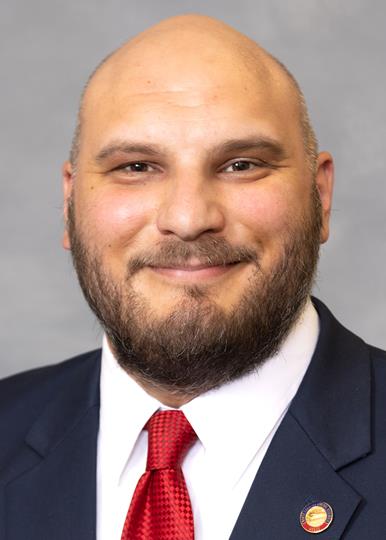
Rep. Cody Huneycutt
Sponsored bills
Maddy summaryHB 480 creates a new pathway for doctors, physician assistants, and anesthesiologist assistants to obtain North Carolina medical licenses by transferring licenses from other states ("licensure by endorsement"). To qualify, applicants must have held an active license in another U.S. jurisdiction for at least five years (with two years of practice post-residency for doctors), have a verified full-time job offer in North Carolina, maintain good standing with no recent disciplinary actions, and meet practice hour requirements. The bill increases application fees for endorsement (e.g., $825 for physicians vs. $400 for standard licensure) and requires additional documentation within 180 days to keep the license active. This directly affects out-of-state medical professionals seeking to practice in North Carolina without retaking exams.
Maddy summaryThis resolution (HR 777) expresses the North Carolina House of Representatives' support for the longstanding friendship and economic ties between North Carolina and France. It highlights historical connections (like French Huguenot settlements and General Lafayette's role), notes France as a major investor in NC ($429M since 2013) and employer (15,500 jobs), and urges closer U.S.-France trade cooperation. The resolution is purely symbolic, with no new policies or funding, and serves to affirm existing bilateral relations through ceremonial recognition.
Maddy summaryHouse Bill 859 proposes to prohibit counties and cities in North Carolina from establishing or enforcing guaranteed income programs. This directly affects local governments by restricting their ability to implement certain types of financial aid programs for their residents. The bill defines a "guaranteed income program" as one that issues unconditional cash payments to individuals on a regular basis for any purpose. However, it clarifies that programs requiring recipients to seek reemployment, perform work, or attend training are not included in this prohibition. This restriction would apply unless such programs are specifically authorized by other general or local laws.
Maddy summaryHouse Joint Resolution 379 is an application from the State of North Carolina to the U.S. Congress. It requests that Congress call a "convention of the states" as outlined in Article V of the U.S. Constitution. The purpose of this convention would be to propose new amendments to the Constitution. These amendments would focus on imposing fiscal restraints on the federal government, limiting its power, and setting term limits for federal officials and members of Congress. This application is considered ongoing until two-thirds of the states submit similar requests.
Maddy summaryHouse Bill 489 establishes a minimum reimbursement rate for emergency ambulance transportation services provided by out-of-network providers under health benefit plans. It mandates that insurers pay these out-of-network ambulance providers directly and sets a cap on the cost-sharing amounts that insured individuals must pay for these services. The minimum reimbursement rate is determined by local government rates, or if none, by comparing 400% of the Medicare rate to the provider's billed charges. This bill affects individuals needing emergency ambulance services, health insurers, and ambulance service providers, with an effective date of October 1, 2025, for new or renewed insurance contracts.
Maddy summaryHB 572 authorizes the Department of Military and Veterans Affairs to establish a statewide pilot program providing Electroencephalogram combined Transcranial Magnetic Stimulation (eTMS) treatment. This program is for veterans, first responders, and their immediate family members experiencing conditions such as substance use disorders, mental illness, sleep disorders, traumatic brain injuries, and PTSD. The Department will select a provider to create a network for in-person and off-site care, aiming for statewide access. Participants in the program will also receive neurophysiological monitoring, counseling, wellness programming, and access to a peer-to-peer support network. The selected provider must collect and report treatment outcomes and expenditures to the Department and legislative committees by September 15, 2026.
Maddy summaryThis bill, HB 519, revises laws regarding when minors can consent to medical treatment and parental access to their children's medical records. It restricts the medical services a minor can consent to on their own to primarily pregnancy-related care, removing their ability to consent for venereal diseases, substance abuse, or emotional disturbance treatment. The bill also requires written parental consent for minors to receive vaccines authorized for emergency use but not yet fully FDA approved. Additionally, it grants parents the right to access all their minor child's medical records, including those for care the minor could consent to, with exceptions for suspected abuse or neglect, court orders, or active law enforcement investigations.
Maddy summaryHB 121 provides local boards of education with additional flexibility in adopting their school calendars. It removes the current state-mandated earliest opening date for students (the Monday closest to August 26) and the latest closing date (the Friday closest to June 11). This change allows local boards to determine the specific opening and closing dates for public schools under their authority. The bill directly affects public schools and students in North Carolina and would apply starting with the 2025-2026 school year.
Maddy summaryHB 297, titled "Breast Cancer Prevention Imaging Parity," aims to ensure equal health insurance coverage for different types of breast cancer imaging. The bill mandates that health benefit plans apply the same cost-sharing requirements (like deductibles and copayments) for diagnostic and supplemental breast examinations, such as MRIs and ultrasounds, as they do for routine screening mammograms. This ensures individuals needing these additional medically necessary tests do not face higher out-of-pocket costs compared to standard screenings. It also maintains existing coverage for cervical cancer screenings and includes provisions for high-deductible health plans.