

Maddy summaryThis bill, known as the Curriculum Honesty, Compliance, and Child Safety Act, establishes new rules for North Carolina public schools regarding parental rights and curriculum content. It requires schools to obtain parental consent before changing a student's name or gender designation in records and mandates that parents be notified before their child receives counseling related to sexuality or gender identity. Additionally, the legislation prohibits any instruction on gender identity or sexual activity in grades kindergarten through fourth grade, with exceptions only for answering student-initiated questions. The bill also creates mechanisms for enforcement, allowing parents to sue schools for violations and authorizing state auditors to investigate noncompliance.
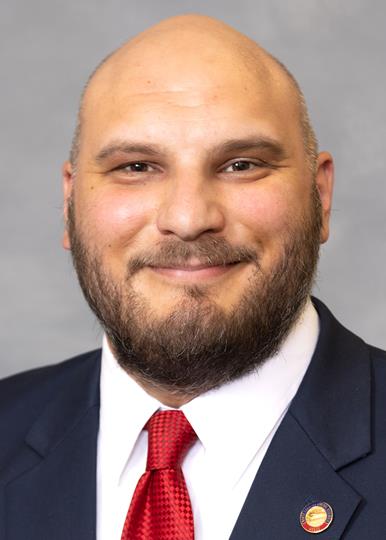
Rep. Cody Huneycutt
Sponsored bills
Maddy summaryHB 434, titled "Lower Healthcare Costs," is a procedural bill focused on updating definitions related to health insurance utilization review in North Carolina. It rewrites statutory definitions (e.g., "medical necessity," "clinical peer," "closely related service") within existing insurance regulations but does not introduce new cost-saving mechanisms or policy changes. The bill directly affects insurers, healthcare providers, and covered individuals by standardizing terminology used in prior authorization processes. As a definition-only update, it has no concrete policy impact on healthcare costs or patient access, and the title does not align with its actual scope.
Maddy summaryHB 491 prepares North Carolina's Medicaid program to implement work requirements if authorized by the federal Centers for Medicare and Medicaid Services (CMS). It requires the state's Division of Health Benefits to negotiate with CMS, notify oversight committees within 30 days of starting talks, and submit detailed reports after CMS approves any work requirements plan. The bill does not enact work requirements itself but establishes procedures for future implementation, including timelines for reporting funding needs. This would directly affect current Medicaid recipients if CMS approves work requirements, though the bill is procedural and conditional on federal approval. The legislation is currently in committee review and has not yet become law.
Maddy summaryHB 402 requires North Carolina state agencies to assess the financial impact of proposed permanent rules. If a rule would cost affected individuals or businesses $20 million or more over five years, it must be approved by the General Assembly before taking effect. For rules with a $1 million or more annual cost impact, agencies must prepare a fiscal note for review by the Office of State Budget and Management. The bill also mandates a two-thirds vote by agency boards to adopt rules exceeding the $1 million cost threshold. This directly affects state agencies creating regulations and the businesses or residents who would bear the costs of those rules.
Maddy summaryHB 318 requires North Carolina county jails and detention facilities to check the immigration status of individuals charged with specific offenses (including certain felonies, misdemeanors, and impaired driving) and to notify U.S. Immigration and Customs Enforcement (ICE) if a detainer is issued. If ICE issues a detainer, facilities must hold the person for up to 48 hours (or until ICE takes custody) and notify ICE 2 hours before the person would otherwise be released. For pretrial defendants facing similar charges, the bill mandates a two-hour hold to allow ICE to issue a detainer; if none is received, the defendant must be released. The law also shields state officials from liability when following these procedures.
Maddy summaryHB 23 transfers 11 acres of state-owned land in Pender County to the Town of Burgaw for $1, with a reversion clause if the land is no longer used for public purposes. It designates the South Fork Passage Trail (a 60-mile hiking and paddling route across Catawba, Lincoln, and Gaston Counties) as part of North Carolina's State Parks System, authorizing the Department of Natural and Cultural Resources to manage it without requiring new appropriations for land acquisition. The bill also codifies the Lake Norman Marine Commission into state law and authorizes the state to support the Gullah Geechee Heritage Trail in Brunswick County. These provisions directly affect local governments (Burgaw, trail jurisdictions), state land management, and recreational planning.
Maddy summaryHB 568 modifies North Carolina's labor laws primarily to streamline safety inspections and administrative processes. It restricts subpoenas against Department of Labor staff during safety investigations (except in enforcement cases or with written consent), limits public hearings for adopting federal safety standards identical to federal rules, and requires medical examiners to share workplace injury reports with the Labor Commissioner within 30 days. The bill also clarifies that safety inspection documents remain admissible in court without witness testimony unless reliability is in question. These changes affect the Department of Labor, employers, and workers' safety investigators by altering how evidence is handled and shared in workplace safety cases.
Maddy summaryHB 697 establishes North Carolina's first licensure requirements for genetic counselors. The bill creates a 5-member Genetic Counselors Licensure Board (with 3 licensed counselors, 1 physician, and 1 public member) to regulate the profession. Key provisions include defining "genetic counseling," setting standards for licensure (requiring ABGC certification or equivalent), establishing temporary licenses for interns, and granting the Board authority to issue, deny, suspend, or revoke licenses. This directly affects genetic counselors practicing in North Carolina, requiring them to obtain a license to legally provide services. The bill does not change healthcare access or funding but sets professional standards for this specific healthcare role.
Maddy summaryHB 612, the "Fostering Care in NC Act," updates North Carolina's laws governing child abuse, neglect, and dependency cases. It expands the definition of "abused juveniles" to include specific offenses like sexual crimes, human trafficking, and certain violent acts, affecting how cases are classified. The bill requires county social services directors to use either a family-centered assessment or a formal investigation when reviewing reports, and to collect military affiliation details of the juvenile's caregiver. It also clarifies that court jurisdiction over juveniles continues until age 18, emancipation, or death. These changes standardize responses to child welfare reports and improve information gathering for safety decisions.
Maddy summaryHB 79, "North Carolina Work and Save," creates a voluntary retirement savings program for North Carolina workers without access to employer-sponsored plans. It allows covered employers (small businesses not already offering tax-qualified retirement plans) to set up payroll deduction IRAs (traditional or Roth) for employees, enabling automatic retirement savings. The program is administered by a 12-member Board under the Department of Commerce, with funds held in a trust managed by private entities. It directly affects approximately 1.7 million North Carolina workers in small businesses, focusing on moderate- and lower-income households to improve retirement security. Participation is voluntary for both employers and employees, with no state funding required for employer participation.