

Maddy summaryThis resolution (HR 777) expresses the North Carolina House of Representatives' support for the longstanding friendship and economic ties between North Carolina and France. It highlights historical connections (like French Huguenot settlements and General Lafayette's role), notes France as a major investor in NC ($429M since 2013) and employer (15,500 jobs), and urges closer U.S.-France trade cooperation. The resolution is purely symbolic, with no new policies or funding, and serves to affirm existing bilateral relations through ceremonial recognition.
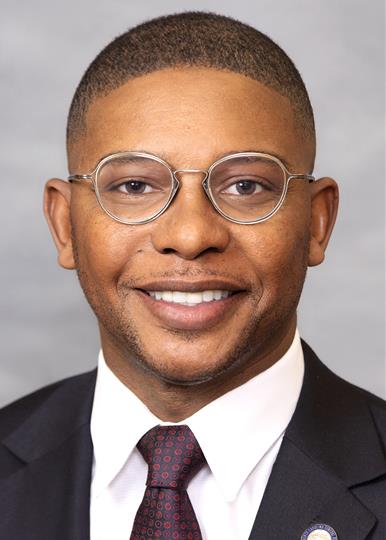
Rep. Mike Colvin
Sponsored bills
Maddy summaryHB 569 requires PFAS manufacturers (those who produce PFAS compounds like GenX) to pay public water systems for cleaning up PFAS contamination in drinking water when levels exceed EPA safety limits. It allows the Environmental Quality Secretary to order polluters to cover actual cleanup costs, including technology to reduce PFAS levels, and applies retroactively to expenses since 2017. The bill appropriates $300,000 for implementation and mandates annual reports on fund use, with water systems refunding ratepayers when manufacturers cover costs. This directly affects water systems burdened by PFAS cleanup, PFAS manufacturers deemed responsible, and ratepayers who may see reduced future water rates.
Maddy summaryHB 485 requires North Carolina's Medicaid agency to request federal approval to extend Medicaid coverage for personal care services to adults living in licensed adult care homes who earn more than the current State-County Special Assistance income limit but stay below 180-200% of the federal poverty level. The bill specifically targets individuals who would qualify for lower-income Medicaid assistance if not for their higher earnings. Before implementing this coverage, the agency must submit a CMS request meeting three conditions: covering the specified income group, ensuring cost savings offset new expenses, and complying with legal requirements. This bill does not immediately change coverage - it only authorizes a federal request, pending CMS approval.
Maddy summaryThis bill designates May 17th of each year as "Lafayette Day" in the State of North Carolina. It amends the General Statutes to officially recognize this day in honor of Marquis de Lafayette's contributions to American independence and his visit to North Carolina.
Maddy summaryThis bill, titled Reagan's Law, aims to improve access to prosthetic and orthotic devices for North Carolinians with limb loss or limb difference by requiring most health benefit plans to cover these devices and related care. Key provisions mandate that plans cover all materials, instruction, and repairs for prosthetics and orthotics, allow for multiple devices based on medical needs, and prohibit denying claims for these devices that would otherwise be covered for non-disabled individuals seeking similar medical treatment. The legislation also requires insurers to provide coverage for device replacements when medically necessary due to changes in the insured's condition or device damage, without limiting coverage based on the device's age or useful lifetime. Additionally, the bill repeals state requirements for health plans to cover emergency care that duplicates federal law, aligning state regulations with federal standards.
Maddy summaryHB 572 authorizes the Department of Military and Veterans Affairs to establish a statewide pilot program providing Electroencephalogram combined Transcranial Magnetic Stimulation (eTMS) treatment. This program is for veterans, first responders, and their immediate family members experiencing conditions such as substance use disorders, mental illness, sleep disorders, traumatic brain injuries, and PTSD. The Department will select a provider to create a network for in-person and off-site care, aiming for statewide access. Participants in the program will also receive neurophysiological monitoring, counseling, wellness programming, and access to a peer-to-peer support network. The selected provider must collect and report treatment outcomes and expenditures to the Department and legislative committees by September 15, 2026.
Maddy summaryHB 414 aims to give equal credit for community college courses towards high school graduation requirements for dually enrolled students, including those in the Career and College Promise program. It directs the State Boards of Community Colleges and Education to collaborate on developing a system where one community college course grants one full high school credit in core subjects, without requiring corresponding high school end-of-course tests. Until this system is fully established, specific community college courses will temporarily satisfy certain high school credits starting in the 2025-2026 academic year. Additionally, the bill modifies high school math graduation requirements, affecting which math courses require an end-of-course test.
Maddy summaryHB 121 provides local boards of education with additional flexibility in adopting their school calendars. It removes the current state-mandated earliest opening date for students (the Monday closest to August 26) and the latest closing date (the Friday closest to June 11). This change allows local boards to determine the specific opening and closing dates for public schools under their authority. The bill directly affects public schools and students in North Carolina and would apply starting with the 2025-2026 school year.
Maddy summaryHouse Bill 520 aims to protect North Carolina citizens and businesses from deceptive telemarketing practices, particularly those involving misleading caller ID. The bill establishes that a telephone number is the property of the subscriber and prohibits telephone solicitors from misrepresenting the origin of a call or transmitting misleading caller identification information. It also prevents telephone carriers from knowingly providing subscriber numbers to entities that will violate these provisions. Individuals who receive calls in violation of the misleading caller ID rules can sue for civil damages, including an additional $10,000 fine for each knowing violation. Knowing violations of the caller ID provision are also classified as a Class H felony.
Maddy summaryHouse Bill 283 establishes the Small Business Investment Grant (SBIG) Program within the One North Carolina Fund, designed to provide financial assistance to eligible small businesses looking to establish or expand facilities in the state. The bill allocates up to $10 million from the Fund to this new account. Through the SBIG Program, competitive grants are offered to businesses meeting specific criteria, such as having 250 or fewer employees or less than $5 million in annual revenue, investing $10-$30 million, and creating new jobs with competitive wages. Grants are capped at $500,000 annually per recipient, up to $2.5 million total, over a maximum of five years. Additionally, the bill renames the "One North Carolina Small Business Account" to the "Small Business Research and Technology Account," which continues to support federal SBIR/STTR grant incentive and matching programs.