

Maddy summaryHB 1003 updates North Carolina's legal definitions related to funeral services and cremation. It clarifies terms like "alkaline hydrolysis" (a water-based process for remains), "authorizing agent," "cremated remains," and requirements for cremation containers and caskets. The bill reorganizes these definitions under a new Article 13F titled "Cremations and Alkaline Hydrolysis" to improve clarity in existing law. This affects funeral service providers, crematories, and the North Carolina Board of Funeral Service by standardizing terminology in regulations. The bill is procedural, focusing on definitional updates rather than new policy changes.
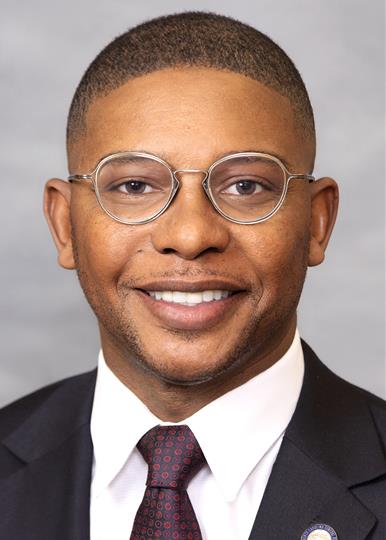
Rep. Mike Colvin
Sponsored bills
Maddy summaryHB 210 establishes minimum standards for the care and maintenance of licensed cemeteries in North Carolina, directly affecting cemetery operators and license holders. The bill requires the Cemetery Commission to set these standards - covering tasks like grass cutting, grave upkeep, and facility repairs - and allows the Commission to impose $50 civil penalties for violations, with a 10-day notice period before penalties apply. It also mandates annual reports from cemetery companies detailing all care and maintenance work performed, using forms provided by the Commission. These provisions aim to ensure consistent upkeep of cemetery properties while holding operators accountable for compliance.
Maddy summaryThis bill establishes an Interstate Medical Licensure Compact in North Carolina, allowing physicians who meet specific qualifications to obtain medical licenses in multiple participating states through a streamlined process. The law creates an Interstate Commission to oversee the compact and sets clear standards for physician eligibility, including requirements for medical school graduation, passing licensing exams, specialty certification, and a clean disciplinary record. While the compact simplifies licensing for qualified doctors, it maintains that each state retains authority to regulate medical practice within its borders and can take disciplinary action against physicians licensed through the compact. The bill does not alter existing state medical practice laws but adds an additional pathway for physicians to practice across state lines.
Maddy summaryHB 373 allows University of North Carolina (UNC) institutions to offer tuition discounts to two specific groups: military students receiving federal or North Carolina National Guard tuition assistance, and students enrolled in employer-sponsored financial support programs approved by UNC. The discount covers the difference between the military/employer funding and full tuition, without creating new free tuition programs. UNC must report annually to the legislature on the number of students receiving these discounts and their financial impact on institutions. The policy takes effect for the 2025-2026 academic year.
Maddy summaryHB 421 clarifies North Carolina's motor vehicle dealer licensing rules. It extends the license renewal grace period from 30 to 60 days after expiration, requiring the Division to issue temporary licenses during this time. The bill also aligns dealer license plate renewals with dealer license cycles (now two years) and mandates that dealer plates be replaced every three to four years. These changes directly affect all licensed motor vehicle dealers in North Carolina who must renew licenses or plates. The bill takes effect October 1, 2025.
Maddy summaryHB 79, "North Carolina Work and Save," creates a voluntary retirement savings program for North Carolina workers without access to employer-sponsored plans. It allows covered employers (small businesses not already offering tax-qualified retirement plans) to set up payroll deduction IRAs (traditional or Roth) for employees, enabling automatic retirement savings. The program is administered by a 12-member Board under the Department of Commerce, with funds held in a trust managed by private entities. It directly affects approximately 1.7 million North Carolina workers in small businesses, focusing on moderate- and lower-income households to improve retirement security. Participation is voluntary for both employers and employees, with no state funding required for employer participation.
Maddy summaryHB 348 extends the period for carrying forward deferred property taxes on agricultural, horticultural, and forest land from three to six years. It creates local grant programs for counties and cities, using the excess tax funds generated by this change, to provide financial support to qualifying farmers for farm sustainability. The bill also requires cities to obtain county commission approval before annexing land classified under present-use value taxation. These provisions directly affect farmers who qualify for present-use value property taxation and local governments managing tax funds and annexation decisions.
Maddy summaryHB 480 creates a new pathway for doctors, physician assistants, and anesthesiologist assistants to obtain North Carolina medical licenses by transferring licenses from other states ("licensure by endorsement"). To qualify, applicants must have held an active license in another U.S. jurisdiction for at least five years (with two years of practice post-residency for doctors), have a verified full-time job offer in North Carolina, maintain good standing with no recent disciplinary actions, and meet practice hour requirements. The bill increases application fees for endorsement (e.g., $825 for physicians vs. $400 for standard licensure) and requires additional documentation within 180 days to keep the license active. This directly affects out-of-state medical professionals seeking to practice in North Carolina without retaking exams.
Maddy summaryHB 578, the Jason Flatt Act, requires all North Carolina public K-12 schools to implement suicide prevention education and training for school staff. It mandates that licensed educators complete at least one hour of annual suicide prevention training, while staff working with grades 6-12 must receive guidelines for identifying at-risk students and procedures for referrals. Schools must adopt a mental health plan including these elements, with initial staff training of six hours (within six months of hire) and two hours annually thereafter. The law applies to all public schools, charter schools, regional schools, and lab schools starting the 2025-2026 school year.
Maddy summaryHR 778 is a non-binding resolution passed by the North Carolina House of Representatives expressing support for the state's historical and economic ties with the United Kingdom. It highlights North Carolina's cultural connections (e.g., city names like Raleigh and Charlotte), economic partnerships (including $1 billion in UK investment and 218 UK-owned companies employing 43,200 workers), and trade relationships (over $2.5 billion in annual trade). The resolution urges the U.S. Congress to strengthen trade and investment cooperation with the UK and directs transmission to the UK Embassy, consulates, and North Carolina's congressional delegation. As a symbolic gesture, it does not create new laws or policy changes but reinforces existing diplomatic and economic bonds.