

Maddy summaryHB 977, titled "Defend NC," primarily prohibits North Carolina law enforcement agencies and officers from assisting U.S. Immigration and Customs Enforcement (ICE) with immigration enforcement actions, including arrests or removal warrants. This directly affects sheriffs' offices, police departments, and criminal justice officers statewide by banning cooperation with ICE under state law. The bill also includes non-binding provisions expressing intent to protect Medicaid eligibility, study federal funding losses in education, and explore replacing NIH research funds, but these do not create immediate policy changes. The core legislative action is the ban on law enforcement collaboration with ICE, effective upon enactment.
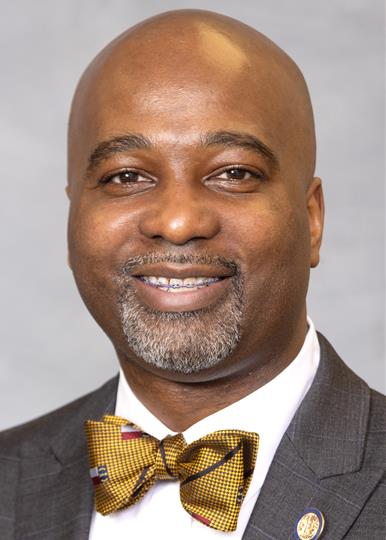
Rep. Zack Hawkins
Sponsored bills
Maddy summaryHB 988 revises North Carolina's laws governing instant bingo games, primarily affecting nonprofit organizations (like community groups and veterans' associations) that operate these games. The bill clarifies that "instant bingo" involves prepackaged paper or digital tickets with winners determined by a preselected symbol, and sets a $600 maximum prize per instant bingo game (compared to $500 for regular bingo). It requires electronic instant bingo systems to meet GLI-14 safety standards, restricts sessions to two per week (max 5 hours each), and mandates that all funds from games be kept in a separate account for approved charitable purposes only. The law also specifies that only certain exempt organizations (those under IRS 501(c)(8), (10), or (19)) may conduct instant bingo.
Maddy summaryHB 1004 proposes to allocate $16 million (one-time) and $8 million annually to establish up to eight Artificial Intelligence Hubs at UNC campuses, including at least one HBCU or UNC Pembroke, requiring institutions to match 10% with non-state funds. It also appropriates $70 million for Technology Hubs at all UNC campuses to drive innovation, workforce development, and entrepreneurship, plus $30 million for research grants focused on AI applications in education, healthcare, ethics, and infrastructure. The bill directly affects UNC system campuses, researchers, and students through funding for hubs, infrastructure, and project grants. It requires reporting on hub activities and becomes effective July 1, 2025, pending legislative approval.
Maddy summaryHB 994 allocates $20.3 million in nonrecurring funds and $1 million in recurring funds to support Western North Carolina recovery from Hurricane Helene and expand economic development services. The bill directs $10 million specifically for long-term housing recovery for residents in Western NC whose homes were damaged by Hurricane Helene, $5 million to Community Development Corporations (CDCs) statewide to enhance economic development services, and $300,000 to fund three women’s business centers in Western NC, the Triad, and the Piedmont. An additional $5 million supports the Institute Capital (I-CAP) for statewide economic activities, while the recurring $1 million aids ongoing housing recovery efforts and matches federal disaster funds. The bill directly affects Western NC residents impacted by Hurricane Helene, local CDCs, and small business support organizations through targeted financial assistance.
Maddy summaryHB 397 allows schools in North Carolina to use epinephrine nasal spray as an emergency treatment option alongside traditional auto-injectors for students experiencing anaphylaxis. The bill amends school health policies to include nasal spray devices in the definition of "epinephrine auto-injector delivery systems," requiring all schools to maintain at least two emergency epinephrine supplies (now including nasal spray) in secure but accessible locations. Schools must train staff to recognize anaphylaxis symptoms, store devices properly, and follow emergency action plans developed with school nurses. This applies to public schools, charter schools, and regional schools starting in the 2025-2026 school year. The policy directly affects school staff, students with severe allergies, and school health protocols.
Maddy summaryHB 842 clarifies that North Carolina public schools may conduct vision, hearing, dental, and developmental screenings for students without requiring parental consent, but must notify parents at the start of each school year about all screenings offered and provide results for their child. This bill directly affects parents of students in public schools across North Carolina, particularly for kindergarten through third grade as noted in the bill text. Key provisions require schools to provide written notice of screenings and results to parents (instead of seeking consent for each screening), while maintaining existing requirements for other health services that do require consent. The law updates school health screening procedures under North Carolina General Statutes § 115C-76.46.
Maddy summaryHB 852, "Safe Dogs, Safe Owners," creates uniform statewide leash laws and requires dog owners to pay for injuries caused when their dog runs unleashed in public and harms a person or domestic animal. The bill defines a dog as "at large" when not under reasonable physical control (e.g., off-leash without sufficient control to prevent an attack) and makes owners strictly liable for resulting damages. It also prohibits allowing dogs over six months old to run unleashed at night without an owner or authorized person present, with violations punishable as a Class 3 misdemeanor and liability for damages. The law takes effect December 1, 2025, replacing inconsistent local ordinances.
Maddy summaryHB 882 requires packaging producers in North Carolina to reduce non-reusable packaging by 10% within two years and 40% by eight years, while ensuring 50% of packaging is recycled within five years and 90% by twelve years. It directly affects manufacturers and sellers of packaged goods sold in the state, mandating they join producer responsibility organizations to meet these targets. The bill also bans intentionally added PFAS (forever chemicals) in covered products and requires packaging to include a minimum amount of postconsumer recycled content. These requirements apply to all packaging used for products sold, offered for sale, or distributed in North Carolina, excluding medical packaging and long-term storage materials. The law aims to reduce plastic waste and toxic chemicals in the state's waste stream through measurable, time-bound producer obligations.
Maddy summaryHB 881 bans the manufacture, use, and distribution of PFAS (per- and poly-fluoroalkyl substances) in North Carolina, directly affecting businesses that currently use these chemicals in products like firefighting foam, non-stick coatings, or food packaging. The law requires companies discharging wastewater to disclose PFAS and 1,4-dioxane levels and remove them if feasible, while public water systems must notify customers about PFAS detected in drinking water by June 2025. It establishes civil penalties of up to $25,000 for violations, with stricter fines for repeat offenses. The bill focuses on preventing contamination and protecting public health through these concrete regulatory changes.
Maddy summaryHB 871, the North Carolina Microplastics Study Act, directs the North Carolina Collaboratory at UNC Chapel Hill to study the impacts of microplastics (tiny plastic particles 1 nanometer to 5 millimeters in size) in the state’s waters. The bill requires the Collaboratory to identify microplastics, research their ecological and health effects, develop standardized testing methods, and create a risk assessment framework by collaborating with state agencies like the Department of Environmental Quality. The study must produce a comprehensive report with recommendations for reducing plastic pollution, including potential policy changes, by July 2026. The $150,000 allocated funds the research, public engagement, and report development, but the bill itself does not impose new regulations or directly affect businesses or residents.