

Maddy summaryHB 922 revises definitions in North Carolina's public utility law to protect ratepayers from unreasonable fees charged by utilities. It specifically clarifies terms like "advertising" (excluding safety messages or mandated public notices), "clean energy facility," and "energy efficiency measure" to ensure utilities cannot charge customers for non-essential promotional activities or misrepresent energy sources. The bill directly affects all electricity, gas, and water utilities operating in North Carolina and their customers, requiring them to comply with these updated definitions when calculating rates. Key provisions include banning utilities from including certain marketing costs in rate base calculations and defining measurable energy efficiency improvements. This focuses on transparency in billing rather than creating new fee structures.
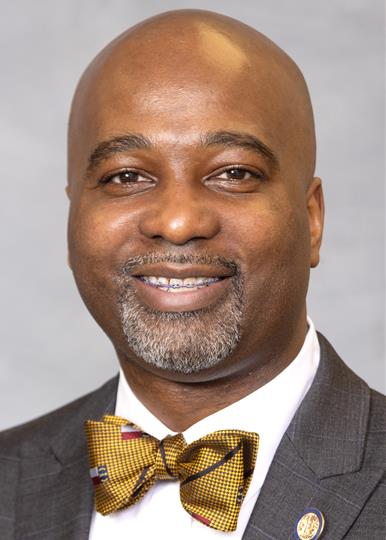
Rep. Zack Hawkins
Sponsored bills
Maddy summaryHB 932 establishes a permanent 10% base salary increase for teachers and first responders in North Carolina, effective July 1, 2025. The bill appropriates $700 million annually for first responders (including law enforcement, firefighters, EMTs, dispatchers, and certain nurses) and $900 million annually for teachers (classroom staff, principals, and instructional support) from the General Fund. Funds must be used solely for the pay increase, added to base salary, and included in future salary calculations - no administrative costs are permitted. Employing authorities and school entities must certify costs and verify implementation by deadlines, with unspent funds reverting to the General Fund annually.
Maddy summaryHB 915 reenacts a 25% tax credit for film production companies in North Carolina that spend at least $250,000 on qualifying expenses within the state. The credit applies to costs like equipment rentals, wages (excluding payments over $1 million to top earners), insurance, and employee benefits, but excludes political ads, news broadcasts, live sports events, and obscene content. The credit is capped at $20 million per feature film and requires producers to notify the North Carolina Film Office before claiming it. This reenactment makes the credit effective for qualifying expenses occurring on or after January 1, 2025, after a prior sunset clause expired in 2015.
Maddy summaryHB 930 creates two separate $1,500 one-time bonus programs for eligible public employees in North Carolina: first responders (including police, firefighters, emergency medical staff, dispatchers, and public hospital nurses) and teachers (classroom staff, principals, and support personnel). The bill allocates $130 million annually for first responders and $165 million for teachers from the General Fund during the 2025-2027 fiscal biennium, with funds distributed to local governments and school districts by November 1 each year. To qualify, recipients must be employed on October 1 of the fiscal year, and bonuses must be paid by December 31 (prorated for part-time workers). Funds cannot cover administrative costs, must be paid in addition to base salary, and will revert to the General Fund if unspent by year-end. The program takes effect July 1, 2025.
Maddy summaryHB 940 prohibits employment discrimination based on pregnancy, childbirth, or pregnancy-related conditions in North Carolina. It requires employers to treat pregnant employees the same as others with similar abilities to work, provide reasonable accommodations (like modified schedules or breastfeeding breaks), and grant leave for pregnancy-related disability on par with other medical leave. The bill also mandates that employers allow return to the same or equivalent position after leave and clarifies that discrimination claims must be filed within three years. It directly affects employers with 15+ employees and pregnant or postpartum workers in North Carolina.
Maddy summaryHB 943 appropriates $100,000 annually from 2025-2027 to expand North Carolina's Teacher Cadet Program (NCTCP), which targets high-achieving high school students - particularly those from underrepresented groups like people of color (42% of cadets vs. 21% of current teachers) and males (25% of cadets) - to enter teaching careers. The funds will support statewide teacher training workshops (in-person and online), prioritize expansion in counties with high teacher turnover (especially rural and low-performing schools), and develop training for underrepresented cadets using current teachers and students. This directly affects high school students in NCTCP participating in the program and their future schools, aiming to strengthen the teacher pipeline in underserved communities. The bill focuses on concrete funding for program growth, not policy changes to teaching standards or school operations.
Maddy summaryHB 916 strengthens North Carolina's Do Not Call and Do Not Text Registry by requiring telemarketers to remove registered numbers from their contact lists within 30 business days when a resident requests no further calls, reducing the previous timeframe from 60 days. It directly affects North Carolina residents who have registered their phone numbers and telemarketers operating in the state, including partner companies. Key provisions include clarifying that "telephone solicitation" covers text messages and automated calls, and holding companies jointly liable if they accept sales leads generated by illegal telemarketing calls. The bill updates state law to align with federal telemarketing rules and enforce stricter compliance.
Maddy summaryThis bill establishes the Free to Learn Library Bill of Rights Act in North Carolina to protect residents' rights to access information, maintain privacy, and participate in library services without discrimination or undue restriction. It applies to all public libraries, including their online services and digital resources, and outlines specific rights such as unrestricted access to materials regardless of viewpoint, protection from surveillance and intimidation, confidentiality of library records, and fair access for all patrons regardless of personal characteristics. The legislation also includes anti-retaliation protections for library employees and volunteers who report violations, requires regional library systems to document compliance, and mandates strict data privacy practices for online usage tracking. Additionally, the bill appropriates funds to support implementation and directs the State Library to provide model language for interlocal agreements to ensure consistent compliance across the state.
Maddy summaryHB 957 creates a study committee to examine infrastructure challenges at North Carolina's HBCUs and MSIs, including building conditions, environmental risks, and maintenance needs. It establishes a $5 million Completion Assistance Program to provide up to $1,000 annually per student at six UNC HBCUs (Elizabeth City State, NC A&T, UNC Asheville, UNC Greensboro, UNC Pembroke, and Winston-Salem State) for tuition/fee balances, targeting students with Pell Grants who need financial aid to graduate on time. The bill also allocates specific infrastructure funds, including $5.1 million for Winston-Salem State's Hauser Hall renovations and $8 million for emergency steam repairs. These provisions directly affect students and campus facilities at the six designated institutions through financial aid and physical infrastructure support.
Maddy summaryHB 978 establishes the North Carolina Commission on Youth Mentoring within the Department of Health and Human Services to administer grants supporting local youth mentoring programs. The bill allocates $1.5 million annually from 2025-2027 to fund small-to-medium nonprofit organizations providing mentoring services, with specific goals to increase quality mentoring, reduce youth safety risks, and strengthen community connections. The Commission, composed of 15 appointed members including youth participants and community representatives, will manage the grant program, develop application processes, and submit annual reports on funding distribution and social impact to legislative committees. This legislation directly affects North Carolina-based youth mentoring nonprofits and aims to expand accessible, high-quality mentoring opportunities for young people across the state.