

Maddy summaryHB 62, the Farmers Protection Act, prohibits banks from denying or canceling financial services to farmers based on their greenhouse gas emissions, fertilizer use, or machinery type. It creates a rebuttable presumption that banks violating this rule are acting on ESG (environmental, social, governance) commitments, requiring banks to prove decisions were financially motivated. Banks must annually attest to compliance under penalty of perjury, and violations may result in civil penalties up to $10,000 per incident. The law directly affects farmers, banks, credit unions, and state financial associations by restricting discriminatory lending practices tied to environmental factors.
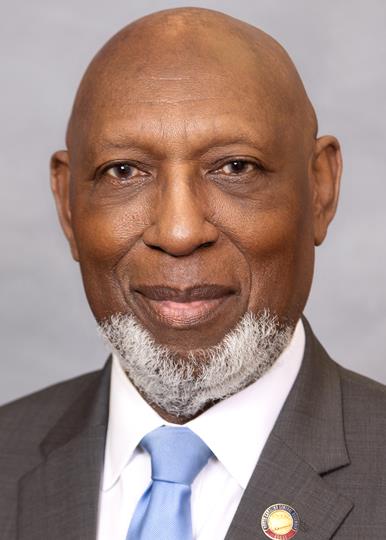
Rep. Shelly Willingham
Sponsored bills
Maddy summaryHB 182 creates two key policy changes: First, it allows judges to issue lifetime no-contact orders against defendants convicted of certain violent offenses (including sex offenses requiring registration), requiring a show-cause hearing to determine if the victim fears future contact. Second, it clarifies that caregivers of children under 16 who commit or allow sexual acts with the child face Class D felony charges, specifically expanding penalties for permitting such abuse. The law directly affects victims of violent crimes (through the no-contact protections) and caregivers of children under 16 (through updated felony charges for sexual abuse). These provisions apply to offenses committed on or after December 1, 2025.
Maddy summaryHB 396 establishes a Nursing Fellows Program at Winston-Salem State University (WSSU) to provide forgivable loans to nursing students. The program targets WSSU students pursuing Bachelor of Science in Nursing or Master of Science in Nursing Education degrees who commit to working as nurses or nursing instructors in North Carolina after graduation. Eligible students receive up to $5,000 per semester (or $2,500 per summer) to cover tuition, fees, and books, with loans forgiven upon meeting service requirements. Funds are managed through a dedicated Trust Fund, with specific allocations for administrative costs, mentoring, and program activities. This directly affects WSSU nursing students planning to work in North Carolina healthcare settings.
Maddy summaryHB 276 expands the definition of "killed in the line of duty" for firefighters to include deaths caused by specific cancers that previously qualified them for benefits under North Carolina's Firefighters' Cancer Insurance Program. The bill adds seven specific cancers (like mesothelioma and testicular cancer) to the list and includes any cancer diagnosis that already provided benefits under the existing program. It also formally links the Firefighters' Health Benefits Pilot Program to the Cancer Insurance Program, ensuring consistent coverage, and appropriates $2 million annually for related death benefits starting July 1, 2025. This change directly affects firefighters diagnosed with covered cancers and their families, who will now qualify for death benefits under the Public Safety Employees' Death Benefits Act.
Maddy summaryHB 52, the "Protect Those Who Serve and Protect Act of 2025," increases penalties for assaults against public safety personnel and their animals. It creates a new Class I felony offense for throwing, spraying, or projecting substances (like water) at public safety officers or law enforcement/search and rescue animals while they are on duty or due to their role. The bill also prohibits intentionally pointing laser devices at these protected individuals or animals during duty. These changes update existing assault laws to explicitly cover a wider range of emergency workers (including firefighters, medical staff, National Guard members, and school employees) and add specific protections for animals used in public safety.
Maddy summaryHB 242 adds freestanding psychiatric hospitals (licensed, Medicare-certified facilities primarily providing psychiatric care that are not state-owned) to North Carolina’s Medicaid Healthcare Access and Stabilization Program (HASP). This expands the existing program - which currently reimburses acute care hospitals - to include these psychiatric hospitals, providing them with increased Medicaid reimbursements. The funding will come from a new quarterly assessment levied on the psychiatric hospitals themselves, calculated as a percentage of their hospital costs. The bill does not change patient eligibility but alters how these specific hospitals receive Medicaid payments through the HASP program.
Maddy summaryHB 351 establishes North Carolina's Recovery-Friendly Workplace Program, which helps employers support employees in addiction recovery. Employers (both public and private) can become "participants" or earn "certified" status by completing training, adopting inclusive policies (like flexible leave and confidential treatment access), and implementing evidence-based practices. The program, funded with $300,000 from the Opioid Settlement Fund, provides employers with advisors, model policies, and annual reviews to maintain certification. It directly affects all North Carolina employers covered by workers' compensation and their employees seeking recovery support. The program becomes effective July 1, 2025.
Maddy summaryHB 314 creates a faster legal process for property owners (or their authorized representatives) to remove people occupying their residential property without legal right, excluding tenants who have overstayed their lease. To use this process, the owner must file a sworn affidavit with the clerk of court (paying a $25 fee) proving the occupant entered unlawfully after the owner acquired the property, was told to leave, paid no rent, and isn’t a tenant. Law enforcement must remove the occupant within 24 hours of receiving the affidavit, with the owner able to change locks afterward. The bill specifically excludes occupants with valid leases or rental agreements and requires proof that no other legal agreement or payment exists.
Maddy summaryHB 29 would allow tribal enrollment cards issued by State or federally recognized North Carolina tribes to be used as valid ID for purchasing alcohol and tobacco. It amends existing state laws to explicitly include these cards alongside driver's licenses, passports, and military IDs when verifying a customer's age at point-of-sale. Businesses selling alcohol or tobacco would be permitted to accept tribal cards as proof of age under the same rules as other official identification. The policy change would take effect on December 1, 2025, if the bill is enacted.
Maddy summaryHB 245 modifies North Carolina's low-income housing tax credit program to prioritize affordable housing development in rural communities and counties with higher poverty rates. It requires the state housing committee to adopt allocation rules that favor projects within 10 miles of amenities (like grocery stores) in towns under 10,000 people, measure distances by straight-line radius (not driving routes), and use poverty levels as a tiebreaker when projects score equally. The bill directs the committee to publish proposed rules for public comment and hold hearings before finalizing annual allocation plans. This policy change redirects existing housing tax credits toward qualifying rural and high-poverty areas without creating new funding. The bill takes effect October 1, 2025, for future allocation plans.