

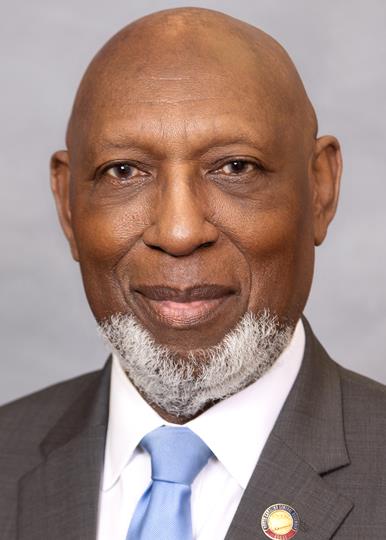
Photo of Shelly Willingham
D North Carolina House · District 23

Rep. Shelly Willingham

Compare
Total votes
4,070
all sessions
Attendance
97%
130 missed
Near the chamber average
With party
91%
of cast votes
Lower than 92% of chamber peers
Bipartisan score
5%
crosses aisle rarely
Higher than 90% of chamber peers
Sponsored
936
bills & resolutions
Near the chamber average
Committees
20
assignments
936 bills and resolutions

Sponsored bills

Total
936
Primary
18
Co-sponsor
918
This page
936
matching current filters
Co-sponsor HB 653
In committee · North Carolina House · Co-sponsor
Adjust Federal Medical Assistance Percentage Trigger for Medicaid Expansion.

Maddy summaryHB 653 lowers the federal funding threshold that would trigger loss of Medicaid coverage for North Carolina's newly eligible expansion recipients. Currently, coverage would end if federal funding for this group drops below 90% compared to non-expansion recipients; the bill reduces this threshold to a lower percentage. If funding falls below the new threshold, Medicaid coverage for this group must discontinue promptly, with state agencies required to notify lawmakers and CMS. The bill affects only those added to Medicaid through the 2014 expansion, not all Medicaid beneficiaries.

In committee Apr 2, 2025 1 co-sponsor
Co-sponsor HB 658
In committee · North Carolina House · Co-sponsor
Optometrists Telehealth Services.

Maddy summaryHB 658 allows licensed optometrists in North Carolina to provide telehealth services (remote video consultations) to patients within the state, without requiring the optometrist to be physically present in North Carolina or hold a license in the state where they are located during the consultation. This directly affects optometrists licensed in North Carolina who wish to offer remote care to NC patients. The bill specifies that telehealth practice must follow all existing optometry laws and Board rules, and the North Carolina Board of Examiners in Optometry must create implementing rules by December 2025 covering patient records, diagnoses, and telehealth standards. The law takes effect on October 1, 2025.

In committee Apr 2, 2025 1 co-sponsor
Co-sponsor HB 585
In committee · North Carolina House · Co-sponsor
Human Trafficking Reporting/Response System.

Maddy summaryHB 585 appropriates $300,000 in recurring funds for the North Carolina Human Trafficking Commission to develop and support a secure, technology-driven reporting and response system focused on survivor-centered care. The system will specifically target western North Carolina, where access to anti-human trafficking resources is limited, and includes funding for a regional coordinator to oversee implementation and partnerships with law enforcement. It also allocates resources for a public awareness campaign to increase system use among at-risk communities and first responders. The bill requires the Commission to coordinate this system as part of its duties under state law.

In committee Apr 1, 2025 1 co-sponsor
Co-sponsor HB 607
In committee · North Carolina House · Co-sponsor
Regulate Hemp Consumable Products.

Maddy summaryThis bill establishes new regulations for hemp-derived consumable products (like edibles, vapes, and beverages) intended for human ingestion or inhalation, limiting THC content to 0.3% or less. It requires retailers to verify ages (21+), use child-resistant "exit packages" at point-of-sale, and obtain licenses from the Alcohol Law Enforcement Division. Manufacturers must use independent labs for testing, and sellers face fines up to $2,000 or license suspension for violations like selling to minors or exceeding THC limits. The rules exclude topical products and hemp seeds, focusing solely on ingestible/inhalable items.

In committee Apr 1, 2025 1 co-sponsor
Co-sponsor HB 611
In committee · North Carolina House · Co-sponsor
Increase Assistant Principals in Public Schools.

Maddy summaryHB 611 requires North Carolina public schools to increase full-time assistant principal positions based on student enrollment, directly affecting all local school districts. It mandates funding to achieve specific student-to-assistant-principal ratios: 1:90 students in the 2025-2026 school year ($23.56 million) and 1:80 students starting in 2026-2027 ($57.57 million), with funds supplementing but not replacing existing budgets. The bill, effective July 2025, directs the Department of Public Instruction to allocate these funds through the school building administration allotment. This policy change aims to support school operations and develop future principals by expanding administrative staffing.

In committee Apr 1, 2025 1 co-sponsor
Primary HB 604
In committee · North Carolina House · Lead sponsor
Rural and Downtown Community Economic Development Grants.

Maddy summaryHB 604 creates two grant programs to support economic development: the Rural Community Development Grant Program and the Downtown Revitalization Grant Program. Both programs allocate $40 million each from the state budget for 2025-2026, providing grants to local governments (counties and municipalities) to fund projects that improve community amenities like grocery stores, childcare, parks, or downtown infrastructure. Grants require a 1:1 local match, max $2 million per award, and must align with comprehensive plans for revitalization or community growth. The programs aim to reverse rural depopulation, attract business investment, and enhance downtown livability through targeted, competitive funding.

In committee Apr 1, 2025 0 co-sponsors
Co-sponsor HB 588
In committee · North Carolina House · Co-sponsor
School Psychologist Omnibus.

Maddy summaryHB 588 aims to improve the number and quality of school psychologists in North Carolina through multiple funding initiatives. It provides a $650 monthly salary boost and a 12% supplement for certified school psychologists (totaling $8.1 million), establishes a $5 million grant program to fund signing bonuses (up to $5,000) for recruiting new psychologists with a one-year commitment requirement, and creates a $5 million internship program offering stipends at starting salaries. Additionally, it allocates $5 million for a virtual training program at Appalachian State University and $1.6 million to expand school psychology programs at five UNC institutions to double graduate output. The bill also includes an interstate licensure compact to facilitate practice across state lines, with all programs requiring annual reporting to the legislature.

In committee Apr 1, 2025 1 co-sponsor
Co-sponsor HB 571
In committee · North Carolina House · Co-sponsor
Posttraumatic Stress Disorder Treatment for Police Officers/Funds.

Maddy summaryHB 571 appropriates $500,000 from the state General Fund to the Department of Public Safety for a grant program treating police officers diagnosed with PTSD. It directly affects North Carolina police officers who have received a clinical PTSD diagnosis. The key provision establishes a state-funded grant program to cover treatment costs, with funds allocated for the 2025-2026 fiscal year. The program becomes effective July 1, 2025, and focuses solely on providing financial support for treatment, not on expanding eligibility or altering diagnosis standards.

In committee Apr 1, 2025 1 co-sponsor
Co-sponsor HB 609
died · North Carolina House · Co-sponsor
Option for Raw Milk Consumption.

Maddy summaryHB 609 allows licensed farms in North Carolina to sell unpasteurized milk and raw milk products directly to consumers under strict safety conditions. It requires farms to obtain a Department of Agriculture license, pass annual inspections for disease (tuberculosis/brucellosis), meet water safety standards, and undergo regular testing for bacteria and pathogens in milk. Sales can only occur at the farm of origin or a small farm stand (max 1,000 sq ft), with mandatory labeling stating "Raw milk: not pasteurized and may contain organisms injurious to your health." The bill does not permit raw milk sales in restaurants or general retail settings, and all requirements must be met before the law takes effect on January 1, 2026.

died Apr 1, 2025 1 co-sponsor
Co-sponsor HB 561
In committee · North Carolina House · Co-sponsor
2025 Youth End Nicotine Dependence Act.

Maddy summaryThis bill creates a $17 million annual Tobacco Use Prevention Fund within North Carolina's Department of Health and Human Services, funded by a portion of the state's annual Tobacco Master Settlement Agreement payments. The fund directly targets youth (high and middle school students) by supporting community-based programs, evidence-based media campaigns, school initiatives, and tracking of e-cigarette use to prevent nicotine dependence. Key provisions include funding local health departments for youth education, launching health-risk media campaigns, supporting tobacco-free college campuses, and evaluating program effectiveness. The fund uses $17 million yearly from the $140 million settlement allocation, with up to 10% of funds allowed for administrative costs.

In committee Mar 31, 2025 1 co-sponsor
Showing 131 to 140 of 936 bills
Previous 1 … 13 14 15 … 94 Next