

Maddy summaryHB 813 renames "multiunit assisted housing with services" as "registered residential facility" to clarify that these non-licensed residences are distinct from licensed adult care homes. It requires annual registration with the Department of Health and Human Services, mandates disclosure statements in rental contracts covering emergency systems and service costs, and prohibits these facilities from caring for residents needing ventilator support, 24-hour nursing care, or certain medical treatments without specific exceptions. The bill directly affects facilities currently operating under the old name and their residents, particularly those with complex medical needs. Key provisions include updated definitions, expanded restrictions on who can be served, and authorization for the Department to seek legal action against unregistered facilities.
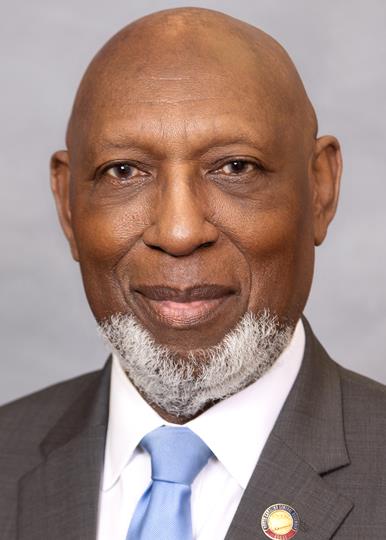
Rep. Shelly Willingham
Sponsored bills
Maddy summaryHB 788 ("Fix Our Democracy") proposes amending the North Carolina Constitution to establish a nonpartisan redistricting process for state legislative and U.S. House districts. It would require a constitutional amendment (voting required in 2026) to remove the General Assembly's role in drawing districts, mandating that districts be contiguous, avoid dividing counties where possible, and remain unchanged until the next census. The bill also includes related provisions like online voter registration, automatic registration, banning voter roll purging, and campaign finance transparency changes. This constitutional change would directly affect how electoral districts are created for state legislators and U.S. representatives in North Carolina.
Maddy summaryHB 810, effective July 1, 2025, provides North Carolina state employees with paid bereavement leave: up to 40 hours for the death of an immediate family member (spouse, parent, child, sibling, or dependent living with them) and up to 8 hours for the death of a colleague. It applies to all state employees, public school staff, and community college workers, requiring documentation like a death certificate but allowing leave without exhausting sick or vacation time. Employees must use family leave within 180 days of the death and provide funeral attendance proof for colleague leave, with no annual limit on usage. The bill appropriates $2 million annually from the General Fund to cover these leave costs through the 2025-2027 fiscal biennium.
Maddy summaryHB 794 mandates the North Carolina State Highway Patrol to study and develop recommendations on four specific areas: overall and regional staffing needs, and overall and rank-specific salary scales. The study requires the Patrol to assess staffing requirements based on state and regional needs, along with salary structures for all ranks. The Patrol must submit findings and recommendations to relevant legislative committees by March 1, 2026. This bill is procedural and does not enact new policies or funding; it solely requires a study to inform future legislative decisions.
Maddy summaryHB 774 ("School Breakfast for All") mandates that all North Carolina public schools (pre-K through 12) provide free breakfast to every student, eliminating costs for families. It establishes a Farm-to-Table Initiative requiring schools to partner with local farmers for fresh, locally sourced ingredients in breakfast meals. The bill allocates $39 million in recurring state funds for the 2025-2026 fiscal year to cover program costs, while requiring annual reports on participation rates, costs, and impacts on student health and academic performance. This directly affects all public school students, school districts, and North Carolina agricultural producers.
Maddy summaryHB 766 appropriates $1.87 million to fund expanded Teen Mental Health First Aid (tMHFA) training for North Carolina high school students in grades 9-12 (ages 14-18). The bill directly affects students by providing evidence-based training to help them recognize, understand, and respond to peers' mental health and substance use challenges. Key provisions include funding for the Department of Health and Human Services to scale up tMHFA programs statewide, building on a pilot that trained 1,519 teens and showed a 50% increase in teens' willingness to seek adult support. The training focuses on connecting peers to trusted adults during crises, addressing high rates of unmet mental health needs among teens (64% don’t seek help, per the bill’s rationale).
Maddy summaryHB 780 appropriates $2 million to expand the All Pro Dad program in North Carolina through Family First, Inc., funding school-based chapters, father-child engagement events, and parenting resources. It also creates the "Responsible Fatherhood NC" program under the Department of Health and Human Services, requiring a nonprofit manager to run a statewide media campaign, provide father-focused resources, and promote existing fatherhood initiatives. The bill directs grants to community organizations addressing fathers' needs - such as employment, child support, and parenting skills - with priority given to areas facing high unemployment, incarceration, or single-parent households. The program directly supports North Carolina fathers and their children, aiming to improve family well-being through increased paternal involvement.
Maddy summaryThis is a House Resolution (HR 769), not a bill, urging Congress to support H.R. 4052, which would create a National Infrastructure Bank. The resolution cites North Carolina's infrastructure needs - like roads, bridges, water systems, and lead pipe replacement - and states the proposed bank would be funded through existing Treasury debt (without new taxes or spending). It calls for Congress to pass the bank legislation to finance infrastructure projects nationwide, including those in North Carolina. The resolution itself does not create the bank but advocates for its adoption.
Maddy summaryHB 71, the Respiratory Care Modernization Act, updates North Carolina's laws governing respiratory care practice. It creates a new "Advanced respiratory care practitioner" (ARCP) category for licensed professionals with postgraduate training, requiring Board-endorsed competency for advanced procedures. The bill clarifies that ARCPs cannot diagnose, prescribe, or perform invasive procedures without physician supervision, while defining their scope to include cardiopulmonary care and tasks delegated by physicians. This directly affects respiratory care practitioners and patients by standardizing advanced practice rules and ensuring procedures align with current professional standards. The changes aim to reflect modern respiratory care practices without altering basic licensing requirements.
Maddy summaryHB 141, the Joe John Remembrance Act, removes an additional fee for special license plates designated for fire department and rescue squad members in North Carolina. The bill amends state law to formally eliminate the "additional fee" listed for these plates (which was already set to $0 in the current fee schedule), meaning eligible firefighters and rescue personnel will pay only the standard registration fee when obtaining or renewing these special plates. This change applies to plates issued or renewed on or after July 1, 2025. The bill does not create new benefits but codifies an existing fee structure for these specific special plates.