

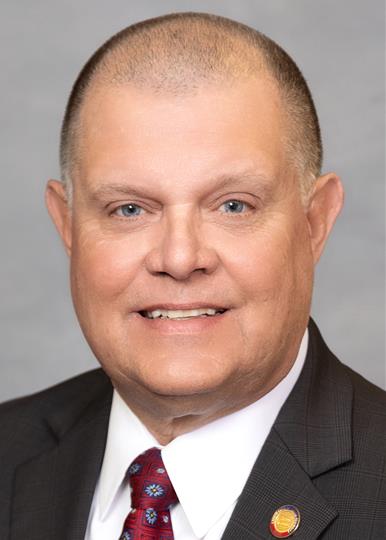
Photo of Charlie Miller
R North Carolina House · District 19 On the 2026 ballot

Rep. Charlie Miller

Compare
Total votes
1,795
all sessions
Attendance
100%
of floor votes
Higher than 91% of chamber peers
With party
99%
of cast votes
Higher than 87% of chamber peers
Bipartisan score
1%
crosses aisle rarely
Lower than 89% of chamber peers
Sponsored
343
bills & resolutions
Near the chamber average
Committees
18
assignments
343 bills and resolutions

Sponsored bills

Total
343
Primary
63
Co-sponsor
280
This page
343
matching current filters
Co-sponsor HB 901
In committee · North Carolina House · Co-sponsor
Recognize Safety Hold Agreements.

Maddy summaryThis bill allows federally licensed gun dealers in North Carolina to safely store firearms for private owners without charging a fee. It provides legal protection for these dealers against lawsuits if someone is injured or killed during the storage period, unless the dealer was negligent or acted unlawfully. The state Bureau of Investigation will create a standard form for these agreements and keep them confidential, while dealers cannot store illegally possessed guns or return weapons to prohibited individuals. The law takes effect on July 1, 2025.

In committee Apr 14, 2025 1 co-sponsor
Co-sponsor HB 968
In committee · North Carolina House · Co-sponsor
Youth Community Emergency Response Team (CERT) Preparedness K-12 Training.

Maddy summaryHB 968 requires all North Carolina public K-12 schools to provide emergency preparedness education, beginning in grade 3 for elementary students and continuing through high school. It mandates state-developed standards for each grade level: elementary students learn about disaster types and school response plans, middle school students research past disasters and mass casualty events, and high school students are introduced to FEMA’s Community Emergency Response Team (CERT) materials. Local school boards must integrate this instruction into existing courses without adding new funding requirements. The law applies to all public schools statewide and takes effect for the 2025-2026 school year.

In committee Apr 14, 2025 1 co-sponsor
Co-sponsor HB 999
In committee · North Carolina House · Co-sponsor
Regulation of Video Gaming Terminals.

Maddy summaryHB 999 establishes a regulatory framework for video gaming terminals in North Carolina, authorizing their operation under the State Lottery Commission. It directly affects licensed businesses (video gaming merchants) holding on- or off-premises ABC permits (e.g., bars, restaurants), requiring them to partner with licensed operators to place terminals. Key provisions include restricting terminals to locations over 1,000 feet from schools/churches, limiting operators to three terminals per location (with potential increases based on revenue), mandating real-time central monitoring, and requiring terminals to be in plain view with surveillance. Revenue from terminals (net machine revenue) allocates 32% to the Commission, with all terminals needing valid permits and compliance with security standards.

In committee Apr 14, 2025 1 co-sponsor
Primary HB 354
Passed · North Carolina House · Lead sponsor
Civil Procedure/Gatekeeper Orders/Database.

Maddy summaryHB 354 requires courts in North Carolina to block filings by individuals declared legally incompetent by a court unless submitted through their guardian or attorney. It mandates courts to strike non-compliant filings and issue "gatekeeper orders" to prevent unauthorized submissions. The bill also creates a centralized database for courts to quickly identify individuals with such court declarations. This applies to all civil cases filed or pending after December 1, 2025, directly affecting people declared legally incompetent and their legal representatives.

Passed Apr 10, 2025 0 co-sponsors
Primary HB 849
In committee · North Carolina House · Lead sponsor
Utility Forced Relocation Expenses.

Maddy summaryHB 849 would require state, city, or public authorities to pay for relocating utility infrastructure (such as power lines, fiber optic cables, and wireless facilities) when relocation is mandated for federally funded highway projects. The state must cover these costs after deducting any increase in the facility's value or salvage value from the old infrastructure. The bill also mandates that cities reimburse utility companies for relocation expenses within their rights-of-way, though this requirement does not apply to cities with fewer than 5,000 residents unless the project is federally funded.

In committee Apr 10, 2025 0 co-sponsors
Co-sponsor HB 160
Passed · North Carolina House · Co-sponsor
Joel H. Crisp Sudden Unexpected Death in Epilepsy (SUDEP) Awareness Law.

Maddy summaryHB 160 requires North Carolina's University of North Carolina School of Medicine Area Health Education Centers (NC AHEC) to create and share evidence-based information about sudden unexpected death in epilepsy (SUDEP) with all healthcare practitioners in the state. This includes current risk factors, conditions, and contact details for epilepsy support organizations, available on NC AHEC's website. Healthcare providers treating epilepsy patients will directly receive this standardized resource, which must be compiled by consulting medical boards and professional societies. NC AHEC must report the completed resource to the legislature by September 1, 2025.

Passed Apr 9, 2025 1 co-sponsor
Co-sponsor HB 800
In committee · North Carolina House · Co-sponsor
Review Effectiveness and Delivery of Child Care.

Maddy summaryHB 800 directs North Carolina's Department of Health and Human Services to study the effectiveness of state child care programs like NC Pre-K and Smart Start, including funding allocation and quality rating systems, with findings due by April 2026. It also allocates $10 million for a pilot program that automatically enrolls preschool-age children (8 weeks-5 years) of full-time licensed child care teachers in state subsidy programs, provided teachers commit to completing early childhood education coursework within 18 months. The pilot targets counties with the highest historical child care capacity loss, requires centers to accept standard subsidy rates without extra fees, and mandates quarterly participation reports starting in 2026. This directly affects licensed child care teachers and their preschool children, aiming to improve child care access and workforce retention.

In committee Apr 8, 2025 1 co-sponsor
Co-sponsor HB 794
In committee · North Carolina House · Co-sponsor
Highway Patrol Staffing/Salary Scale/Study.

Maddy summaryHB 794 mandates the North Carolina State Highway Patrol to study and develop recommendations on four specific areas: overall and regional staffing needs, and overall and rank-specific salary scales. The study requires the Patrol to assess staffing requirements based on state and regional needs, along with salary structures for all ranks. The Patrol must submit findings and recommendations to relevant legislative committees by March 1, 2026. This bill is procedural and does not enact new policies or funding; it solely requires a study to inform future legislative decisions.

In committee Apr 8, 2025 1 co-sponsor
Co-sponsor HB 774
In committee · North Carolina House · Co-sponsor
School Breakfast for All.

Maddy summaryHB 774 ("School Breakfast for All") mandates that all North Carolina public schools (pre-K through 12) provide free breakfast to every student, eliminating costs for families. It establishes a Farm-to-Table Initiative requiring schools to partner with local farmers for fresh, locally sourced ingredients in breakfast meals. The bill allocates $39 million in recurring state funds for the 2025-2026 fiscal year to cover program costs, while requiring annual reports on participation rates, costs, and impacts on student health and academic performance. This directly affects all public school students, school districts, and North Carolina agricultural producers.

In committee Apr 7, 2025 1 co-sponsor
Co-sponsor HB 753
In committee · North Carolina House · Co-sponsor
Law Enforcement Officers Return to Work.

Maddy summaryHB 753 allows eligible North Carolina law enforcement officers aged 59.5 or older to continue receiving retirement benefits while remaining actively employed. Retired officers who separated from service for at least six months may return to duty and retain their retirement benefits. The bill requires employers to cover both employee and employer retirement contributions during this period and clarifies that beneficiaries remain eligible for death benefits under specific conditions. It directly affects current and retired state/local law enforcement officers meeting age and service criteria.

In committee Apr 7, 2025 1 co-sponsor
Showing 61 to 70 of 343 bills
Previous 1 … 6 7 8 … 35 Next