

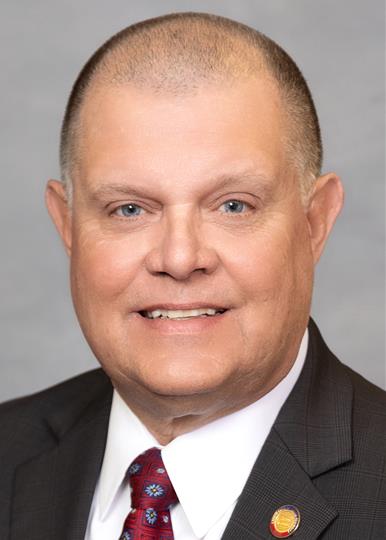
Photo of Charlie Miller
R North Carolina House · District 19 On the 2026 ballot

Rep. Charlie Miller

Compare
Total votes
1,056
all sessions
Attendance
100%
of floor votes
Higher than 91% of chamber peers
With party
99%
of cast votes
Higher than 86% of chamber peers
Bipartisan score
0%
crosses aisle rarely
Lower than 89% of chamber peers
Sponsored
343
bills & resolutions
Near the chamber average
Committees
18
assignments
343 bills and resolutions

Sponsored bills

Total
343
Primary
63
Co-sponsor
280
This page
343
matching current filters
Co-sponsor HB 268
Signed into law · North Carolina House · Co-sponsor
2026 Budget Technical Corrections - II.

Maddy summaryHB 268 authorizes the University of North Carolina system to finance specific capital projects at UNC Chapel Hill and UNC Wilmington using alternative funding sources like gifts, grants, and revenue bonds - instead of state general funds. It specifically covers major projects including Chapel Hill's electrical system upgrade and Fetzer Hall addition, plus Wilmington's parking deck and student housing. The bill allows the university board to issue special obligation bonds up to 5% over the project costs to cover expenses, with potential adjustments approved by the state budget director. This directly affects the two universities by enabling them to fund these infrastructure improvements through non-state appropriations.

Signed into law Aug 11, 2026 1 co-sponsor
Co-sponsor HB 206
Signed into law · North Carolina House · Co-sponsor
DPS/Other Changes.

Maddy summaryHB 206 modifies North Carolina's process for handling firearms surrendered under domestic violence protective orders. It requires defendants to immediately surrender firearms, ammunition, and permits to the sheriff when such orders are issued, with a 24-hour deadline if immediate surrender isn't possible. The bill clarifies that sheriffs must store these items, may charge reasonable storage fees, and must conduct criminal background checks before returning firearms after the order ends. This directly affects domestic violence defendants, victims, and sheriffs managing firearm storage and retrieval.

Signed into law Jul 8, 2026 1 co-sponsor
Co-sponsor HB 133
Signed into law · North Carolina House · Co-sponsor
NC Farmland and Military Protection Act.

Maddy summaryHB 133, the NC Farmland and Military Protection Act, bans U.S.-designated adversarial foreign governments from buying, leasing, or holding interests in agricultural land or land within 75 miles of major military installations like Fort Bragg and Camp Lejeune. It directly affects foreign governments identified by the U.S. State Department as adversaries under arms regulations, preventing them from acquiring land critical to food production or near military sites. The law excludes agricultural research leases under 250 acres and makes any violating land transfer legally void. This focuses on restricting foreign control of strategic land without altering existing domestic land transactions.

Signed into law Jul 8, 2026 1 co-sponsor
Primary HB 1104
Signed into law · North Carolina House · Lead sponsor
Improve Involuntary Commitment Process and Enhance Public Safety.

Maddy summaryThis bill requires the North Carolina Department of Health and Human Services, the Department of Information Technology, and the Administrative Office of the Courts to study the state's involuntary commitment process. The agencies must identify gaps in the current system and submit a report with recommendations by February 1, 2027. Key areas for improvement include ensuring judges receive timely clinical data, training legal officials on community-based treatment options, and updating electronic forms to capture consistent data. The legislation also aims to increase data sharing between health and court systems to support more effective legal and clinical outcomes.

Signed into law Jul 7, 2026 0 co-sponsors
Co-sponsor HB 162
Signed into law · North Carolina House · Co-sponsor
Parking Lot Reform/Stormwater Control.

Maddy summaryHB 162 requires North Carolina counties and cities to conduct criminal history background checks through the State Bureau of Investigation for all job applicants whose positions involve working with children in any capacity. This applies specifically to local government employment decisions, mandating checks for roles like childcare workers, school staff, or youth program coordinators, but not for general positions. The law takes effect October 1, 2025, and does not alter existing background check processes for non-child-related roles. It directly affects local government hiring practices by adding a mandatory screening requirement for child-impacting positions.

Signed into law Jul 7, 2026 1 co-sponsor
Co-sponsor HB 1222
Signed into law · North Carolina House · Co-sponsor
Record Development Approval Votes/Brunswick.

Maddy summaryThis bill requires the Brunswick County Board of Commissioners to decide all development proposals using a roll call vote, where each member's individual choice is recorded in the official meeting minutes. By repealing a previous state law, the legislation ensures that these decisions are made locally within the county rather than being subject to broader state-level voting procedures. The change directly impacts developers, applicants, and residents in Brunswick County by making the voting process on each project transparent and individualized.

Signed into law Jul 2, 2026 1 co-sponsor
Primary HB 198
Failed · North Carolina House · Lead sponsor
ABC Omnibus of 2026.

Maddy summaryHB 198 requires alcohol law enforcement officers to notify the permit holder (not just the employee) within five business days when a violation occurs on a licensed establishment's premises. This applies to both citations issued to employees and reports from other law enforcement agencies about violations of alcohol or related laws. The notice must be sent via email or certified mail and must identify the specific violation and the involved employee. The bill directly affects bars, restaurants, and other businesses holding alcohol permits in North Carolina by mandating clearer, faster communication about violations. It does not change enforcement powers but standardizes how permit holders receive violation notices.

Failed Jun 30, 2026 0 co-sponsors
Co-sponsor HB 34
Passed · North Carolina House · Co-sponsor
Strengthen Medicaid Provider Controls.

Maddy summaryHB 34 creates a new criminal offense for stealing or misusing someone else's mail, directly affecting individuals who unlawfully take, control, or transfer mail intended for others. The bill defines "mail" broadly to include letters, packages, or valuable items sent to another person and prohibits two specific actions: stealing mail to deprive the owner, or transferring mail to benefit someone not entitled to it. Punishments range from a Class A1 misdemeanor for first-time, low-value thefts (under $200) to a Class D felony for repeat offenses or high-value thefts (over $2,000). This law, effective December 1, 2025, applies to offenses committed after that date.

Passed Jun 25, 2026 1 co-sponsor
Co-sponsor HB 171
Vetoed · North Carolina House · Co-sponsor
Equality in State Agencies/Prohibition on Diversity, Equity, and Inclusion (DEI).

Maddy summaryHB 171 prohibits North Carolina state agencies from implementing diversity, equity, and inclusion (DEI) programs, including in hiring, employment practices, or training. It defines DEI broadly as any initiative influencing hiring or benefits based on protected characteristics (like race or gender) beyond merit-based processes. The bill mandates state auditor compliance audits, imposes civil penalties up to $5,000 per violation, and allows employees to file lawsuits after submitting a grievance to their agency. It explicitly excludes compliance with existing anti-discrimination laws (such as Title IX and the ADA) and protects First Amendment rights.

Vetoed Jun 24, 2026 1 co-sponsor
Primary HB 258
Signed into law · North Carolina House · Lead sponsor
Worker Safety Act of 2026.

Maddy summaryHB 258, the Utility Worker Protection Act, increases penalties for assaulting utility and communications workers by designating such assaults as Class A1 misdemeanors - the highest misdemeanor level - when the worker is visibly identifiable (e.g., wearing company-logoed uniforms) and performing duties. It directly affects workers providing electricity, gas, telecommunications, or internet services, including those employed by public, private, or cooperative entities. The bill adds specific language to North Carolina’s assault statute, requiring prosecutors to apply this enhanced penalty for assaults meeting these criteria, without needing other legal provisions. The law takes effect December 1, 2025, applying to offenses committed on or after that date.

Signed into law Jun 22, 2026 0 co-sponsors
Showing 1 to 10 of 343 bills
1 2 3 35 Next