

Maddy summaryHB 780 appropriates $2 million to expand the All Pro Dad program in North Carolina through Family First, Inc., funding school-based chapters, father-child engagement events, and parenting resources. It also creates the "Responsible Fatherhood NC" program under the Department of Health and Human Services, requiring a nonprofit manager to run a statewide media campaign, provide father-focused resources, and promote existing fatherhood initiatives. The bill directs grants to community organizations addressing fathers' needs - such as employment, child support, and parenting skills - with priority given to areas facing high unemployment, incarceration, or single-parent households. The program directly supports North Carolina fathers and their children, aiming to improve family well-being through increased paternal involvement.
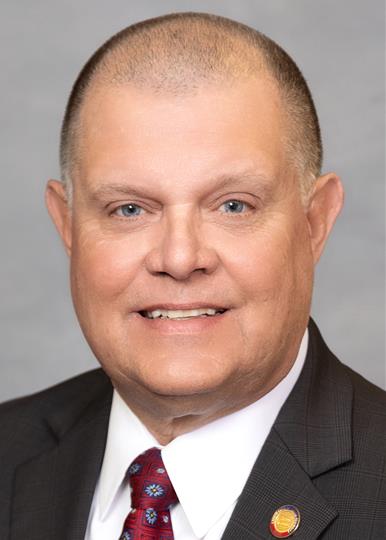
Rep. Charlie Miller
Sponsored bills
Maddy summaryHB 295 requires the North Carolina Department of Transportation (DOT) to install permanent property corner markers after acquiring land for transportation projects. It directly affects property owners whose land is used for DOT projects, ensuring clear boundary identification. The bill mandates DOT to survey and place durable markers (like metal stakes) along acquired property lines after project completion, using coordinates tied to North Carolina's State Plane Coordinate system. This ensures accurate, long-term documentation of property boundaries for future reference.
Maddy summaryHB 331 designates the North Carolina Rice Festival, held annually on the first weekend in March at the Brunswick Town State Historic Site in Winnabow, as the official state rice festival. The bill directly affects the festival organizers and the Winnabow community by granting the event formal recognition. It does not create new regulations, funding, or policy changes - only establishes ceremonial status through a statutory reference. The bill is procedural, focusing solely on naming the event, with no impact on state laws or resources.
Maddy summaryHB 382 allows North Carolina's Wildlife Resources Commission to issue elk hunting permits through a raffle and an auction for the 2026 season. Residents can enter a $20-per-ticket raffle (max 30 tickets for $500), while a nonprofit focused on elk conservation must conduct an auction where the nonprofit keeps ≤25% of proceeds, with all other funds going to elk conservation. Permits are nontransferable, and the Commission must reserve 50% of raffle permits for North Carolina residents in future seasons. All revenue supplements existing elk management funding, and the Commission must report annually on program effectiveness to legislative committees.
Maddy summaryHB 355 directs North Carolina's Legislative Research Commission (LRC) to study challenges facing rural fire departments, focusing on volunteer recruitment, funding, equipment needs, interdepartmental cooperation, firefighter well-being, and public education. The LRC must examine specific issues like financial incentives for volunteers, equitable resource distribution, mutual aid agreements, and community fire safety programs. It requires regional public hearings and a 90-day comment period before submitting interim and final reports to the 2025 and 2027 General Assemblies. This bill does not change current law but sets up a review process to inform future legislative action.
Maddy summaryHB 658 allows licensed optometrists in North Carolina to provide telehealth services (remote video consultations) to patients within the state, without requiring the optometrist to be physically present in North Carolina or hold a license in the state where they are located during the consultation. This directly affects optometrists licensed in North Carolina who wish to offer remote care to NC patients. The bill specifies that telehealth practice must follow all existing optometry laws and Board rules, and the North Carolina Board of Examiners in Optometry must create implementing rules by December 2025 covering patient records, diagnoses, and telehealth standards. The law takes effect on October 1, 2025.
Maddy summaryHB 300 establishes a program to reimburse owners of retired first responder dogs for veterinary care. It directly affects owners of canines that served with law enforcement, fire departments, or correctional agencies in roles like narcotics detection or search and rescue, after retiring on or after July 1, 2024. The bill requires registration of the dog and owner with the Department of Public Safety, then allows reimbursement of up to $1,500 annually for covered care - including routine check-ups, vaccinations, emergencies, surgeries, and euthanasia. Owners must submit itemized vet bills within 90 days of service.
Maddy summaryHB 571 appropriates $500,000 from the state General Fund to the Department of Public Safety for a grant program treating police officers diagnosed with PTSD. It directly affects North Carolina police officers who have received a clinical PTSD diagnosis. The key provision establishes a state-funded grant program to cover treatment costs, with funds allocated for the 2025-2026 fiscal year. The program becomes effective July 1, 2025, and focuses solely on providing financial support for treatment, not on expanding eligibility or altering diagnosis standards.
Maddy summaryHB 275 increases penalties for drivers who fail to yield the right-of-way to blind or partially blind pedestrians using a white cane (white or red-tipped) or a guide dog. It requires drivers to come to a full stop, leave a clear path, and remain stopped until the pedestrian has crossed at both uncontrolled intersections and signal-controlled crossings where the pedestrian is already moving when lights change. This bill directly affects drivers operating vehicles in North Carolina and blind/partially blind pedestrians using visible signals. The penalty for violating this law becomes a Class 2 misdemeanor, effective December 1, 2026.
Maddy summaryHB 330 updates North Carolina's Controlled Substances Act by adding specific synthetic drugs and chemical structures to Schedule I, making them illegal without exception. It directly affects law enforcement, healthcare providers, and individuals using these substances, as it automatically controls new variants of fentanyl derivatives (like 4-fluorofentanyl), nitazenes, synthetic cannabinoids (including indole carboxamides), and other novel psychoactive substances based on their chemical structure - not just named compounds. Key mechanisms include defining "structurally derived" compounds (e.g., fentanyl modifications) and listing specific examples to close loopholes where manufacturers alter molecules slightly to evade existing laws. This policy change aims to address emerging drug threats by expanding the legal definition of controlled substances.