

Maddy summaryHB 673 provides $656,000 annually from the state General Fund to cover transportation costs for neonatal patients in the UNC Health Care System when insurance denies coverage for ambulance services or mileage. It directly affects newborns requiring critical transport between UNC hospitals and their families, ensuring timely care without financial barriers from insurance denials. The bill requires the UNC Board of Governors to submit annual reports tracking funds used, number of transports covered, and effectiveness. This is a funding mechanism to fill coverage gaps, not a change to insurance rules, and takes effect July 1, 2025.
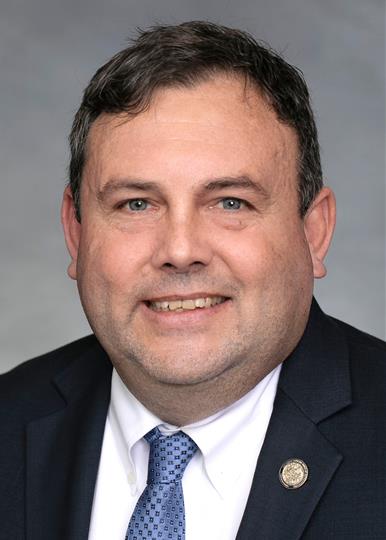
Rep. Eric Ager
Sponsored bills
Maddy summaryHB 682 allows North Carolina to override federal restrictions that block food and cash assistance (TANF) for people convicted of certain drug-related felonies. It directly affects individuals with Class H or I controlled substance felony convictions who complete substance abuse treatment (while incarcerated or in the community) and avoid new drug offenses for six months. The bill requires counties to offer food and cash benefits to eligible individuals who meet these conditions, making treatment participation a requirement for accessing aid. This change aims to support successful reintegration by removing a barrier to basic needs assistance for this group.
Maddy summaryHB 665 creates the Public School Disaster Preparedness Fund to help North Carolina schools in high-risk natural disaster areas improve or replace vulnerable buildings. The fund, starting with $25 million for 2025-2026, requires schools to submit disaster preparedness plans detailing structural risks and improvement costs before receiving funding. Approved projects must meet state-set preparedness standards, with schools reporting annually on fund use and progress. The Department of Public Instruction administers applications on a rolling basis, requiring unanimous approval from the State Board of Education for disbursements.
Maddy summaryHB 668 establishes a program to expand free tax preparation assistance in North Carolina through two key components. It allocates $1.38 million (including $790,000 nonrecurring and $610,000 recurring annually) to fund community colleges to create tax preparation courses and paid work-study opportunities for students, enabling them to become IRS-certified VITA (Volunteer Income Tax Assistance) preparers. Additionally, it appropriates $840,000 to the United Way of North Carolina to increase VITA locations, hire staff, provide multilingual resources, and offer financial education. The bill directly helps low-income North Carolinians (earning under $67,000 annually, with disabilities, or limited English proficiency) who qualify for the federal Earned Income Tax Credit but often miss claiming it, by expanding access to free tax filing services starting July 1, 2025.
Maddy summaryHB 667 would allow certain children of H-1B or L-1 visa holders to pay in-state tuition at North Carolina public universities. Specifically, it applies to students whose parents are lawfully present in the U.S. (not citizens) with valid H-1B/L-1 visas, and who either hold an H-4 visa or were previously classified as in-state residents for tuition while continuously enrolled in college. The bill amends tuition law to permit this status for students meeting these criteria, effective for the 2025-2026 academic year. This policy directly affects immigrant students who would otherwise pay higher out-of-state rates, aiming to support North Carolina's goal of increasing postsecondary degree attainment.
Maddy summaryHB 683 expands North Carolina's property tax exclusion for disabled veterans by removing the $45,000 cap and excluding the **entire appraised value** of a qualifying veteran's primary residence from property taxes. It directly affects **disabled veterans** (with VA-certified service-connected disabilities) and their **unremarried surviving spouses**, who previously could only exclude the first $45,000 of their home's value. The bill requires the state to **reimburse local governments** for lost tax revenue through a "hold harmless amount" calculated by multiplying the excluded value by the local tax rate, with counties reporting this by September 1 and receiving funds by December 31 annually. This change takes effect for taxes due in 2026 and ensures no net revenue loss for local governments.
Maddy summaryHB 691, the "Voter Protection and Reliance Act," ensures voters' ballots are counted based on election-day rules by prohibiting the exclusion of valid ballots cast under procedures in place on election day. It requires courts and election officials to apply election rules as they existed on election day, not later changes, and mandates that technical registration errors (like incomplete forms) cannot invalidate a ballot if the voter relied on the process. The bill also creates expedited court procedures for election challenges filed within 90 days before an election or after an election concludes, directing such cases to Wake County Superior Court for faster resolution. This directly affects voters, election officials, and courts by prioritizing ballot integrity based on election-day procedures over post-election interpretations.
Maddy summaryHB 685, the Rural NC Reinvestment Act, allocates $605 million in nonrecurring state funds for rural North Carolina communities during the 2025-2026 fiscal year. It provides grants for water/sewer infrastructure ($200M), law enforcement/fire equipment ($10M), economic development land ($20M), rural school construction ($200M), broadband expansion ($50M), early childhood education ($100M), and physician placement ($5M). Local governments, schools, emergency services, and healthcare providers in rural areas directly receive these funds, with allocations prioritized based on need, efficiency, and community impact. The bill becomes effective July 1, 2025, focusing on tangible infrastructure and service improvements without creating new regulations.
Maddy summaryHB 677 requires North Carolina movie theaters with more than 10 weekly showings to provide open captioning (on-screen text for dialogue and sounds) for at least one-fourth of showings for movies with four or more showings per week. Theaters must advertise captioned showings in the same way as other showings, keep compliance records for three years, and face $100-$500 penalties per violation for noncompliance. This applies to theaters showing movies with four or more weekly showings, excluding films produced without captioning. The law takes effect October 1, 2025, and focuses on ensuring accessible viewing during peak attendance hours where possible.
Maddy summaryHB 669 establishes a temporary reimbursement program for North Carolina volunteer firefighters, allowing them to be paid back for mileage to emergency scenes and costs of personal equipment used during responses. The program, funded by $1 million for 2025-2026, reimburses at the IRS business mileage rate and covers equipment like safety gear used to secure scenes or treat individuals. Volunteer organizations must collect claims within 60 days, and the Division of Emergency Management will oversee the program until it ends June 30, 2026. A report to lawmakers by that date will evaluate participation and recommend whether to expand or make the program permanent.