

Maddy summaryHB 786, the "Working Families Act," reduces child care costs for low-income families by lowering parent copayments from 10% to 7% of income (effective 2025), reinstates a refundable state child tax credit with income-based payments (effective 2025), and phases up North Carolina’s minimum wage to $15/hour by 2030 with annual inflation adjustments. It also increases income limits for property tax relief, creates a homebuyers’ assistance program for public servants (like firefighters and EMTs) as first-time buyers, and establishes a paid family leave insurance program funded through an employer grant program. The bill directly affects working families, hourly workers, public-sector employees, and households using subsidized child care or property tax relief. Key mechanisms include phased wage increases, income-tiered tax credits, and targeted housing support, all designed to reduce financial strain on low-to-moderate-income households.
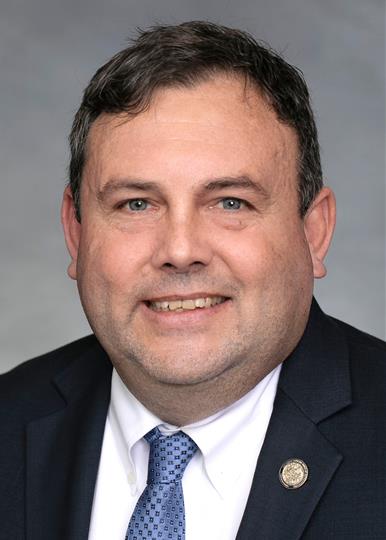
Rep. Eric Ager
Sponsored bills
Maddy summaryHB 774 ("School Breakfast for All") mandates that all North Carolina public schools (pre-K through 12) provide free breakfast to every student, eliminating costs for families. It establishes a Farm-to-Table Initiative requiring schools to partner with local farmers for fresh, locally sourced ingredients in breakfast meals. The bill allocates $39 million in recurring state funds for the 2025-2026 fiscal year to cover program costs, while requiring annual reports on participation rates, costs, and impacts on student health and academic performance. This directly affects all public school students, school districts, and North Carolina agricultural producers.
Maddy summaryHB 780 appropriates $2 million to expand the All Pro Dad program in North Carolina through Family First, Inc., funding school-based chapters, father-child engagement events, and parenting resources. It also creates the "Responsible Fatherhood NC" program under the Department of Health and Human Services, requiring a nonprofit manager to run a statewide media campaign, provide father-focused resources, and promote existing fatherhood initiatives. The bill directs grants to community organizations addressing fathers' needs - such as employment, child support, and parenting skills - with priority given to areas facing high unemployment, incarceration, or single-parent households. The program directly supports North Carolina fathers and their children, aiming to improve family well-being through increased paternal involvement.
Maddy summaryHB 687 clarifies North Carolina's public swimming pool regulations by exempting safety-certified floatation or sensory deprivation systems from standard pool requirements. Specifically, it excludes systems certified by the National Sanitation Foundation (NSF) to meet NSF Standard 50, directly affecting operators of such facilities (e.g., floatation tanks in wellness centers). The bill does not create new safety rules but explicitly states these certified systems are not subject to the state's public pool regulations. This change aligns with existing exemptions for therapeutic pools and private family pools under defined conditions. The exemption takes effect July 1, 2025.
Maddy summaryHB 689 allows North Carolina high school graduates who attended NC public or nonpublic schools for four consecutive years before graduation to pay in-state tuition at state colleges and universities, provided they hold a NC driver's license, have a Social Security number, and enroll immediately after high school. It directly affects qualifying NC high school graduates who would otherwise pay out-of-state tuition rates. Key provisions include requiring proof of NC residency through driver's license and school attendance records each semester, with all application information kept confidential. The bill takes effect for the 2025-2026 academic year and does not change residency status for other purposes.
Maddy summaryHB 711 phases out North Carolina's corporate income tax for C Corporations over time, reducing the rate from 2.25% in 2025 to 0% after 2029. The bill directly affects C Corporations operating in North Carolina, which would pay progressively lower taxes until the tax is eliminated entirely. Key provisions include specific tax rates for taxable years beginning in 2025 (2.25%), 2026 (2%), 2028 (1%), and 0% after 2029. The bill is effective for tax years starting January 1, 2026, and does not change tax treatment for S Corporations.
Maddy summaryHB 688 creates a dedicated annual appropriation of $100,000 from the state General Fund to the Parks and Recreation Trust Fund specifically for inclusive playground projects. It directly affects local governments, public schools, and public authorities (as defined in state law) seeking to build or adapt playgrounds to meet the needs of people with disabilities. The bill provides grants of up to $5,000 per project, requiring recipients to match each $5 in state funds with $1 in local funds. This funding operates separately from other Trust Fund allocations, ensuring dedicated resources for accessibility improvements without reducing existing funding for state parks or coastal access. The bill becomes effective July 1, 2025.
Maddy summaryHB 713 mandates that all North Carolina public schools provide free breakfast and lunch to every student, eliminating meal fees for all. This affects every student enrolled in public schools, including those in charter schools and regional school units, starting with the 2025-2026 school year. The bill appropriates $144 million from the state General Fund to cover costs, with funds allocated based on school size, student eligibility for free/reduced meals, and nutritional quality standards. Schools must comply with federal nutrition guidelines while using state funds to supplement, not replace, existing meal program funding.
Maddy summaryHB 712 establishes North Carolina's Universal Income Program (NCUIP) within the Department of Commerce, providing eligible individuals who participate in job training or community volunteer work with up to $3,000 monthly for up to five years. The program is funded through a 1% surcharge on state income taxes paid by participants after completing the program, with the revenue directed into a "Pay-It-Forward Fund" to support future recipients. It requires the Department of Commerce to implement the program by January 1, 2026, and report annually to the legislature on its progress. The bill directly affects low-income residents struggling to find stable employment who qualify for retraining or volunteer opportunities.
Maddy summaryHB 715 appropriates $13.3 million annually from the General Fund to expand access to North Carolina's Prekindergarten (NC Pre-K) program for eligible children. The funding, allocated to the state's child development agency, will create additional program slots for children seeking enrollment starting July 1, 2025. This bill directly affects low-income 4-year-olds who qualify for the NC Pre-K program by increasing available spots through dedicated state funding. The legislation focuses solely on providing financial resources for program expansion, with no changes to eligibility criteria or program structure.