

Maddy summaryHB 706 changes how North Carolina allocates public school capital funds by eliminating the use of the Department of Commerce's economic development tier designations. Instead, it requires funding to be based on either a county's adjusted property value (with specific matching percentages) or HUD-designated poverty areas. The bill affects all public K-12 schools, community colleges, and UNC institutions receiving state education funds, prohibiting agencies from using Commerce's economic tiers for allocation starting in the 2025-2026 school year. It also repeals prior sections allowing tier-based funding and mandates equal per-school allocations for certain cooperative high schools. The law takes effect July 1, 2025, for new grant applications.
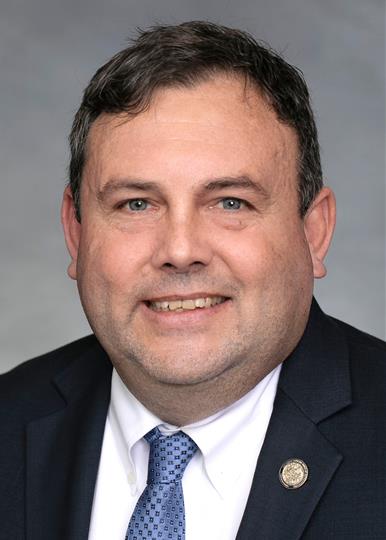
Rep. Eric Ager
Sponsored bills
Maddy summaryHB 684 establishes North Carolina's first formal environmental justice framework to address disproportionate health and environmental risks faced by BIPOC, low-income, and marginalized communities. The bill defines key terms like "communities of color" (40%+ nonwhite residents or 10% higher than county/state) and "disproportionate impact" to guide state agencies. It requires all state agencies to identify and reduce environmental health disparities by considering environmental justice in decision-making, ensuring equitable distribution of benefits like clean air, green spaces, and renewable energy. The law aims to create consistent standards for addressing pollution burdens and health inequities across North Carolina.
Maddy summaryHB 141, the Joe John Remembrance Act, removes an additional fee for special license plates designated for fire department and rescue squad members in North Carolina. The bill amends state law to formally eliminate the "additional fee" listed for these plates (which was already set to $0 in the current fee schedule), meaning eligible firefighters and rescue personnel will pay only the standard registration fee when obtaining or renewing these special plates. This change applies to plates issued or renewed on or after July 1, 2025. The bill does not create new benefits but codifies an existing fee structure for these specific special plates.
Maddy summaryHB 630 restores a sales tax refund program for North Carolina's public school districts. It allows local school administrative units to receive annual refunds for sales tax paid on direct purchases of tangible property and services (like supplies or equipment), excluding items such as electricity, telecom, or food. The refund amount is capped at $13.3 million per year for all districts combined. The bill takes effect July 1, 2025, and adjusts state funding to reflect the restored refund program.
Maddy summaryHB 639 requires all University of North Carolina (UNC) educator preparation programs to give first priority in admissions to applicants who qualify as North Carolina residents for tuition purposes under state law. This directly affects UNC schools offering teacher training programs and prospective in-state students applying to those programs starting in the 2025-2026 academic year. The bill mandates that programs follow the state's standardized residency determination process to verify applicant status. It does not change tuition rates but alters admission priority based solely on residency eligibility.
Maddy summaryHB 651 reduces parent cost-sharing for subsidized child care in North Carolina by lowering the copayment rate from 10% to 7% of gross family income. This change directly affects families enrolled in state-subsidized child care programs who pay a portion of their care costs. The bill appropriates $25 million annually from the General Fund for the 2025-2027 fiscal biennium to fund this reduction, effective July 1, 2025. It also specifies adjusted copayment rates for blended-rate and part-time care scenarios.
Maddy summaryHB 643 clarifies North Carolina's firearm storage law (G.S. 14-315.1) to explicitly include both loaded and unloaded firearms stored near ammunition. It directly affects households with minors by requiring owners to store firearms - whether loaded or unloaded - in a way that prevents unsupervised minor access, addressing a court case where an unloaded gun next to ammo led to a teen's accidental death. The bill amends the statute to specify that storage "in a condition that the firearm can be discharged" covers scenarios where firearms are accessible with ammunition, aligning with the law's intent to prevent harm. The change takes effect December 1, 2025, for offenses committed on or after that date.
Maddy summaryHB 646 is a constitutional amendment that would permanently ban all slavery and involuntary servitude in North Carolina, removing the current exception allowing forced labor as punishment for crimes. If approved by voters in the November 2026 election, the amendment would change the state constitution to state that slavery and involuntary servitude are "forever prohibited" without any exceptions. This change would directly affect incarcerated individuals by ending the legal basis for requiring prison labor as punishment. The amendment requires voter approval through a statewide referendum before taking effect.
Maddy summaryHB 624 requires drug manufacturers to notify state agencies, insurers, and pharmacy benefit managers 60 days before raising prices on prescription drugs by 10% or more in a year. Manufacturers must disclose the justification for price hikes, previous marketing budgets, and historical pricing data within 30 days of notification. The bill also mandates rapid disclosure of pricing for new FDA-approved drugs and requires manufacturers to inform prescribers if a drug contains ingredients known to cause dependency. The state will create a public online portal for transparency, including annual reports on the most prescribed, costliest, and fastest-increasing drugs, but does not set price limits.
Maddy summaryHB 633 appropriates $1.678 million annually in recurring funds and additional nonrecurring funds to expand sickle cell disease services in North Carolina. The bill directly supports approximately 7,000 North Carolinians living with sickle cell disease by funding comprehensive medical centers (like Atrium Health, Duke, and UNC Chapel Hill), creating transition coordinators to help patients move from pediatric to adult care, and providing grants to community organizations in underserved areas. Key mechanisms include distributing $1.3 million yearly to medical centers for care coordination, allocating $75,000 annually per center for transition staff, and funding a statewide emergency department toolkit to improve acute care. The bill becomes effective July 1, 2025, with funds designated for the 2025-2027 fiscal biennium.