

Maddy summaryThe Transportation for the Future Act reorganizes North Carolina's transportation funding to prioritize sustainable projects like public transit (including bus rapid transit and commuter rail), bike lanes, and pedestrian pathways. It requires at least 20% of transportation funds to be allocated to non-highway projects and caps state funding for commuter rail and light rail at 10% of project costs. The bill establishes three funding categories with project selection criteria emphasizing safety, congestion reduction, economic growth, and multimodal transportation. This change affects statewide transportation planning and funding decisions to modernize the system for future sustainability.
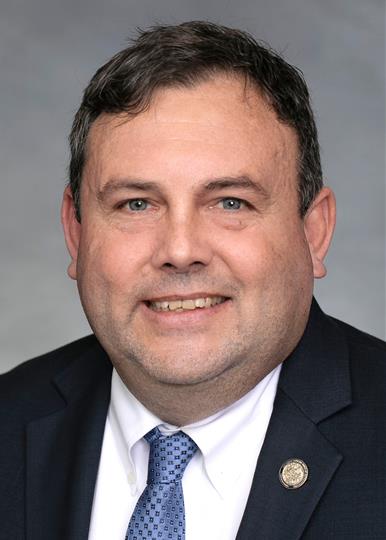
Rep. Eric Ager
Sponsored bills
Maddy summaryHB 628 reenacts North Carolina's state-level child tax credit, which expired, to provide financial support to families with children. It directly affects low- and middle-income North Carolina residents who qualify under federal child tax credit rules, offering up to $250 per child annually based on household income. Key provisions include income-based credit amounts (e.g., $250 for married couples filing jointly with under $40,000 income) that phase out at higher earnings, and the credit is refundable - meaning families may receive cash payments even if they owe no state tax. The bill takes effect for 2025 tax years and mirrors the federal credit structure without creating new policy.
Maddy summaryHB 654 designates the week containing March 12 each year as "Girl Scouts Week" in North Carolina. This ceremonial bill recognizes Girl Scouts of the USA's history and the achievements of Gold Award recipients, who complete community-focused leadership projects. It does not create new policies, funding, or obligations - it simply establishes an annual observance period for celebration. The bill directly affects public recognition efforts by state and local governments, schools, and community groups.
Maddy summaryHB 653 lowers the federal funding threshold that would trigger loss of Medicaid coverage for North Carolina's newly eligible expansion recipients. Currently, coverage would end if federal funding for this group drops below 90% compared to non-expansion recipients; the bill reduces this threshold to a lower percentage. If funding falls below the new threshold, Medicaid coverage for this group must discontinue promptly, with state agencies required to notify lawmakers and CMS. The bill affects only those added to Medicaid through the 2014 expansion, not all Medicaid beneficiaries.
Maddy summaryHB 645 (Friendly NC Act) strengthens hate crime laws in North Carolina by expanding definitions to include offenses motivated by race, religion, nationality, or other protected characteristics. It increases penalties for hate-motivated misdemeanors (elevating them to Class 1 misdemeanors or felonies) and creates new felony charges for hate-motivated serious bodily injury. Victims gain civil remedies (including emotional distress damages and attorney fees) and can request restorative justice sessions with trained facilitators, paid for by the offender. The bill directly affects individuals who commit hate crimes and victims of such offenses, aiming to promote inclusivity through enhanced legal protections.
Maddy summaryHB 300 establishes a program to reimburse owners of retired first responder dogs for veterinary care. It directly affects owners of canines that served with law enforcement, fire departments, or correctional agencies in roles like narcotics detection or search and rescue, after retiring on or after July 1, 2024. The bill requires registration of the dog and owner with the Department of Public Safety, then allows reimbursement of up to $1,500 annually for covered care - including routine check-ups, vaccinations, emergencies, surgeries, and euthanasia. Owners must submit itemized vet bills within 90 days of service.
Maddy summaryHB 608 amends North Carolina's computer trespass law to add automatic minimum damages for unauthorized copying of protected health information (like medical records) or government employee personnel files (including SSNs, medical history, and salary details). It establishes a $5,000 minimum penalty per violation for breaches involving either type of sensitive data, replacing the previous requirement to prove actual damages. The law directly affects healthcare providers, government employers, and anyone handling such data, ensuring victims can recover at least $5,000 per incident without proving financial loss. The bill takes effect July 1, 2025, and applies to offenses committed after that date.
Maddy summaryHB 599 provides a 7.5% across-the-board salary increase for all North Carolina Forest Service (NCFS) employees, directly affecting approximately 500+ state workers. The bill appropriates $2.6 million for the 2025-2026 fiscal year (effective July 1, 2025) and an additional $5.2 million for 2026-2027 (effective July 1, 2026) from the state general fund. These increases are funded through recurring annual appropriations, meaning the funding is guaranteed each year. The bill requires no new policy changes but allocates specific state budget resources to adjust employee compensation.
Maddy summaryHB 619, the Health Care Security Act, repeals a law that would have ended Medicaid expansion coverage in North Carolina if federal funding dropped below 90%. This change directly affects the state's Medicaid expansion population, ensuring their coverage remains secure regardless of federal funding fluctuations. The bill removes a specific statutory trigger (G.S. 108A-54.3C) that previously threatened automatic discontinuation of benefits. It does not create new programs or alter eligibility but prevents coverage loss due to federal funding changes. The act becomes effective upon enactment.
Maddy summaryHB 601 appropriates $10 million annually from North Carolina's General Fund (2025-2027) to fund grants for Disabled American Veterans (DAV) chapters. The bill provides up to $1 million per chapter per year to renovate or expand facilities and offer additional resources directly to disabled veterans served by these nonprofit chapters. Grants must be distributed statewide, with unspent funds rolling over annually instead of returning to the state treasury. The Department of Military and Veterans Affairs must report annually on grant recipients, amounts, and county distribution starting in 2026.