

Maddy summaryHB 35 designates November of each year as Military Appreciation Month in North Carolina. The bill creates a symbolic recognition within state law, honoring military service members and veterans during this month. It does not establish new programs, funding, or requirements - it simply formally names November for this purpose. The bill affects the state government's official calendar and public recognition efforts, with no direct impact on individuals or organizations.
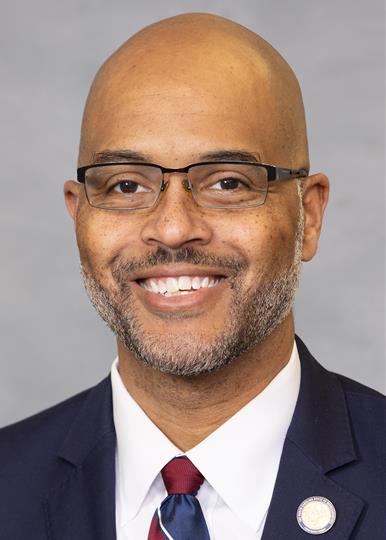
Rep. Brandon Lofton
Sponsored bills
Maddy summaryHB 416 appropriates $30,000 from the state General Fund for the 2025-2026 fiscal year to provide a directed grant to the Boys & Girls Clubs of Durham and Orange Counties. The funds will support a six-part youth development program focusing on teen recruitment, emotional safety, leadership, trauma-informed practices, cultural inclusion, and college/career readiness for area youth. This bill directly affects the Boys & Girls Clubs in those counties and the young people they serve, becoming effective July 1, 2025.
Maddy summaryHB 420 allocates $4.3 million annually to fund teacher recruitment programs like "Grow-Your-Own" and "2+2" pathways in high-need schools, targeting efforts to recruit and prepare new educators. It requires the State Board of Education to develop a teacher licensure and compensation reform plan by March 2026, including pathways for new teachers and retention strategies. The bill also funds a study to expand educator preparation programs to graduate 5,000 in-state teachers annually, with a focus on increasing diversity among educators. These provisions directly affect public schools, teacher preparation programs, and prospective teachers through new funding streams and policy requirements.
Maddy summaryHB 365, the Workforce Education Act, revises North Carolina's community college funding model to base allocations on student enrollment in workforce-focused programs like career training and continuing education, starting in 2025-2026. It creates an Enrollment Increase Reserve (funded with $6 million initially) to provide additional support to colleges experiencing enrollment growth exceeding 5% or 325 students, preventing funds from reverting to the general budget. The bill also expands funding for cooperative high schools in underserved areas, with tiered payments based on county development status (e.g., $740,000 for first high schools in "Tier One" regions). These changes directly affect community colleges, public school students accessing career programs, and participating high schools seeking to expand workforce education opportunities.
Maddy summaryHB 242 adds freestanding psychiatric hospitals (licensed, Medicare-certified facilities primarily providing psychiatric care that are not state-owned) to North Carolina’s Medicaid Healthcare Access and Stabilization Program (HASP). This expands the existing program - which currently reimburses acute care hospitals - to include these psychiatric hospitals, providing them with increased Medicaid reimbursements. The funding will come from a new quarterly assessment levied on the psychiatric hospitals themselves, calculated as a percentage of their hospital costs. The bill does not change patient eligibility but alters how these specific hospitals receive Medicaid payments through the HASP program.
Maddy summaryHB 316 reenacts North Carolina's Child Tax Credit to help families cover child care costs, with reimbursement percentages based on income and child age (e.g., 7-13% for dependents aged 6-12). It allocates $200 million annually to expand the NC Pre-K program, adding 32,000 slots for 4-year-olds, and $35 million to increase subsidized child care funding. The bill also requires public schools to provide free lunches at no cost to students through state funding tied to school nutrition evaluations. Additionally, it mandates a report on creating a high school child care apprenticeship program. The bill directly affects families with children, public schools, and child care providers across North Carolina.
Maddy summaryHB 326 requires North Carolina's Department of Public Instruction (DPI) to study ways to increase teacher planning time or reduce workloads that cut into it. The DPI must report to lawmakers by February 15, 2026, with specific recommendations, cost estimates, and other relevant findings. The bill allocates $5,000 in one-time funding for the study, which can include partnering with outside experts. This is a procedural study bill with no immediate policy changes; it aims to inform future decisions about teacher workloads in public schools.
Maddy summaryHB 289 adds one new seat to North Carolina's Criminal Justice Education and Training Standards Commission, specifically allowing the North Carolina Police Benevolent Association (PBA) to select a full-time sworn law enforcement officer to serve on the Commission. This amendment increases the Commission's membership from 35 to 36 members by adding the PBA representative to the existing list of appointed positions. The initial appointee selected by the PBA would serve a three-year term beginning July 1, 2025, with subsequent appointees serving three-year terms as determined by the PBA. The bill does not change training standards or requirements, only the composition of the Commission that oversees them.
Maddy summaryHB 265 allows Charlotte-Mecklenburg Schools (CMS) to align its academic calendar with the schedule of local community colleges, removing the requirement that CMS follow the standard August 26 opening date and June 11 closing date. The bill directly affects CMS, enabling it to coordinate school terms with community college calendars for better scheduling flexibility. Key provisions include waiving the standard date rules for CMS while requiring compliance with minimum instructional day requirements. This change applies only to CMS and takes effect for the 2025-2026 school year.
Maddy summaryHJR 157 is a procedural resolution inviting Governor Josh Stein to address a joint session of the North Carolina General Assembly on March 12, 2025. It directs a committee of five House members and five Senate members to extend the invitation and specifies that the governor's cabinet, Council of State members, and state judges may attend. This resolution does not create new policy or affect any laws; it solely schedules a ceremonial address. The invitation is effective upon ratification, as noted in the resolution's text.