

Maddy summaryHB 517 modifies North Carolina's Nonprofit Corporations Act to expand merger options for charitable organizations and simplify disclosure requirements. It allows charitable nonprofits to merge with specific tax-exempt limited liability companies (LLCs) that would qualify for 501(c)(3) status if not disregarded for tax purposes, and clarifies rules for merging with unincorporated entities like partnerships. The bill also permits charitable organizations to satisfy state disclosure obligations by providing the acknowledgment required for federal tax deductions, aligning state and federal compliance. This directly affects North Carolina-based charitable nonprofits and their merger partners by reducing administrative barriers and clarifying legal pathways.
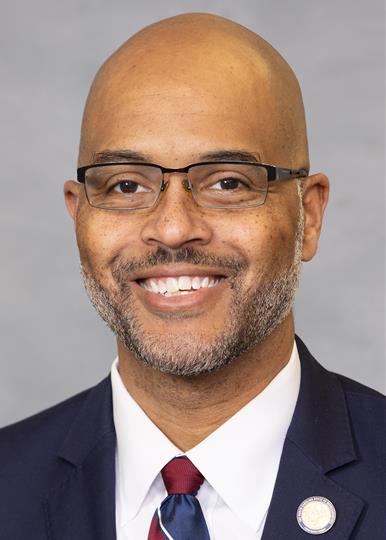
Rep. Brandon Lofton
Sponsored bills
Maddy summaryThis bill honors the life and memory of Louis Milford Pate Jr., a former North Carolina state legislator and retired Air Force navigator. It formally recognizes his military service, public service career, and community contributions while extending sympathy to his family following his death. The resolution directs the Secretary of State to send a certified copy of the document to Pate's family as a final tribute.
Maddy summaryThis bill proposes a constitutional amendment to guarantee voters in North Carolina the right to early voting for all primary and general elections. If approved by voters in a 2026 referendum, the amendment would require county election boards to designate a minimum of 14 days for early voting, with sites open at least 8:00 A.M. to 7:30 P.M. on weekdays and same-day voter registration available at these sites. The legislation also mandates that early voting locations and staffing levels be adjusted to meet voter demand, ensuring consistent operating hours across the state. This change would be implemented only if a majority of voters cast ballots in favor of the amendment at the upcoming general election.
Maddy summaryThis House Resolution honors the life and memory of James Michael "Mike" Clampitt, a former member of the North Carolina House of Representatives from District 119. The bill formally recognizes his extensive background in public service, which included decades as a firefighter and deputy sheriff in North Carolina before his election to the state legislature. It expresses the House's appreciation for his legislative work and extends condolences to his family, with a copy of the resolution sent to them.
Maddy summaryThis House Resolution honors the Carolina Hurricanes hockey team for winning the 2026 Stanley Cup and recognizes their contributions to the state of North Carolina. The bill formally acknowledges the team's historic season, including their record-breaking regular performance and playoff victory, while also praising the owner, management, and coaching staff for their leadership. It directs the Principal Clerk to send a certified copy of the resolution to the team, its owner Tom Dundon, and head coach Rod Brind'Amour. This measure serves as a commemorative gesture rather than establishing new laws or funding.
Maddy summaryThis bill expands tuition waivers at North Carolina community colleges to children of public safety workers who are injured or disabled in the line of duty. It allows children aged 17 to 24 of law enforcement officers, experienced correctional officers, and firefighters to attend classes for free if their parent is permanently and totally disabled due to a traumatic work-related injury. The waiver covers the cost of tuition for the time needed to complete the student's chosen educational program, provided they meet standard admission requirements. The law takes effect with the 2026-2027 academic year.
Maddy summaryThis bill establishes an Interstate Compact for School Psychologists in North Carolina, allowing licensed professionals to practice in other participating states without facing repetitive licensing requirements. The legislation creates a commission to oversee the agreement and defines specific rules for mobility, including provisions for military families and standards for professional conduct. Additionally, the bill allocates funds to support a virtual training program for school psychologists. By streamlining the licensure process, the measure aims to increase the availability of qualified mental health services in schools across member states.
Maddy summaryThis bill, known as the Mike Clampitt 1st Responder Tax Fairness Act, aims to expand tax exemptions for volunteer fire departments and rescue squads in North Carolina. Specifically, it allows these independent groups, which have two or fewer paid employees and are already exempt from state income tax, to avoid paying a highway use tax on specific emergency vehicles like fire trucks, forest firefighting units, and other emergency service vehicles. The change applies to vehicles when a certificate of title is issued on or after July 1, 2026, ensuring these organizations can acquire necessary equipment without incurring this particular tax. By broadening the existing exemption, the legislation directly benefits volunteer responders who operate outside of local government units.
Maddy summaryHB 1193, known as the Mike Clampitt Bone Marrow Donation Act, designates November as Marrow Donation Awareness Month in North Carolina. The bill requires the Department of Health and Human Services and the Department of Motor Vehicles to promote bone marrow donation by posting public service announcements online and displaying them at driver license offices. Additionally, the legislation appropriates $100,000 to fund a state-wide public awareness campaign for this initiative, with the law taking effect on July 1, 2026.
Maddy summaryThis bill clarifies that designating a historic district in Mecklenburg County does not count as "down-zoning" under state law. By making this distinction, the legislation ensures that local governments can create historic districts without needing the written consent of every property owner within the area, a requirement that currently applies to other types of down-zoning. The law also prohibits waiting periods that prevent applicants from resubmitting denied development requests. These changes apply retroactively to December 11, 2024, and affect only Mecklenburg County.