

Maddy summaryHB 546 modernizes North Carolina's Medicaid program by requiring the state to develop team-based care coordination for individuals with alcohol and opioid use disorders, including screening, medication, and recovery support. The bill also allows telehealth-only providers to enroll in Medicaid without needing a physical office in the state and mandates a statewide specialty plan for children in foster care or receiving adoption assistance, to be implemented by December 2025. These changes directly affect Medicaid beneficiaries with substance use disorders, telehealth providers, and eligible children and families. The Department of Health and Human Services must report on the implementation of the substance use care and telehealth provisions by October 1, 2025.
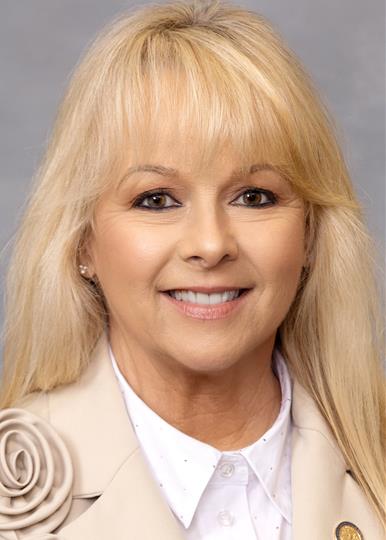
Rep. Julia Greenfield
Sponsored bills
Maddy summaryHB 948, the P.A.V.E. Act, amends North Carolina law to allow Mecklenburg County to levy an additional 0.5% local sales tax specifically for public transportation systems. The bill defines "public transportation system" broadly to include buses, transit facilities, bike/pedestrian infrastructure, and automated transport tunnels, while excluding general roads. Funds collected must supplement, not replace, existing public transit funding and can only be used for financing, building, operating, or maintaining these systems. The tax proceeds would be distributed monthly to Mecklenburg County and its public transportation authorities per a financial plan, with the bill taking effect only if Mecklenburg levies this tax.
Maddy summaryHB 612, the "Fostering Care in NC Act," updates North Carolina's laws governing child abuse, neglect, and dependency cases. It expands the definition of "abused juveniles" to include specific offenses like sexual crimes, human trafficking, and certain violent acts, affecting how cases are classified. The bill requires county social services directors to use either a family-centered assessment or a formal investigation when reviewing reports, and to collect military affiliation details of the juvenile's caregiver. It also clarifies that court jurisdiction over juveniles continues until age 18, emancipation, or death. These changes standardize responses to child welfare reports and improve information gathering for safety decisions.
Maddy summaryHB 373 allows University of North Carolina (UNC) institutions to offer tuition discounts to two specific groups: military students receiving federal or North Carolina National Guard tuition assistance, and students enrolled in employer-sponsored financial support programs approved by UNC. The discount covers the difference between the military/employer funding and full tuition, without creating new free tuition programs. UNC must report annually to the legislature on the number of students receiving these discounts and their financial impact on institutions. The policy takes effect for the 2025-2026 academic year.
Maddy summaryHB 578, the Jason Flatt Act, requires all North Carolina public K-12 schools to implement suicide prevention education and training for school staff. It mandates that licensed educators complete at least one hour of annual suicide prevention training, while staff working with grades 6-12 must receive guidelines for identifying at-risk students and procedures for referrals. Schools must adopt a mental health plan including these elements, with initial staff training of six hours (within six months of hire) and two hours annually thereafter. The law applies to all public schools, charter schools, regional schools, and lab schools starting the 2025-2026 school year.
Maddy summaryHR 778 is a non-binding resolution passed by the North Carolina House of Representatives expressing support for the state's historical and economic ties with the United Kingdom. It highlights North Carolina's cultural connections (e.g., city names like Raleigh and Charlotte), economic partnerships (including $1 billion in UK investment and 218 UK-owned companies employing 43,200 workers), and trade relationships (over $2.5 billion in annual trade). The resolution urges the U.S. Congress to strengthen trade and investment cooperation with the UK and directs transmission to the UK Embassy, consulates, and North Carolina's congressional delegation. As a symbolic gesture, it does not create new laws or policy changes but reinforces existing diplomatic and economic bonds.
Maddy summaryThis resolution (HR 777) expresses the North Carolina House of Representatives' support for the longstanding friendship and economic ties between North Carolina and France. It highlights historical connections (like French Huguenot settlements and General Lafayette's role), notes France as a major investor in NC ($429M since 2013) and employer (15,500 jobs), and urges closer U.S.-France trade cooperation. The resolution is purely symbolic, with no new policies or funding, and serves to affirm existing bilateral relations through ceremonial recognition.
Maddy summaryHB 429 would have authorized a special license plate for North Carolina vehicle owners supporting the NC State University College of Veterinary Medicine's Turtle Rescue Team. The bill specified a $30 annual fee per plate, with $20 directly funding the Turtle Rescue Team's work rehabilitating turtles, while $10 went to a state fund. However, the bill explicitly states this plate program expired on July 1, 2016, meaning it is no longer active or available for purchase. The legislation primarily affected vehicle owners who chose to buy this specific plate, with the fees supporting the Turtle Rescue Team's wildlife rehabilitation services.
Maddy summaryHB 569 requires PFAS manufacturers (those who produce PFAS compounds like GenX) to pay public water systems for cleaning up PFAS contamination in drinking water when levels exceed EPA safety limits. It allows the Environmental Quality Secretary to order polluters to cover actual cleanup costs, including technology to reduce PFAS levels, and applies retroactively to expenses since 2017. The bill appropriates $300,000 for implementation and mandates annual reports on fund use, with water systems refunding ratepayers when manufacturers cover costs. This directly affects water systems burdened by PFAS cleanup, PFAS manufacturers deemed responsible, and ratepayers who may see reduced future water rates.
Maddy summaryHB 485 requires North Carolina's Medicaid agency to request federal approval to extend Medicaid coverage for personal care services to adults living in licensed adult care homes who earn more than the current State-County Special Assistance income limit but stay below 180-200% of the federal poverty level. The bill specifically targets individuals who would qualify for lower-income Medicaid assistance if not for their higher earnings. Before implementing this coverage, the agency must submit a CMS request meeting three conditions: covering the specified income group, ensuring cost savings offset new expenses, and complying with legal requirements. This bill does not immediately change coverage - it only authorizes a federal request, pending CMS approval.