

Maddy summaryHouse Bill 754 aims to protect disabled and older adults from financial exploitation. It empowers financial institutions to take action when they reasonably suspect such exploitation by updating relevant laws. Financial institutions are required to report suspected cases to law enforcement and social services, and they can contact designated "trusted contacts." The bill also allows these institutions to temporarily delay or refuse suspicious transactions for up to 30 days and grants them immunity from liability for these good-faith actions.
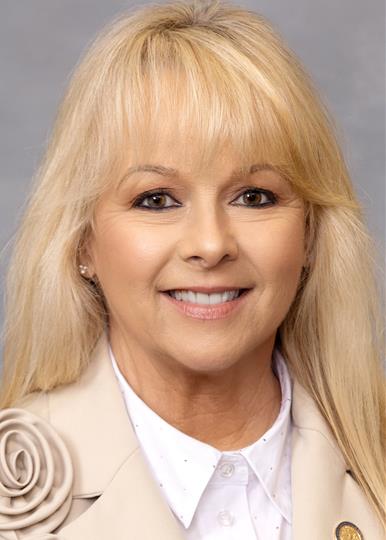
Rep. Julia Greenfield
Sponsored bills
Maddy summaryHB 572 authorizes the Department of Military and Veterans Affairs to establish a statewide pilot program providing Electroencephalogram combined Transcranial Magnetic Stimulation (eTMS) treatment. This program is for veterans, first responders, and their immediate family members experiencing conditions such as substance use disorders, mental illness, sleep disorders, traumatic brain injuries, and PTSD. The Department will select a provider to create a network for in-person and off-site care, aiming for statewide access. Participants in the program will also receive neurophysiological monitoring, counseling, wellness programming, and access to a peer-to-peer support network. The selected provider must collect and report treatment outcomes and expenditures to the Department and legislative committees by September 15, 2026.
Maddy summaryHB 121 provides local boards of education with additional flexibility in adopting their school calendars. It removes the current state-mandated earliest opening date for students (the Monday closest to August 26) and the latest closing date (the Friday closest to June 11). This change allows local boards to determine the specific opening and closing dates for public schools under their authority. The bill directly affects public schools and students in North Carolina and would apply starting with the 2025-2026 school year.
Maddy summaryHB 772, titled the North Carolina Student Lifeline Act, requires public schools and community colleges in North Carolina to provide students with the Suicide and Crisis Lifeline phone number. It mandates that institutions display the phrase "To reach the Suicide and Crisis Lifeline, call 988 or text HOME to 741741." in several locations. These locations include new student identification cards issued to students in grades six through 12, the school website, and the home screen of any electronic device issued to students. The information must also appear on school agendas or calendars, documents used during suicide awareness activities, and registration documents. Additionally, schools are required to annually verify the accuracy of the Lifeline contact information.
Maddy summaryHouse Bill 515, the North Carolina Economic Abuse Prevention Act, creates a new legal framework to protect survivors of domestic violence and children in foster care from "coerced debt." It defines coerced debt as debt incurred through duress, intimidation, or undue influence and provides pathways for individuals to notify creditors of such debt using specific documentation. Upon receiving adequate documentation, creditors must pause collection efforts while reviewing the claim. The bill also establishes that a person who causes another to incur coerced debt is civilly liable to the claimant for the debt amount, attorney's fees, and costs.
Maddy summaryHB 552 establishes the Agricultural Manufacturing Investment Grant Account within North Carolina's One North Carolina Fund, allocating up to $5 million for new economic development incentives. This account provides competitive grants to eligible agricultural manufacturers in the state. The Department of Commerce will administer these grants, prioritizing projects in less developed areas, those using advanced agricultural technologies, or those with significant research and development. To qualify, recipients must commit to investing at least $5 million of private funds, employ a minimum of 25 full-time employees, and meet specific wage requirements. Grants are capped at $100,000 annually per recipient for up to five years.
Maddy summaryJesse's Law (HB 896) mandates specific training for professional personnel involved in child custody proceedings in North Carolina. It requires judges, magistrates, judicial officers, and court personnel, including guardian ad litems and mediators, to complete trauma-informed and culturally appropriate training. This training focuses on the dynamics, signs, and impact of domestic violence and child abuse, including child sexual abuse. Professionals must complete an initial 20 hours of training and 15 hours every five years, based on evidence-based research. The bill aims to improve the ability of these individuals to recognize and respond to abuse and trauma when making child custody decisions.
Maddy summaryHouse Bill 283 establishes the Small Business Investment Grant (SBIG) Program within the One North Carolina Fund, designed to provide financial assistance to eligible small businesses looking to establish or expand facilities in the state. The bill allocates up to $10 million from the Fund to this new account. Through the SBIG Program, competitive grants are offered to businesses meeting specific criteria, such as having 250 or fewer employees or less than $5 million in annual revenue, investing $10-$30 million, and creating new jobs with competitive wages. Grants are capped at $500,000 annually per recipient, up to $2.5 million total, over a maximum of five years. Additionally, the bill renames the "One North Carolina Small Business Account" to the "Small Business Research and Technology Account," which continues to support federal SBIR/STTR grant incentive and matching programs.
Maddy summaryHB 567, titled "Ensure Access to Biomarker Testing," mandates that North Carolina health benefit plans provide coverage for biomarker testing for the diagnosis, treatment, and monitoring of various diseases or conditions. This coverage is required when the testing is supported by medical and scientific evidence, such as FDA approval or nationally recognized clinical guidelines. The bill also prohibits insurers from denying coverage, raising premiums, or charging higher rates based on an individual's biomarker information. Additionally, it establishes a 24-hour timeline for insurers to complete utilization reviews for urgent healthcare services, aiming to improve access to diagnostic testing and care for North Carolinians.
Maddy summaryHB 627 requires local governments to allow the construction of at least one accessory dwelling unit (ADU) for each single-family home in residential zones, aiming to increase affordable housing options. The bill prohibits local governments from imposing certain restrictions, such as minimum parking requirements, banning long-term rentals of both units, or setting maximum ADU sizes under 800 square feet. However, local governments may still regulate aspects like setbacks or require ADUs to be smaller than the primary dwelling. Local governments must adopt regulations by January 1, 2027, or ADUs will be permitted without any local limitations.