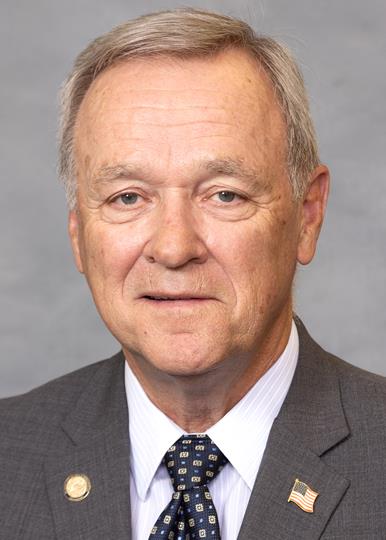
SB 680 creates the North Carolina Child Care Finance Agency to address the state's childcare shortage through targeted financing. The agency will provide loans and bonds for constructing or renovating childcare facilities, prioritizing small providers (under 10 facilities), high-quality licensed centers, and projects in high-need areas. It specifically supports faith-based organizations, businesses offering on-site childcare for employees, and encourages full-day care and workforce development partnerships. The bill directly affects childcare providers, employers, and families by expanding affordable, accessible childcare options across North Carolina.
HB 708 establishes a $2.5 million annual grant program to fund after-school robotics education for North Carolina high school students. It provides grants to public schools or community organizations partnering with approved robotics organizations (like nonprofits or universities) to cover robotics kits, coach stipends, competition fees, and program coordination. The bill also requires schools to grant excused absences for students participating in robotics competitions, aligning with existing policies for academic events. This directly supports high school students in STEM fields through structured, competitive robotics programs while mandating annual reporting on grant usage and student outcomes.
HB 534 appropriates $700,000 from North Carolina's General Fund for the 2025-2026 fiscal year to establish sexual assault nurse examiner (SANE) training programs at Rowan-Cabarrus Community College and Wake Technical Community College. Each college receives $350,000 to hire a full-time faculty member ($105,000), a clinical coordinator ($105,000), purchase equipment/supplies ($45,000), and cover program development and accreditation costs ($95,000). The bill directly affects these two community colleges and future healthcare professionals seeking SANE certification. It creates a concrete funding mechanism to expand training capacity for nurses specializing in sexual assault victim care.
HB 120 appropriates $1,040,514 annually for fiscal years 2025-2026 and 2026-2027 to expand North Carolina's Project C.A.R.E. program. The bill directly funds support services for family caregivers of individuals living with Alzheimer's disease or related dementias. It provides recurring state funding to the Division of Aging and Adult Services to enhance existing caregiver assistance programs. The legislation becomes effective July 1, 2025, without altering eligibility or service requirements.
HB 526 allocates $209,000 in one-time state funds to Onslow County to establish a drug testing laboratory at the Sheriff's Office. This funding directly supports the sheriff's office in improving the speed and accuracy of drug testing for local law enforcement investigations. The bill directs the Office of State Budget and Management to provide the grant for the 2025-2026 fiscal year. It will become effective on July 1, 2025.
SB 226 expands eligibility for death benefits under North Carolina's Public Safety Employees' Death Benefits Act to include firefighters who die from specific cancers. It adds any cancer diagnosed after January 1, 2022, that qualified a firefighter for benefits under the Firefighters' Cancer Insurance Program (or its predecessor, the Health Benefits Pilot Program) to the list of cancers presumed to be "killed in the line of duty." This means firefighters receiving cancer benefits under the program will automatically qualify for death benefits if they later die from that cancer. The bill also permanently establishes the Cancer Insurance Program as the successor to the pilot program and allocates $2 million annually for related death benefits starting July 1, 2025.
SB 284 allocates $8.3 million in state funds to Guilford County Schools for the 2025-2026 school year. Specifically, $5 million will expand high-dosage tutoring programs by hiring more tutors, broadening subject areas, and increasing session availability. An additional $3.3 million will support learning hubs designed to help at-risk students complete graduation requirements and improve graduation rates. The bill directly affects Guilford County Schools students and staff through these targeted academic support programs.
HB 229 adjusts North Carolina's Medicaid reimbursement rates for ambulatory surgical centers (ASCs), requiring payments to be at least 95% of the current Medicare Ambulatory Surgical Centers fee schedule. This change directly affects ASCs by increasing their Medicaid payments, with the state appropriating $10.476 million annually from the General Fund to cover the cost and match $19.135 million in federal funds each year for the 2025-2027 fiscal biennium. The bill mandates these rate adjustments to take effect on July 1, 2025, ensuring ASCs receive consistent reimbursement aligned with Medicare rates. The legislation focuses solely on establishing the new payment structure and funding mechanism, without altering eligibility or services.
HB 660 appropriates $22.65 million in nonrecurring state funds for specific projects in Cabarrus County and its towns. The bill directs $7 million to the Town of Midland for road improvements in Bethel Glen and Tucker Chase developments, $12.7 million to Harrisburg for turf fields, a passenger rail station, and YMCA building completion, $1.95 million to Cabarrus County for health center expansion, and $1 million to Cabarrus Cooperative Christian Ministry for crisis assistance. These funds are allocated for the 2025-2026 fiscal year and become effective July 1, 2025. The bill directly affects local governments and community organizations in Cabarrus County through targeted infrastructure, health, and social services funding.
HB 943 appropriates $100,000 annually from 2025-2027 to expand North Carolina's Teacher Cadet Program (NCTCP), which targets high-achieving high school students - particularly those from underrepresented groups like people of color (42% of cadets vs. 21% of current teachers) and males (25% of cadets) - to enter teaching careers. The funds will support statewide teacher training workshops (in-person and online), prioritize expansion in counties with high teacher turnover (especially rural and low-performing schools), and develop training for underrepresented cadets using current teachers and students. This directly affects high school students in NCTCP participating in the program and their future schools, aiming to strengthen the teacher pipeline in underserved communities. The bill focuses on concrete funding for program growth, not policy changes to teaching standards or school operations.