

Maddy summaryThis bill requires New Jersey's Governor to include a detailed annual report in the budget message about revenues and spending from the "societal benefits charge" on utility bills. The report must show, for each of the past five fiscal years and the current year, how much was collected from electricity and gas customers, and how those funds were spent - specifically for energy efficiency programs, low-income energy assistance, plug-in electric vehicle incentives, and other approved initiatives. It also mandates itemized breakdowns of funds allocated by each utility company. The goal is to increase transparency about how this charge, embedded in customer bills, finances state energy and assistance programs.
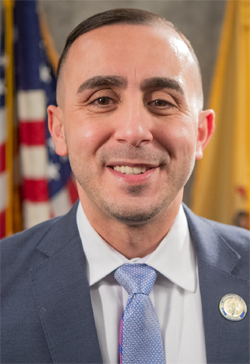
Asm. Al Abdelaziz
Sponsored bills
Maddy summaryThis bill prohibits real estate sellers and their agents in New Jersey from using photos in advertisements that have been created or edited with generative artificial intelligence or other software intended to fundamentally alter an image. It requires all property photos to reflect the actual current state of the dwelling and be no older than five years. Sellers may still use AI or editing tools to add furniture or non-fixed items, provided they disclose the use of such technology in advertisements and provide original unaltered images upon request. Violations of these rules could result in civil penalties of $500 for the first offense and up to $1,000 for subsequent offenses.
Maddy summaryThis bill, known as the SLUMLORD Act, aims to strengthen habitability protections for residential tenants in New Jersey by increasing oversight of landlords. It defines 'habitability' to include conditions that ensure living spaces are safe, healthy, and fit for human use, while also establishing who qualifies as a 'beneficial owner' of a rental business. The legislation requires landlords to designate a 'principal agent' to handle tenant complaints and mandates that rental units comply with state construction and safety codes. To support these enforcement efforts, the bill appropriates $5 million for the Department of Community Affairs.
Maddy summaryThis New Jersey bill requires the state's Division of Housing and Community Resources to create a reimbursement program for local shelters that serve homeless individuals from other municipalities. Under the plan, a municipality would share the costs of providing services like food, shelter, and transportation to nonresident homeless people, with the state providing $10 million in funding to support the initiative. To qualify for reimbursement, shelters must submit applications verifying that the individuals served do not live in the municipality where the shelter is located, and the program excludes cases where people voluntarily moved for work or family reasons. The legislation also mandates that all participating shelters use the Homeless Management Information System to track occupancy and service data in real time.
Maddy summaryThis bill requires NJ FamilyCare, New Jersey's public health insurance program, to cover prescriptions for healthy foods for certain enrollees. It defines a food prescription as a written order from a healthcare provider for specific foods to treat diet-related health conditions. The legislation amends existing state laws to establish a program that supports small food retailers and pharmacies in stocking and selling fresh produce and other nutritious items at affordable prices. By covering these food prescriptions, the bill aims to improve access to healthy foods for low-income residents, particularly those in areas with limited grocery options. The changes apply to NJ FamilyCare participants who receive healthcare provider prescriptions for specific healthy foods as part of their treatment plans.
Maddy summaryThis New Jersey bill requires institutions of higher education and private employers with 100 or more employees to provide free feminine hygiene products to students and staff. It also mandates that public restrooms accessible to the menstruating population stock these items, while establishing a $500,000 grant program to support implementation at community colleges. The legislation defines covered products as sanitary napkins, tampons, panty liners, menstrual cups, and disks, and requires agencies receiving federal funds to include provisions for these products in their applications.
Maddy summaryThis bill amends New Jersey law to allow veterans who hold a Combat Action Ribbon (as certified by their military discharge documents, such as a DD-214) to obtain the "Combat Infantryman Badge" license plate, which was previously only available to those with a Combat Infantryman Badge. The special plate, featuring the Combat Infantryman Badge emblem and the words "Combat Infantryman Badge," will now be accessible to Marines and other veterans awarded the Combat Action Ribbon. A $15 additional fee applies for this plate, beyond standard vehicle registration costs. Surviving spouses of eligible veterans may continue to display the plate on their vehicle under existing provisions.
Maddy summaryThis bill creates the "New Jersey Reparations Task Force" to research and develop proposals addressing generational harms from New Jersey's role in slavery and systemic racial discrimination. The task force will examine historical and current disparities affecting Black communities, including voter disenfranchisement, youth incarceration rates, housing discrimination, wealth gaps, and school segregation. It will produce a report with policy recommendations for state-based reparations based on documented harms. The bill directly affects Black residents of New Jersey who face these systemic inequities, as outlined in the legislative findings.
Maddy summaryThis bill shortens the timeframe for declaring certain abandoned properties in New Jersey from six months to three months of non-occupancy. It directly affects municipalities (which can now declare abandonment faster) and property owners (who face a shorter window before rehabilitation efforts may be required). Key provisions include reducing the required period of non-occupancy, updating procedures for tax certificate holders to pursue foreclosure, and requiring municipalities to provide notice before seeking possession of such properties. The law aims to accelerate rehabilitation of blighted properties by streamlining the process for municipalities to take control and develop rehabilitation plans. The bill is currently pending before the Assembly Housing Committee.
Maddy summaryThis bill requires New Jersey's Department of Health to update warning notices about alcohol's health risks, including prenatal dangers and links to certain cancers, within six months of enactment and every five years thereafter. It directly affects businesses with Class C alcohol licenses (retail sellers) and club licenses, mandating they post these updated notices prominently in service areas and restrooms. The notices must reflect current medical evidence, developed through consultation with health experts and advocacy groups. Current warnings, unchanged for over a decade, will now align with newer scientific understanding of alcohol's health impacts. The policy ensures patrons receive the most up-to-date information on risks like birth defects, low birth weight, and cancer.