

Maddy summaryThis bill, known as the Targeted Midwifery Workforce Development Act, aims to address racial disparities in maternal and infant health in New Jersey by investing $12 million in workforce development for midwives. The legislation is based on findings that Black women and infants in the state face significantly higher risks of pregnancy-related death and infant mortality compared to white residents. To tackle these issues, the act appropriates funds to expand training and education opportunities for midwives, thereby increasing access to culturally competent care and helping to close the gap in prenatal care and birth outcomes.
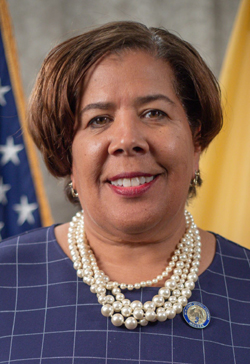
Asm. Linda Carter
Sponsored bills
Maddy summaryThis bill establishes the Mom Project oral health program within New Jersey's Department of Health to provide dental care for low-income pregnant women and new mothers. The legislation defines eligible participants as residents earning less than 300% of the federal poverty level who are enrolled in Medicaid or NJ FamilyCare, and it directs services to specific community oral health centers in medically underserved areas. A total of $3,000,000 is appropriated to fund the program, aiming to address the link between maternal periodontal disease and adverse birth outcomes such as preterm labor. The bill also includes findings on the health disparities affecting Black mothers in the state and the barriers that often prevent access to preventive dental care during pregnancy.
Maddy summaryThis bill establishes the Community-led Birthing Justice and Equity Resource Initiative Program to address high maternal and infant mortality rates among Black women in New Jersey. It allocates $12 million to fund community-based programs that provide culturally congruent care through Black OBGYNs, midwives, doulas, and other medical professionals. The initiative specifically targets underserved urban areas like Atlantic City, Newark, Trenton, and Plainfield, aiming to improve health outcomes by supporting accessible and culturally sensitive birthing resources.
Maddy summaryThis New Jersey bill requires food service businesses to clearly inform customers about major food allergens present in each menu item. Covered establishments, such as restaurants, cafés, and grocery stores, must display this information directly on menus, via digital codes linking to websites, or through separate written materials like charts and booklets. The law mandates that allergen notices use common names or approved standardized symbols and applies to both permanent and temporary menu items, while exempting prepackaged foods already regulated by federal labeling rules. Enforcement is handled by the Department of Health or local health boards, which can issue written notices and order corrective action if violations occur.
Maddy summaryThis bill (A 3523) reduces the number of members required to form a quorum for the New Jersey Educational Facilities Authority (NJ EFA) board. Currently, a majority of the full 7-member board (4 members) is needed; the bill changes this to a majority of the *current* members present, but with a minimum of 3 members. This directly affects the NJ EFA board, which oversees state education facility financing and bonds. The change streamlines decision-making by allowing meetings to proceed with fewer members present, as long as at least 3 are in attendance.
Maddy summaryThis bill (A2127) prohibits electric and gas public utilities in New Jersey from charging residential tenants in multi-unit dwellings (like apartments) a meter-reading fee that exceeds the actual cost of their electricity or gas usage for a billing cycle. It specifically targets fees charged to customers who have opted out of smart meter installation and require manual meter readings. The law sets a clear cap: utilities cannot charge more for manual readings than the customer’s regular utility usage cost. This applies directly to renters in shared housing who choose manual metering, ensuring fees align with actual consumption rather than arbitrary charges.
Maddy summaryThis bill establishes a Women's Menstrual Health Program within New Jersey's Department of Health to identify and assist patients experiencing symptoms related to endometriosis and polycystic ovary syndrome (PCOS). The program requires the Department to provide evidence-based education and training for healthcare providers, emergency staff, and the public on menstrual health screening and care. It also mandates the creation of online resources, including clinical guidelines for screening, referral, and treatment, and public educational materials about these conditions. The program directly affects individuals with symptoms of endometriosis or PCOS, aiming to improve access to appropriate care through standardized resources and provider education.
Maddy summaryThis bill (A1295) prohibits New Jersey local government agencies from hiring individuals who are currently on paid leave from another local government agency in a different county or municipality. It directly affects local hiring practices by preventing cross-jurisdictional employment while an employee remains on paid leave elsewhere. The key provision amends the Local Government Ethics Law to explicitly ban such employment for full-time or part-time positions. The bill is currently pending in the Assembly State and Local Government Committee after introduction on January 13, 2026. It addresses a specific hiring scenario without altering broader ethics rules.
Maddy summaryThis bill requires New Jersey's Department of Health (DOH) and Department of Education (DOE) to create and distribute annual guidelines for school districts and colleges. The guidelines must include research-backed materials on vaping's health risks (lung effects, mental health, comparison to smoking, dangers to pregnant people and children), age-appropriate anti-vaping campaigns, decision-making tools to resist peer pressure, and promotional materials for students from middle school through college. Schools and colleges must use these guidelines to implement campus anti-vaping programs. The DOH and DOE will update the guidelines yearly and post them online with additional resources.
Maddy summaryThis bill requires New Jersey's Division of Developmental Disabilities to create and distribute a client satisfaction survey to individuals using support coordination services. The survey will rate agencies on a 1-5 star scale based on client feedback, with results updated quarterly and published online. Support coordination agencies - which help people with developmental disabilities access medical, social, and educational services - are directly affected by this new rating system. The policy mandates transparency in service quality without altering existing support structures.