

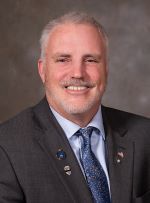
Photo of Howard Pearl
R New Hampshire Senate · District 17 On the 2026 ballot

Sen. Howard Pearl

Compare
Total votes
1,631
all sessions
Attendance
87%
242 missed
Near the chamber average
With party
93%
of cast votes
Near the chamber average
Bipartisan score
4%
crosses aisle rarely
Near the chamber average
Sponsored
594
bills & resolutions
Higher than 91% of chamber peers
Committees
3
assignments
594 bills and resolutions

Sponsored bills

Total
594
Primary
76
Co-sponsor
518
This page
594
matching current filters
Co-sponsor SB 665
Failed · New Hampshire Senate · Co-sponsor
relative to pharmacy benefits managers, managed care laws, notice of drug pricing options and pharmacy benefit manager business practices.

Maddy summarySB 665 requires pharmacies to charge consumers the lowest available price for prescription drugs at the point of sale, directly affecting patients purchasing medications and pharmacies. The bill defines "lowest available price" as the minimum of the pharmacy’s cash price, the consumer’s insurance cost-sharing amount, or any available discount price at the time of transaction. Pharmacists must determine and disclose this price before completing the sale, and insurers cannot penalize pharmacies for doing so. Violations could result in disciplinary action by the pharmacy board or civil penalties up to $1,000 per violation, with the law taking effect January 1, 2027.

Failed May 14, 2026 1 co-sponsor
Co-sponsor SB 480
Failed · New Hampshire Senate · Co-sponsor
limiting certain prior authorization requirements for physical therapy, occupational therapy, and similar rehabilitative services.

Maddy summarySB 480 prohibits health insurers from requiring prior authorization for the first 12 visits of physical therapy, occupational therapy, or similar rehabilitative services for each new health condition or condition not treated within the previous 60 days. Patients seeking these therapies and their insurers are directly affected by this change. Insurers may still deny coverage if treatment is determined not to be medically necessary. The law takes effect 60 days after enactment.

Failed May 14, 2026 1 co-sponsor
Primary SB 640
Failed · New Hampshire Senate · Lead sponsor
relative to the use of artificial intelligence to provide services requiring a professional license.

Maddy summarySB 640 prohibits using artificial intelligence to provide services requiring a professional license (such as psychology, mental health, or substance abuse counseling) unless those services are delivered by a licensed professional. The bill specifically bans AI from replacing human professionals in direct client interactions, though it allows AI for administrative tasks like scheduling or billing. It also authorizes the Office of Professional Licensure to collect fees to cover enforcement costs for violations. This applies to all licensed professions in New Hampshire, with additional specific rules for psychologists and mental health practitioners.

Failed May 14, 2026 0 co-sponsors
Co-sponsor SB 508
Failed · New Hampshire Senate · Co-sponsor
relative to the zoning board of adjustments appeal period.

Maddy summarySB 508 requires all grounds for appealing zoning board decisions to be stated in the initial appeal notice, directly affecting applicants, municipalities, and planning boards. It adds a new provision mandating that cities and towns must stamp and accept revised zoning plans within 3 business days of submission, provided the revisions address specific comments from the initial review. The bill also limits applicants to one revision round unless original comments were unaddressed, preventing repeated requests for changes beyond the initial review conditions. These changes aim to streamline the zoning approval process by setting clear timelines and revision limits. The bill applies to all municipalities in New Hampshire with zoning boards of adjustments.

Failed May 14, 2026 1 co-sponsor
Co-sponsor SB 432
Failed · New Hampshire Senate · Co-sponsor
authorizing the application of sunscreen in schools and camps without a licensed health care provider's note or prescription and establishing a skin cancer prevention education program.

Maddy summaryThis bill allows students in New Hampshire public schools and camps to use over-the-counter sunscreen without a doctor's note or prescription. School and camp staff may assist with application upon parental permission, and the law requires schools to implement age-appropriate skin cancer prevention education covering UV risks and protective measures like sunscreen and sun-protective clothing (e.g., hats). It also protects staff from liability when following these guidelines, addressing current barriers where some schools prohibited sunscreen due to "medication bans."

Failed May 14, 2026 1 co-sponsor
Co-sponsor CACR 12
Passed · New Hampshire Senate · Co-sponsor
the adoption of tax laws.

Maddy summaryThis constitutional amendment (CACR 12) would require a two-thirds vote in both the New Hampshire Senate and House of Representatives to pass new broad-based taxes, such as income, sales, or capital gains taxes. It directly affects the legislative process for enacting new taxes that broadly impact many residents or businesses, not existing tax laws. The key mechanism is changing the constitutional requirement for such taxes from a simple majority to a supermajority vote. If approved by voters in 2026, this would apply to all new broad-based tax legislation moving forward.

Passed May 14, 2026 1 co-sponsor
Co-sponsor SB 433
Failed · New Hampshire Senate · Co-sponsor
establishing the seizure safe schools act.

Maddy summarySB 433, the "Seizure Safe Schools Act," requires New Hampshire public, charter, and private schools to train at least two staff members per school (by the 2026-27 school year) to recognize seizures and administer FDA-approved seizure rescue medication. It mandates parental consent for medication use, including written authorization, healthcare provider documentation, and individualized "seizure action plans" for students with seizure disorders. Schools must store medication securely and provide 75 minutes of training every two years for relevant staff on seizure recognition and first aid. The law applies only to schools with students requiring FDA-approved seizure medication, ensuring protocols align with medical guidelines while protecting trained staff from liability.

Failed May 14, 2026 1 co-sponsor
Co-sponsor SB 416
Passed · New Hampshire Senate · Co-sponsor
relative to the pooling and sharing of tips among tipped employees.

Maddy summarySB 416 replaces New Hampshire's state rule on tip pooling with the federal Fair Labor Standards Act (FLSA) rules governing how tipped employees can share tips. It directly affects workers in service industries like restaurants and bars who rely on tips, such as servers and bartenders. The bill removes state restrictions and aligns the state with federal regulations, including specific FLSA provisions (29 C.F.R. §§ 531.42, 531.50, 531.54) that allow tip pooling among eligible employees. The law takes effect 60 days after enactment.

Passed May 14, 2026 1 co-sponsor
Co-sponsor SB 593
Signed into law · New Hampshire Senate · Co-sponsor
enabling the use of solid waste management funds by solid waste management districts.

Maddy summarySB 593 clarifies that landfill expansions (adding capacity to existing permitted sites) require approval solely from New Hampshire's Department of Environmental Services, overriding local zoning rules. It mandates landfill operators expanding capacity to pay host municipalities at least $2.50 per ton of waste received. For new landfills not on existing sites, the bill requires visual impact assessments within one mile of homes and analysis of benefits/impacts on regional land uses. This directly affects landfill operators, host communities, and municipalities near proposed landfill sites.

Signed into law May 12, 2026 1 co-sponsor
Co-sponsor HB 1159
Signed into law · New Hampshire House · Co-sponsor
relative to updating the state building code.

Maddy summaryHB 1159 updates New Hampshire's definition of the state building code to reference the 2024 editions of key model codes, including the International Building Code and International Plumbing Code, instead of the previous 2021 versions. This change directly affects builders, contractors, architects, and building inspectors who must comply with the updated code standards for new construction and renovations. The bill specifies that the 2024 versions, along with the National Electrical Code 2023, become effective upon legislative ratification and review by the state building code review board. It does not create new requirements but aligns state law with current model code standards.

Signed into law May 12, 2026 1 co-sponsor
Showing 91 to 100 of 594 bills
Previous 1 … 9 10 11 … 60 Next